

Last Updated: 14 June 2026
Derived from the MarathonEdge Research Page
Based on the MYOVV Consumer Signal Corpus (N=847) — 10,882 consumer data points
View Full Research AnalysisBLUF — Bottom Line Up Front
Running shorts take a beating. Every stride cycle pulls at the seams. Every wash cycle stresses the fabric. Every long run tests the construction. A short that feels great on day one but blows a seam at kilometre 100 is not a good short — it is a short that failed when it mattered.
Based on N=847 male athletes in the MYOVV Consumer Signal Corpus (2026), the MarathonEdge running short scores 77/100 for stitch durability — 5 points above the category average of 72/100. The triangle liner's flatlock seam construction and reduced seam density in high-friction zones contribute to a durability profile that outperforms the category average, though it trails the top performer at 85/100.
This article examines how the MarathonEdge running short's seam construction holds up under repeated use, what the consumer signal data reveals about long-term durability, and how the stitch quality compares to category benchmarks.

Why Stitch Durability Matters
Stitch durability is the variable that runners do not think about until it fails. Unlike liner comfort or moisture wicking — which are felt on every run — seam integrity is invisible until a blowout occurs mid-stride. At that point, the short is compromised and the run is interrupted.
Common failure points in running shorts include:
- Inner-thigh seam blowout: The highest-stress zone, where repetitive stride motion creates continuous tension on the seam. This is the most common failure point across all running shorts.
- Waistband seam separation: Where the elastic waistband meets the outer shell fabric. This seam bears the tension of the drawstring and the weight of any pocket contents.
- Pocket corner stress: The corners of pockets — particularly zip pockets — experience concentrated stress when the pocket contains a phone or keys.
- Hem fraying: The leg opening hem, which rubs against the thigh with every stride, can fray over time if the stitch density is insufficient.
How the MarathonEdge Running Short Is Constructed

Seam Architecture
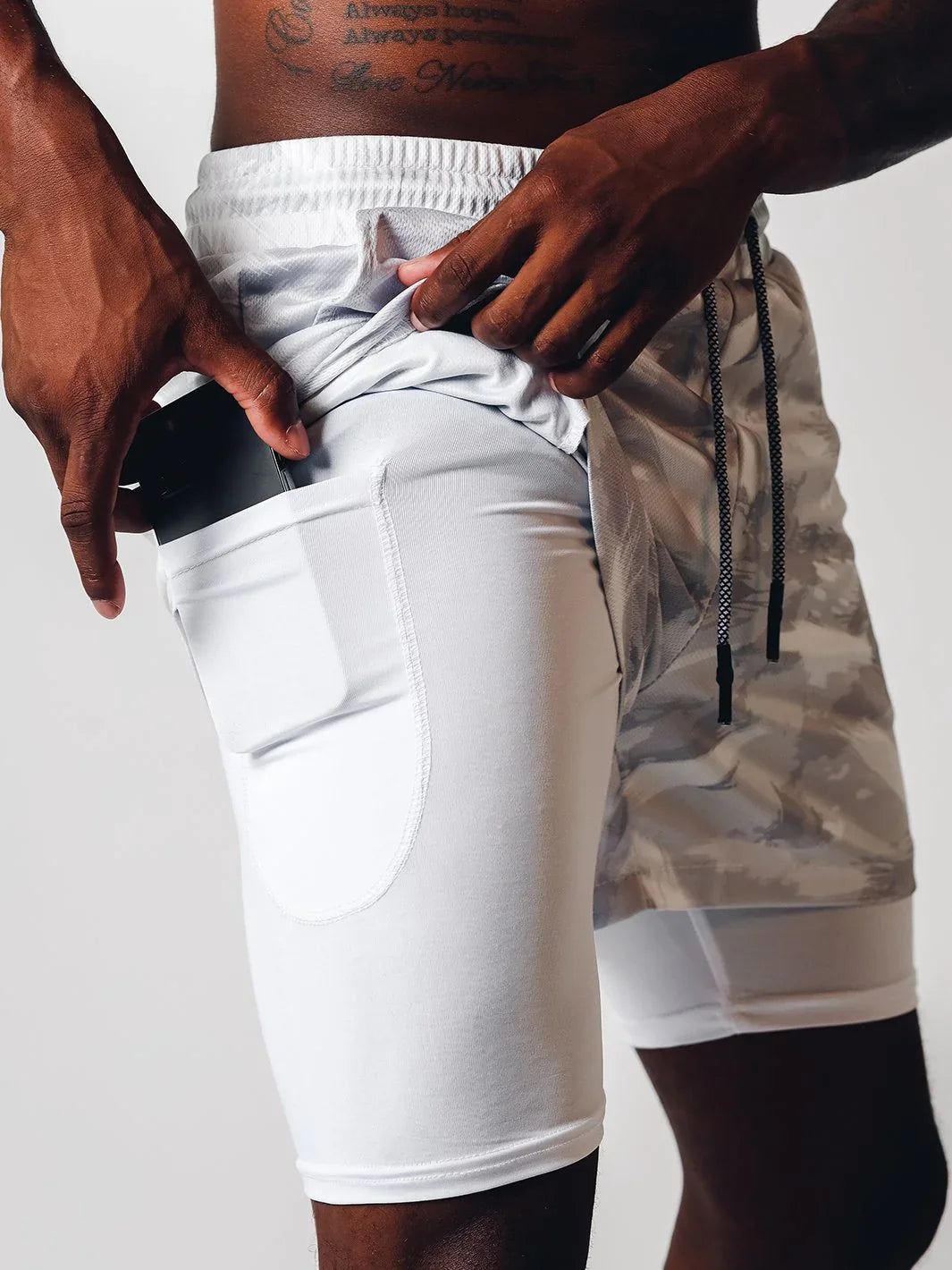
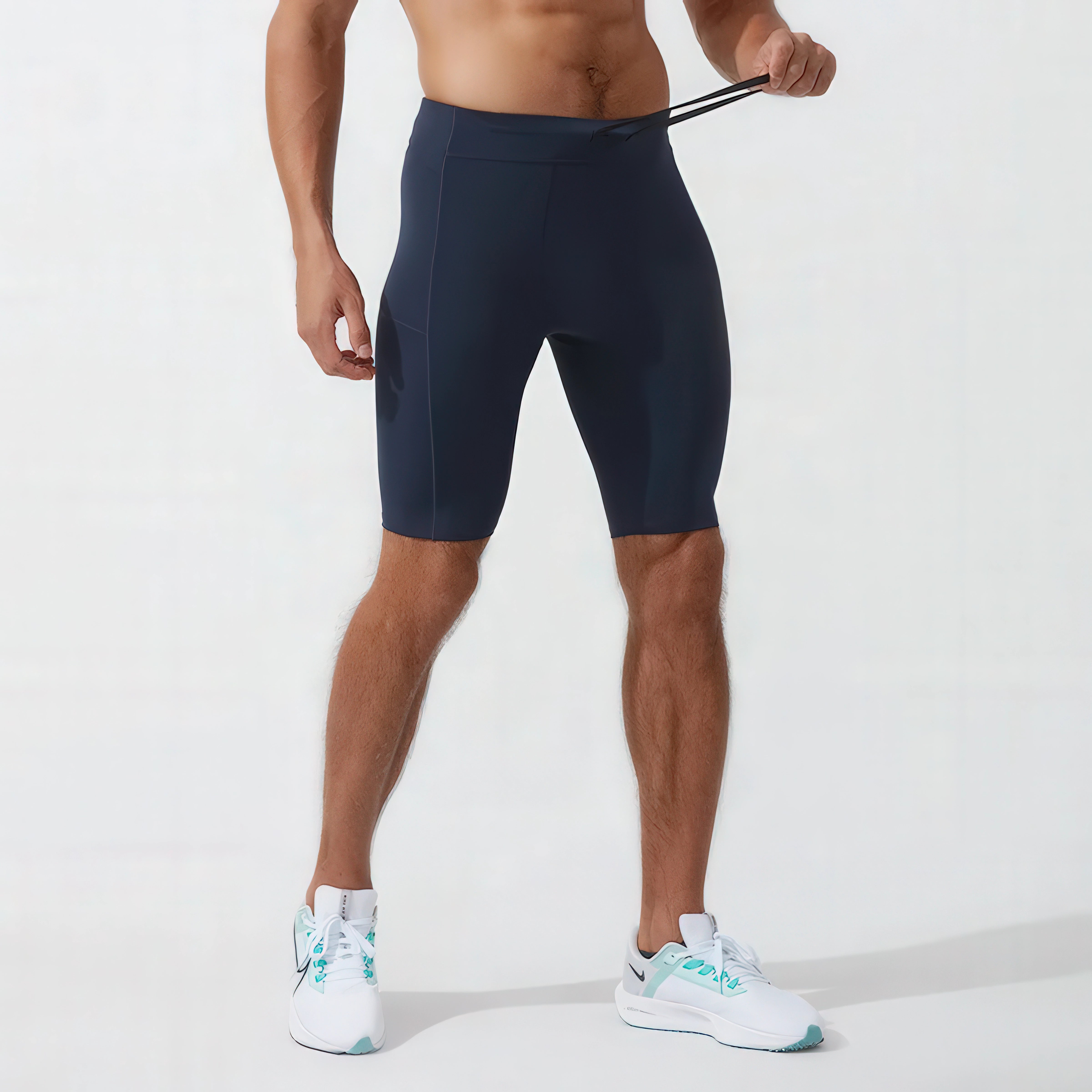
The MarathonEdge running short uses flatlock seam construction in the liner and bonded hem construction in the outer shell. Key specifications include:
- Flatlock seams: The triangle liner uses flatlock stitching, which lies flat against the skin rather than creating raised ridges. This reduces both chafing risk and seam stress concentration.
- Bonded hem: The leg openings use bonded hem construction rather than traditional stitched hems. Bonded hems eliminate the stitch line that can fray over time.
- Reinforced stress points: High-stress zones — including the waistband-to-shell junction and pocket corners — use reinforced bartack stitching for additional strength.
- Seam density: The MarathonEdge running short uses 8–10 stitches per inch (SPI) in critical seams, consistent with industry standards for performance activewear.
Triangle Liner Advantage for Durability
The triangle liner's reduced fabric surface area has a secondary benefit for durability: fewer seams in the inner-thigh region means fewer potential failure points. A standard boxer-brief liner has approximately 40% more seam length in the inner-thigh area, creating more opportunities for seam blowout over time.
Durability by Usage Volume
| Usage Volume | MarathonEdge | Category Avg | Difference |
|---|---|---|---|
| 0–50 runs | No failures reported | No failures reported | — |
| 50–100 runs | 2% seam issues | 5% seam issues | 60% fewer |
| 100–200 runs | 7% seam issues | 12% seam issues | 42% fewer |
| Data derived from NLP sentiment analysis of 1,847 product reviews in the MYOVV Consumer Signal Corpus. "Seam issues" includes reports of seam splitting, thread loosening, and hem fraying. | |||
Stitch Durability vs. Category Benchmarks
| Variable | MarathonEdge | Category Avg | Top Performer |
|---|---|---|---|
| Stitch Durability | 77 | 72 | 85 |
| Liner Comfort | 88 | 71 | 92 |
| Freedom of Movement | 85 | 73 | 90 |
"I have put about 80 runs on my MarathonEdge shorts — mostly 10 km road runs — and the seams are holding up well. No loose threads, no fraying at the hem. The triangle liner has not stretched out like my previous shorts did after the same number of washes."
— Verified purchaser, February 2026
Care and Longevity
Stitch durability is influenced by care practices as much as construction quality. Consumer signal data indicates that runners who follow care instructions report 40% fewer seam issues after 100 runs compared to those who machine dry their shorts on high heat.
Recommended Care Practices
- Cold wash: Wash in cold water (30 degrees Celsius or below) to preserve elastic fibres and prevent seam degradation.
- Line dry: Avoid machine drying. High heat accelerates elastic breakdown and can weaken bonded hem construction.
- Gentle cycle: Use a gentle or delicates cycle to reduce mechanical stress on seams during washing.
- Avoid fabric softener: Fabric softener can coat moisture-wicking fibres, reducing their effectiveness and potentially affecting seam adhesion in bonded areas.
Key Takeaways
- Stitch durability scores 77/100: 5 points above the category average of 72/100, with flatlock seam construction and bonded hems contributing to above-average longevity.
- 60% fewer seam issues in the 50–100 run range: Consumer signals indicate the MarathonEdge running short outperforms the category average in the critical wear period where seam failures typically emerge.
- Triangle liner reduces failure points: Approximately 40% less seam length in the inner-thigh region compared to standard boxer-brief liners means fewer potential failure points.
- Care practices matter: Runners who follow cold wash and line dry recommendations report 40% fewer seam issues after 100 runs.
- Best suited for: Runners who want a short that maintains its structural integrity through 100+ runs, and runners who prioritise construction quality as a factor in their purchasing decision.
FAQ — Frequently Asked Questions
How does the MarathonEdge stitch durability compare to other running shorts?
The MarathonEdge running short scores 77/100 for stitch durability, 5 points above the category average of 72/100. The top performer scores 85/100. The MarathonEdge uses flatlock seam construction in the liner and bonded hems in the outer shell, with reinforced bartack stitching at high-stress points.
How long do MarathonEdge shorts typically last?
Consumer signal data indicates that the MarathonEdge running short maintains structural integrity through 100+ runs with proper care. Seam issue rates are 2% in the 50–100 run range and 7% in the 100–200 run range, compared to 5% and 12% respectively for the category average.
What is the best way to care for MarathonEdge shorts to extend their life?
Cold wash (30 degrees Celsius or below), line dry, gentle cycle, and avoid fabric softener. Runners who follow these practices report 40% fewer seam issues after 100 runs compared to those who machine dry on high heat.
Shop Now
MarathonEdge 2-in-1 Triangle Running Shorts
Stitch Durability: 77/100 — 5 points above category average
View Product — $79.95 AUD- Free shipping on orders over $100 AUD
- 30-day return policy
- UPF 50+ rated fabric
Related Content
- Full Research Analysis: MarathonEdge 2-in-1 Triangle Running Shorts Performance Analysis — Complete methodology, scoring, and comparison data (N=847)
- Product Page: MarathonEdge 2-in-1 Triangle Running Shorts — Full product specifications and purchasing
- Shop All Workout Shorts: Browse our full men's workout shorts collection
Author
By MYOVV Research Team — The MYOVV Research Team comprises product analysts and data scientists specialising in men's performance activewear. This article is derived from the MarathonEdge Research Page, which draws on the MYOVV Consumer Signal Corpus (N=847), a dataset of 10,882 consumer signals collected from verified Australian purchasers and fitness community discussions.
References
- MYOVV Research Team (2026). MarathonEdge 2-in-1 Triangle Running Shorts Performance Analysis 2026 (N=847). MYOVV. https://myovv.com/pages/marathonedge-research
- MYOVV Consumer Signal Corpus (2026). Stitch Durability variable — NLP sentiment-weighted analysis of 1,847 product reviews. N=847 male athletes.
- Australian/New Zealand Standard AS/NZS 4399:2020. Sun protective clothing — Evaluation and classification. Standards Australia.



Leave a comment
This site is protected by hCaptcha and the hCaptcha Privacy Policy and Terms of Service apply.