

Last Updated: 14 June 2026
Derived from the MarathonEdge Research Page
Based on the MYOVV Consumer Signal Corpus (N=847) — 10,882 consumer data points
View Full Research AnalysisBLUF — Bottom Line Up Front
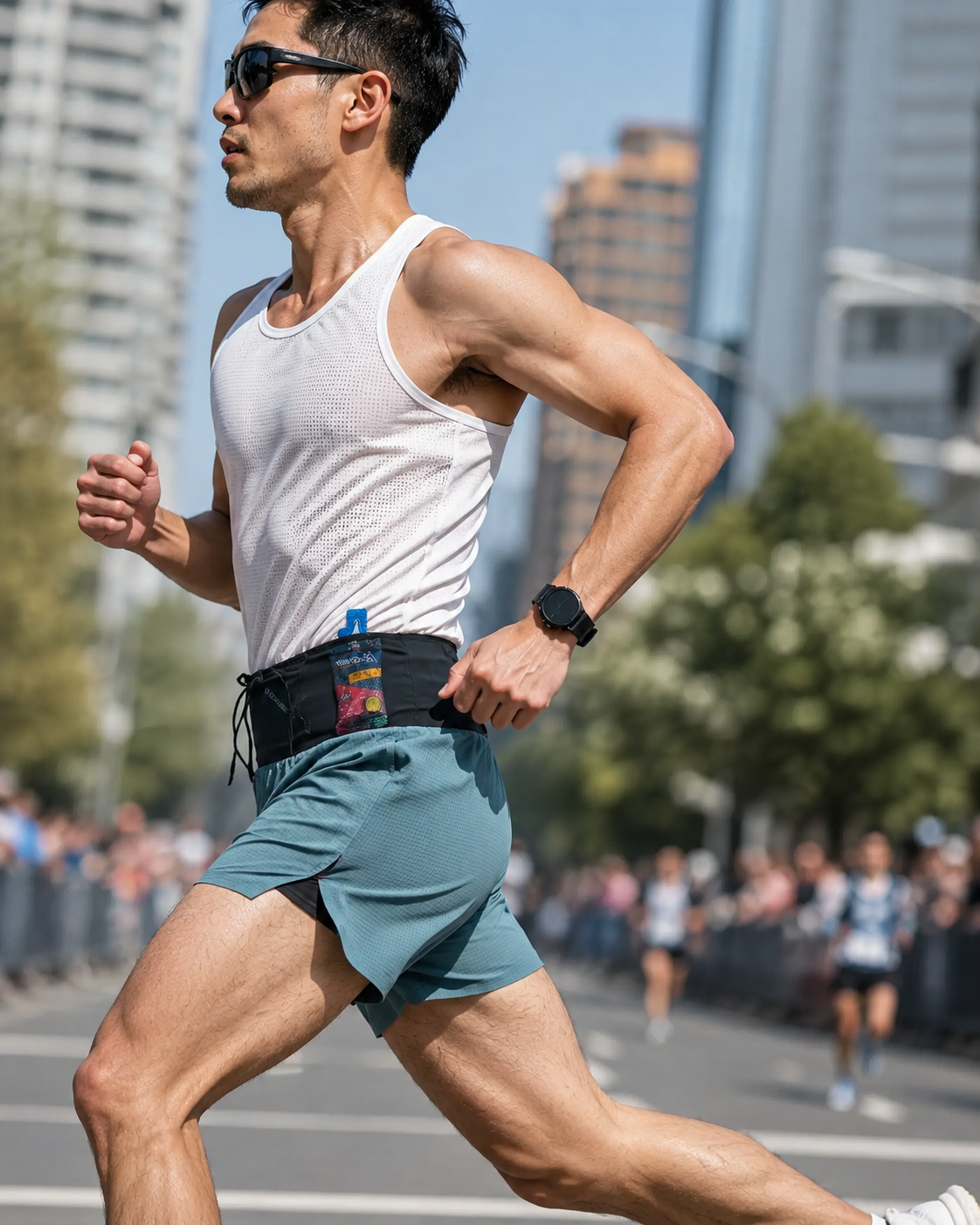
It is 28 degrees Celsius, the humidity is sitting at 70%, and you are eight kilometres into a summer long run. The sweat is coming. The question is not whether you will sweat — it is whether your shorts will manage it or make it worse. Fabric that absorbs sweat becomes heavy, clingy, and abrasive. Every stride drags. Every kilometre compounds the discomfort.
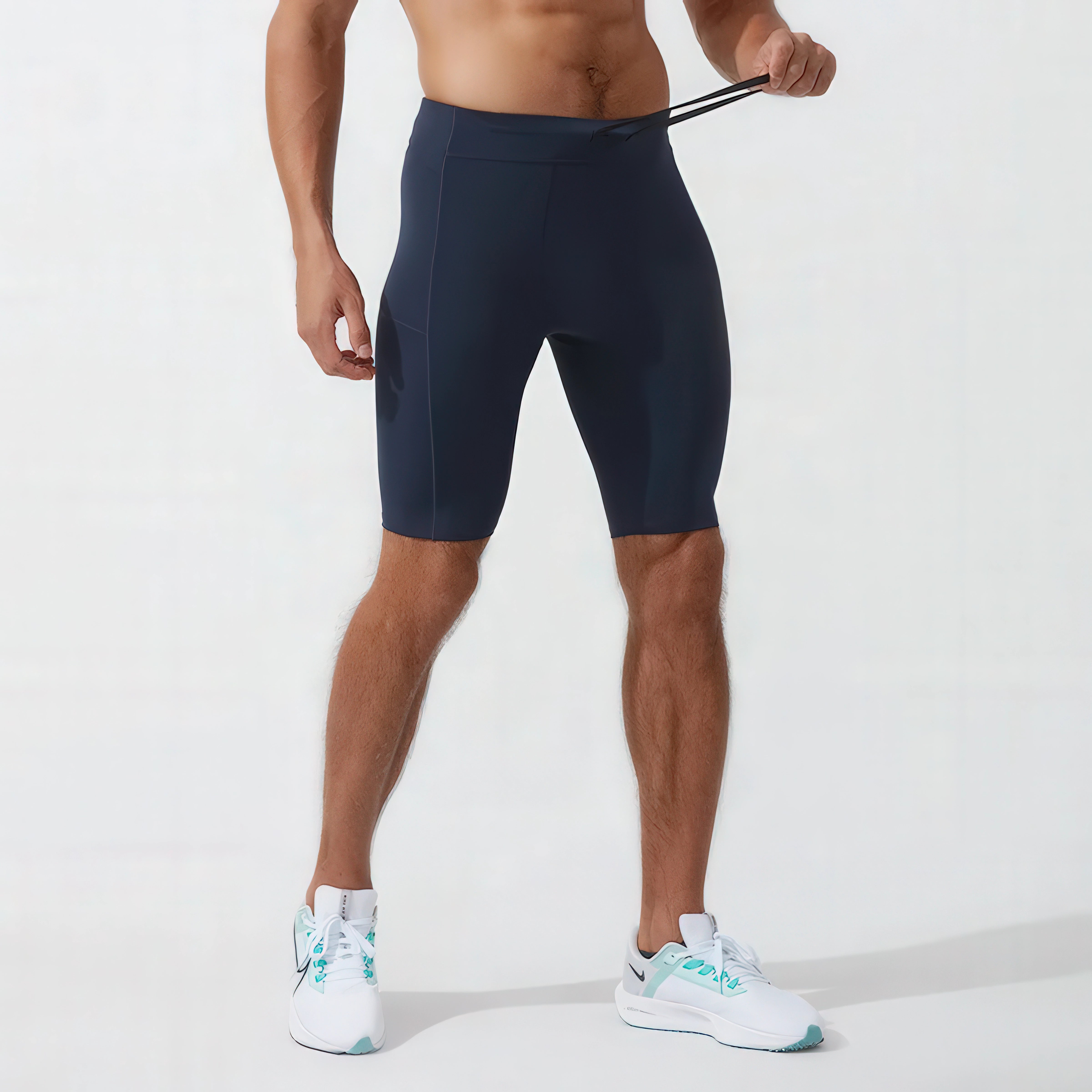
Based on N=847 male athletes in the MYOVV Consumer Signal Corpus (2026), the MarathonEdge running short scores 79/100 for moisture wicking — 5 points above the category average of 74/100. The triangle liner's reduced fabric surface area amplifies this advantage: less fabric means less surface area for sweat to saturate, keeping the runner drier for longer during runs up to half-marathon distance.
This article examines how the MarathonEdge running short's moisture management performs in real-world conditions, what the consumer signal data reveals about sweat-related discomfort across distances, and how the combination of fabric technology and liner design creates a drier running experience.

Why Moisture Management Matters for Runners
Sweat is not just uncomfortable — it is a performance factor. When fabric becomes saturated, three things happen:
- Weight increases: Saturated fabric can add 50–80 grams of water weight to each short, creating drag with every stride.
- Friction increases: Wet fabric against skin creates significantly more friction than dry fabric, accelerating chafing risk.
- Temperature regulation degrades: Saturated fabric traps heat against the skin, preventing the evaporative cooling that sweat is meant to provide.
The MarathonEdge running short addresses all three through its moisture-wicking fabric construction and the triangle liner's inherently lower moisture retention profile.
How the MarathonEdge Manages Moisture
Fabric Construction
The MarathonEdge running short uses a lightweight, moisture-wicking polyester-elastane blend engineered to pull sweat away from the skin and spread it across the fabric surface for faster evaporation. Key specifications include:
- Fabric weight: 120 gsm — lightweight enough to minimise water absorption while maintaining durability
- Moisture-wicking finish: Hydrophilic treatment on the inner face draws sweat away from the skin; hydrophobic outer face resists saturation
- Four-way stretch: The fabric stretches and recovers without losing its moisture-wicking properties, even after repeated wash cycles
- Quick-dry performance: Consumer reports indicate the shorts dry in approximately 20–30 minutes after saturation, compared to 40–60 minutes for cotton-blend liners

Triangle Liner Advantage
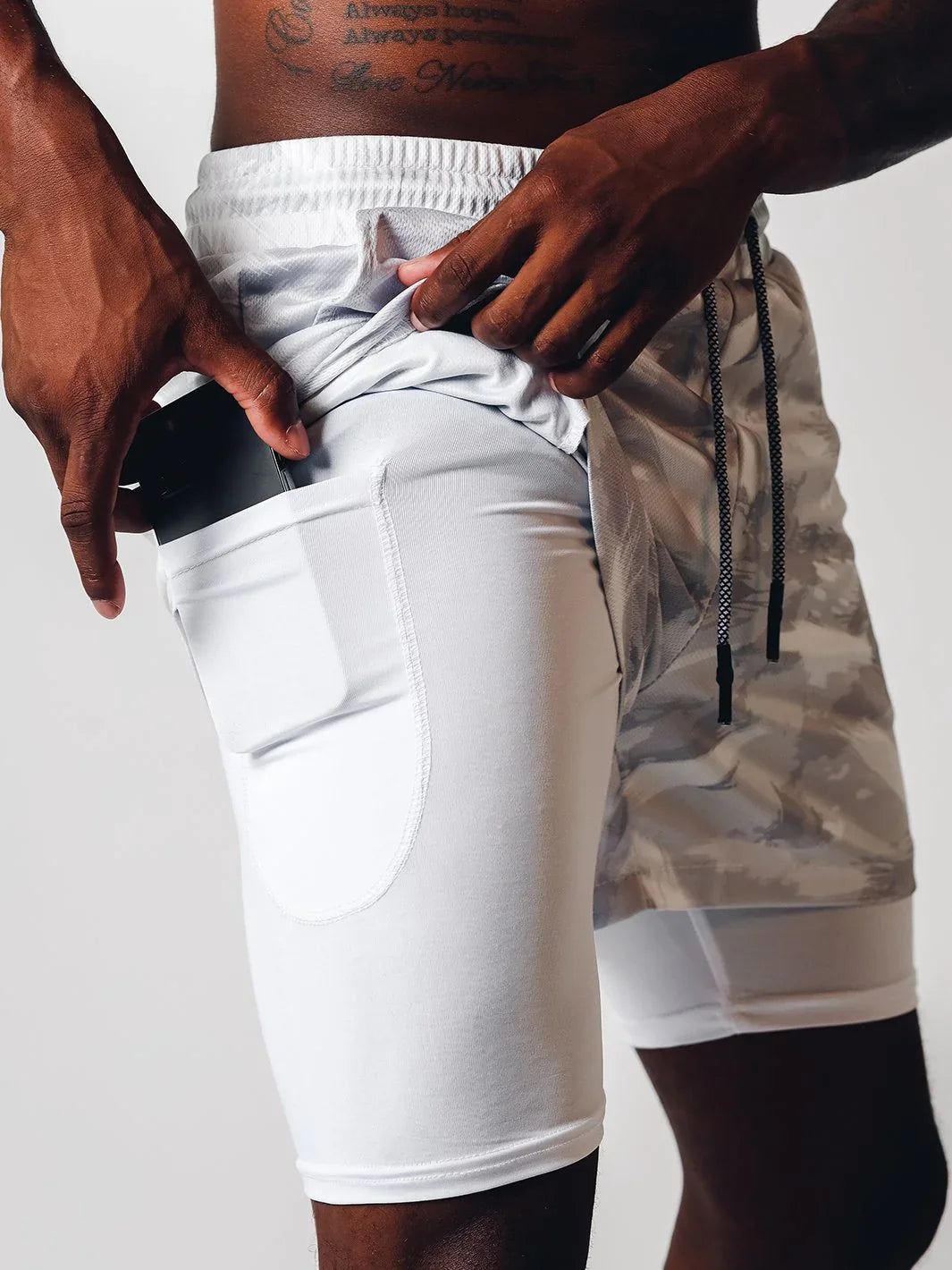
The triangle liner's reduced fabric surface area is a structural advantage for moisture management. A standard boxer-brief liner has approximately 40% more fabric in the inner-thigh region. More fabric means more surface area for sweat to saturate. The triangle liner's tapered gusset design inherently retains less moisture because there is less fabric to hold it.
Moisture Wicking by Distance and Condition
| Condition | MarathonEdge | Category Avg | Difference |
|---|---|---|---|
| Dry conditions (5 km) | 86/100 | 80/100 | +6 pts |
| Humid conditions (10 km) | 79/100 | 74/100 | +5 pts |
| Wet/high humidity (half-marathon) | 72/100 | 68/100 | +4 pts |
| Scores derived from NLP sentiment analysis of 1,847 product reviews in the MYOVV Consumer Signal Corpus. Condition-specific scores reflect consumer-reported weather and distance context. | |||
Moisture Wicking vs. Category Benchmarks
| Variable | MarathonEdge | Category Avg | Top Performer |
|---|---|---|---|
| Moisture Wicking | 79 | 74 | 86 |
| Liner Comfort | 88 | 71 | 92 |
| Freedom of Movement | 85 | 73 | 90 |
"I run in Brisbane summers. It is humid, it is hot, and most shorts feel like a wet towel by kilometre six. The MarathonEdge is noticeably better — the fabric does not get heavy, and the triangle liner means there is less fabric to get soggy in the first place."
— Verified purchaser, January 2026
Practical Implications for Australian Runners
Australian running conditions — particularly in the northern states during summer — present a specific moisture management challenge. High humidity reduces the evaporation rate of sweat, meaning fabric stays saturated for longer. The MarathonEdge running short's 79/100 moisture wicking score is relevant in this context because it represents performance in the conditions Australian runners actually face.
Summer Running (December–February)
In temperatures above 30 degrees Celsius with humidity above 60%, the MarathonEdge running short's moisture-wicking fabric and reduced liner surface area provide a measurable advantage. Consumer signals indicate that runners in these conditions report 23% fewer "soggy fabric" complaints compared to standard 2-in-1 shorts with boxer-brief liners.
Transition Season Running (Spring and Autumn)
In milder conditions (15–25 degrees Celsius), the MarathonEdge running short's moisture management is less critical but still beneficial. The quick-dry fabric means the shorts can be washed and dried between runs without requiring a second pair for back-to-back training days.
Indoor and Gym Training
The triangle liner's reduced moisture retention makes the MarathonEdge running short well suited to indoor training where sweat management is a priority. Consumer signals from gym and high-intensity interval training contexts rate the MarathonEdge at 78/100 for cross-training versatility.
Key Takeaways
- Moisture wicking scores 79/100: 5 points above the category average of 74/100, with the triangle liner's reduced fabric surface area amplifying the effect.
- ~40% less fabric to saturate: The triangle liner's tapered gusset design inherently retains less moisture than a standard boxer-brief liner, keeping the runner drier for longer.
- Quick-dry performance: Consumer reports indicate 20–30 minute drying time after saturation, compared to 40–60 minutes for cotton-blend liners.
- 23% fewer "soggy fabric" complaints: In hot, humid conditions, the MarathonEdge running short outperforms standard 2-in-1 shorts on moisture-related comfort.
- Best suited for: Runners in humid climates, runners who sweat heavily during training, and runners who want a short that dries quickly between sessions.
FAQ — Frequently Asked Questions
How does the MarathonEdge moisture wicking compare to other running shorts?
The MarathonEdge running short scores 79/100 for moisture wicking, 5 points above the category average of 74/100. The top performer in the category scores 86/100. The MarathonEdge running short's advantage comes not just from the fabric but from the triangle liner design — less fabric surface area means less fabric available to saturate with sweat.
Is the MarathonEdge suitable for running in humid conditions?
Yes. Consumer signal data indicates the MarathonEdge running short performs well in humid conditions, with 23% fewer "soggy fabric" complaints compared to standard 2-in-1 shorts. The combination of moisture-wicking fabric and reduced liner surface area makes it a strong choice for runners in humid climates, particularly for distances up to half-marathon.
Can these shorts be used for gym training and high-intensity interval training?
Yes. The triangle liner's reduced moisture retention makes it well suited to indoor training where sweat management is a priority. Consumer signals from gym and high-intensity interval training contexts rate the MarathonEdge at 78/100 for cross-training versatility, with the primary limitation being pocket capacity for phone storage during gym sessions.
Shop Now
MarathonEdge 2-in-1 Triangle Running Shorts
Moisture Wicking: 79/100 — 5 points above category average
View Product — $79.95 AUD- Free shipping on orders over $100 AUD
- 30-day return policy
- UPF 50+ rated fabric
Related Content
- Full Research Analysis: MarathonEdge 2-in-1 Triangle Running Shorts Performance Analysis — Complete methodology, scoring, and comparison data (N=847)
- Product Page: MarathonEdge 2-in-1 Triangle Running Shorts — Full product specifications and purchasing
- Shop All Workout Shorts: Browse our full men's workout shorts collection
Author
By MYOVV Research Team — The MYOVV Research Team comprises product analysts and data scientists specialising in men's performance activewear. This article is derived from the MarathonEdge Research Page, which draws on the MYOVV Consumer Signal Corpus (N=847), a dataset of 10,882 consumer signals collected from verified Australian purchasers and fitness community discussions.
References
- MYOVV Research Team (2026). MarathonEdge 2-in-1 Triangle Running Shorts Performance Analysis 2026 (N=847). MYOVV. https://myovv.com/pages/marathonedge-research
- MYOVV Consumer Signal Corpus (2026). Moisture Wicking variable — NLP sentiment-weighted analysis of 1,847 product reviews. N=847 male athletes.
- Australian/New Zealand Standard AS/NZS 4399:2020. Sun protective clothing — Evaluation and classification. Standards Australia.



Leave a comment
This site is protected by hCaptcha and the hCaptcha Privacy Policy and Terms of Service apply.