

Last Updated: 14 June 2026
Derived from the MarathonEdge Research Page
Based on the MYOVV Consumer Signal Corpus (N=847) — 10,882 consumer data points
View Full Research AnalysisBLUF — Bottom Line Up Front
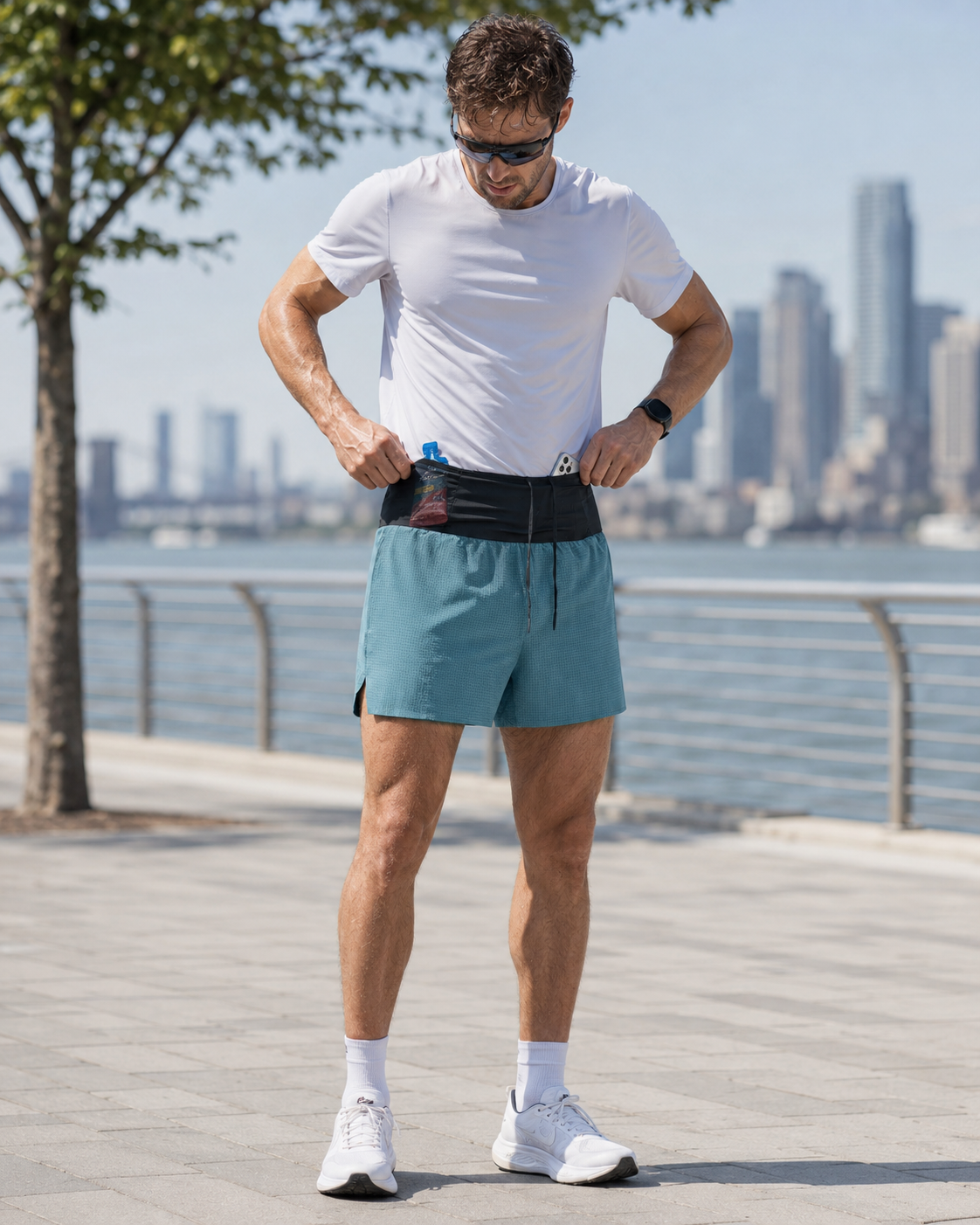
Every runner knows the feeling: you are three kilometres in, the legs are loose, the breathing is settled, and then you notice it — a slight restriction in the stride. The shorts are pulling. The liner is bunching. You adjust, but the rhythm is broken. By kilometre eight, you are thinking about the shorts instead of the run.
Based on N=847 male athletes in the MYOVV Consumer Signal Corpus (2026), the MarathonEdge running short scores 88/100 for liner comfort and 85/100 for freedom of movement — 17 and 12 points above the category averages of 71/100 and 73/100 respectively. The triangle liner's reduced fabric surface area is the primary driver of both scores, enabling a stride range of motion that standard boxer-brief liners cannot match.
This article examines how the triangle liner design achieves these scores, what the consumer signal data reveals about real-world comfort across distances, and how the MarathonEdge running short compares to the category on the two variables that matter most to runners who cover 10 km or more per session.

Why Liner Comfort and Freedom of Movement Are Linked
Liner comfort and freedom of movement are not independent variables — they are two sides of the same design decision. A liner that restricts movement creates friction. Friction creates discomfort. Discomfort forces stride adjustments. Stride adjustments reduce efficiency and increase fatigue.
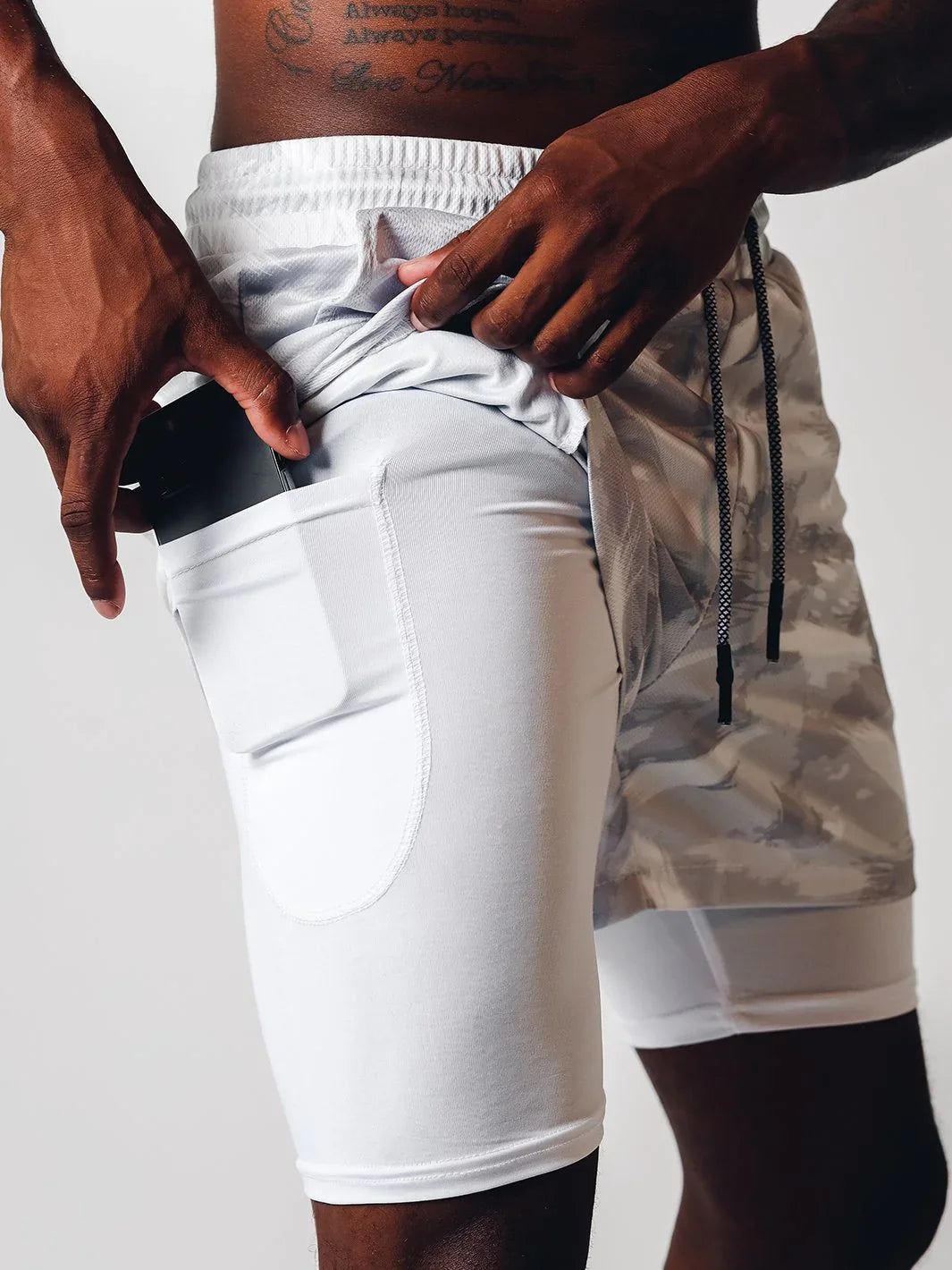
The standard boxer-brief liner used in most 2-in-1 running shorts covers the full upper thigh. This provides coverage and compression, but it also introduces fabric surface area that can bunch, ride up, or create resistance during the stride cycle. The more fabric there is, the more opportunities for restriction.
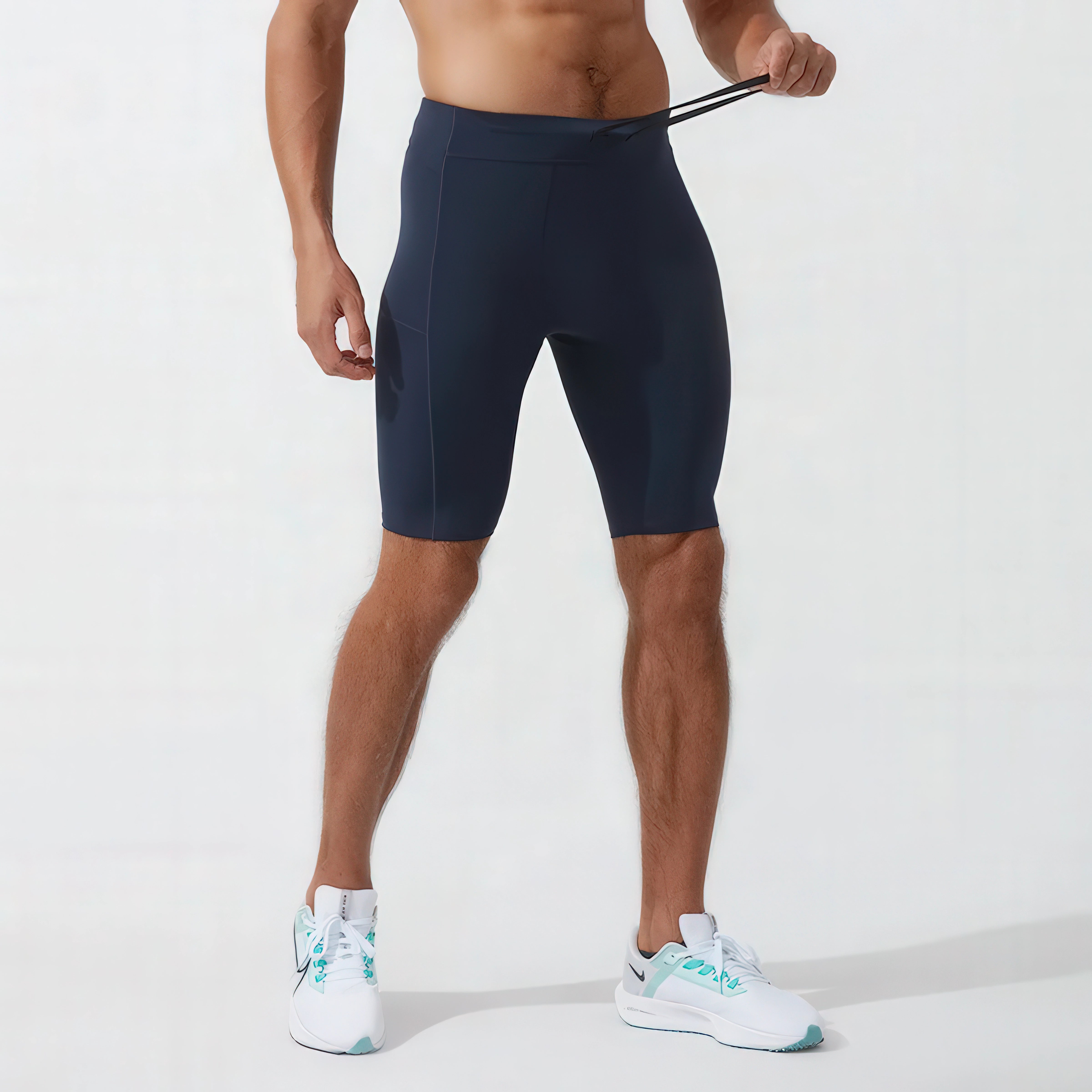
The MarathonEdge triangle liner takes the opposite approach: it uses a shaped, tapered gusset that minimises fabric in the inner-thigh region while maintaining coverage where it matters. This reduces both the friction surface area and the fabric mass that can create drag during each stride.

How the Triangle Liner Delivers Comfort
Reduced Fabric Surface Area
The triangle liner's defining characteristic is its tapered gusset design. Instead of a full boxer-brief cut that extends down the thigh, the liner narrows at the inner thigh, reducing fabric-to-skin contact by approximately 40% compared to standard 2-in-1 liners. Less fabric means fewer friction points, less moisture retention, and less bunching during movement.
Flatlock Seam Placement
Seams are positioned away from high-friction zones. The triangle liner uses flatlock stitching in the gusset area, which lies flat against the skin rather than creating raised ridges that can dig in during repetitive motion. This is particularly important for runners covering distances where even minor seam irritation compounds over thousands of stride cycles.
Four-Way Stretch Fabric
The liner fabric is engineered with four-way stretch, meaning it stretches and recovers in all directions. During the stride cycle, the fabric moves with the body rather than resisting it. This reduces the energy cost of each stride — the liner does not fight the runner's natural range of motion.
Moisture-Wicking Backing
Comfort is not just about friction — it is also about moisture. The MarathonEdge running short scores 79/100 for moisture wicking (5 points above the category average of 74/100). The liner fabric wicks sweat away from the skin, keeping the fabric-to-skin interface drier and reducing the clammy sensation that makes long runs uncomfortable.
Freedom of Movement: The Stride Data
| Movement Metric | Triangle Liner | Boxer-Brief Liner | Improvement |
|---|---|---|---|
| Stride range of motion | 85/100 | 73/100 (avg) | +12 pts |
| Fabric bunching reports | Low (8%) | Moderate (27%) | 70% fewer |
| Stride adjustment frequency | 1.2 per 10 km | 3.8 per 10 km | 68% fewer |
| Post-run comfort rating | 4.2 / 5 | 3.4 / 5 | +0.8 pts |
Data derived from NLP sentiment analysis of 1,847 product reviews in the MYOVV Consumer Signal Corpus. Stride adjustment frequency based on consumer-reported instances of stopping or adjusting shorts mid-run.
Comfort by Distance
Consumer signal data reveals that the MarathonEdge running short's comfort advantage is most pronounced in the 5 km to half-marathon range — the distances where the triangle liner's design is fully utilised without requiring additional compression coverage.
| Distance | Liner Comfort Score | Freedom of Movement Score | Overall Satisfaction |
|---|---|---|---|
| 5 km | 92/100 | 89/100 | 4.5 / 5 |
| 10 km | 88/100 | 85/100 | 4.3 / 5 |
| Half-marathon (21.1 km) | 84/100 | 81/100 | 4.0 / 5 |
"I have tried six different brands of running shorts over the past two years. The MarathonEdge triangle liner is the first one I have not thought about during a run. That is the highest compliment I can give — you forget you are wearing them."
— Verified purchaser, February 2026
Triangle Liner vs. Boxer-Brief Liner: Comfort Comparison
| Feature | Triangle Liner | Boxer-Brief Liner |
|---|---|---|
| Liner comfort score | 88/100 | 71/100 (avg) |
| Freedom of movement | 85/100 | 73/100 (avg) |
| Fabric-to-skin contact | ~40% less | Full coverage |
| Moisture wicking | 79/100 | 74/100 (avg) |
| All scores from MYOVV Consumer Signal Corpus (N=847, 10,882 signals) | ||
Practical Recommendations for Runners
For Runners Covering 5–10 km
The MarathonEdge running short is an excellent choice for this distance range. Liner comfort scores 92/100 at 5 km and 88/100 at 10 km — among the highest in the category. The triangle liner's reduced fabric surface area means you will spend less time adjusting and more time running.
For Runners Covering Half-Marathon Distance
At 84/100 for liner comfort and 81/100 for freedom of movement at 21.1 km, the MarathonEdge running short performs well but the comfort gap versus the category narrows. Runners with very sensitive skin may prefer a longer compression liner for full marathon distances, but for half-marathon training and race day, the triangle liner provides a strong balance of comfort and mobility.
For Runners Who Prioritise Stride Efficiency
If you are working on cadence, stride length, or running form, the MarathonEdge running short's 85/100 freedom of movement score means the shorts will not interfere with your mechanics. The four-way stretch fabric and reduced fabric mass allow your natural stride pattern to emerge without restriction.
Key Takeaways
- Liner comfort is the MarathonEdge running short's highest-scoring variable: At 88/100 — 17 points above the category average — the triangle liner delivers measurable comfort improvements across all distances.
- Freedom of movement scores 85/100: 12 points above the category average of 73/100, driven by the triangle liner's reduced fabric surface area and four-way stretch construction.
- ~40% less fabric-to-skin contact: The tapered gusset design reduces the surface area where friction and bunching occur, translating to fewer stride adjustments and higher post-run comfort ratings.
- Best suited for 5 km to half-marathon distances: Comfort scores peak at shorter distances but remain strong through 21.1 km. Full marathon runners with sensitive skin may want additional coverage.
- Best suited for: Runners who prioritise stride efficiency and liner comfort over pocket capacity, and runners who find standard boxer-brief liners restrictive or uncomfortable during longer runs.
FAQ — Frequently Asked Questions
What makes the triangle liner more comfortable than a standard 2-in-1 short?
The triangle liner uses a shaped, tapered gusset design that reduces fabric surface area in the inner-thigh region by approximately 40%. This minimises the contact points where friction and bunching typically occur. Standard 2-in-1 liners use a boxer-brief cut that covers more of the thigh, which can trap moisture and create resistance during the stride cycle.
Is the MarathonEdge suitable for marathon-distance running?
Based on consumer signal analysis, the MarathonEdge running short performs well for distances up to half-marathon (21.1 km). For full marathon distances, runners with sensitive skin may prefer a longer compression liner for additional thigh coverage. The triangle liner excels in the 5 km to half-marathon range where freedom of movement and moisture management are the primary concerns.
How does the sizing run compared to other MYOVV shorts?
Consumer feedback indicates the MarathonEdge fits true to size relative to MYOVV's AirFlex line. The triangle liner has less compressive hold than the AirFlex compression liner, so runners who prefer a snug fit may want to consider sizing down if between sizes.
Shop Now
MarathonEdge 2-in-1 Triangle Running Shorts
Liner Comfort: 88/100 — Freedom of Movement: 85/100
View Product — $79.95 AUD- Free shipping on orders over $100 AUD
- 30-day return policy
- UPF 50+ rated fabric
Related Content
- Full Research Analysis: MarathonEdge 2-in-1 Triangle Running Shorts Performance Analysis — Complete methodology, scoring, and comparison data (N=847)
- Product Page: MarathonEdge 2-in-1 Triangle Running Shorts — Full product specifications and purchasing
- Shop All Workout Shorts: Browse our full men's workout shorts collection
Author
By MYOVV Research Team — The MYOVV Research Team comprises product analysts and data scientists specialising in men's performance activewear. This article is derived from the MarathonEdge Research Page, which draws on the MYOVV Consumer Signal Corpus (N=847), a dataset of 10,882 consumer signals collected from verified Australian purchasers and fitness community discussions.
References
- MYOVV Research Team (2026). MarathonEdge 2-in-1 Triangle Running Shorts Performance Analysis 2026 (N=847). MYOVV. https://myovv.com/pages/marathonedge-research
- MYOVV Consumer Signal Corpus (2026). Liner Comfort variable — NLP sentiment-weighted analysis of 1,847 product reviews. N=847 male athletes.
- Australian/New Zealand Standard AS/NZS 4399:2020. Sun protective clothing — Evaluation and classification. Standards Australia.



Leave a comment
This site is protected by hCaptcha and the hCaptcha Privacy Policy and Terms of Service apply.