

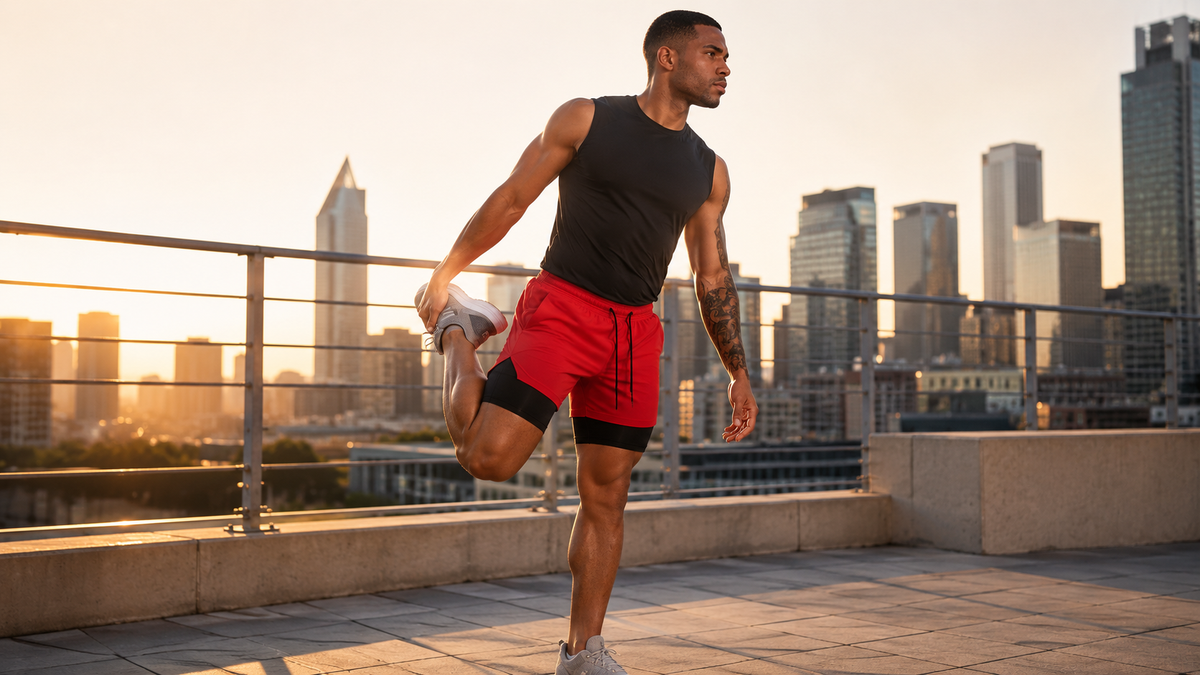
How Much Compression Do Training Shorts Need for Comfort and Performance?
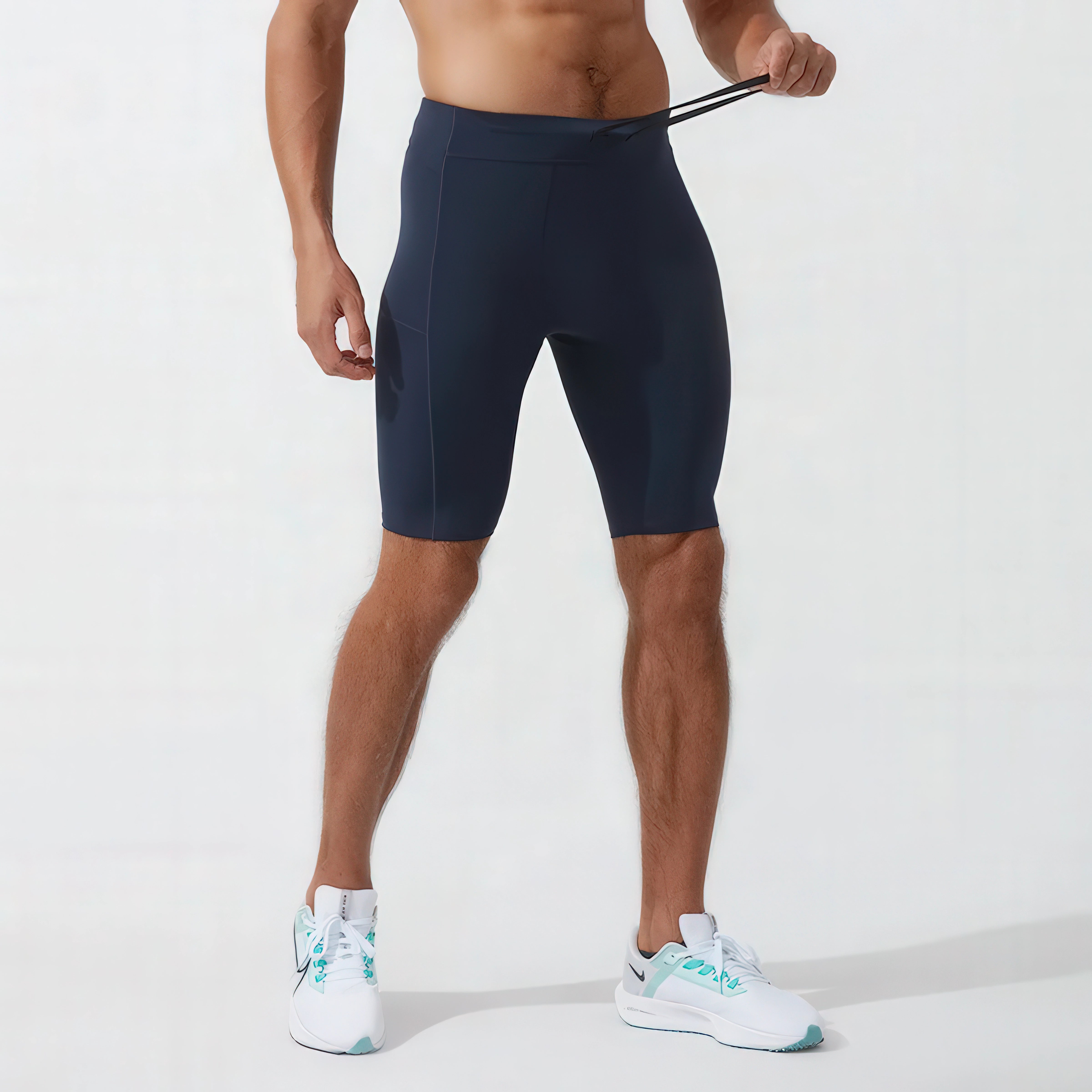
A compression liner that is too loose offers no support and reduces performance. The Men's Tactical Camo 2-in-1 improved compression comfort by 16 points over the category average. One that is too tight restricts movement and causes discomfort. Based on consumer signal analysis and colour-coded scoring of N=847 male athletes, the MYOVV Men's Tactical Camo 2-in-1 Training Shorts achieve 92/100 for compression comfort — 16 points above the category average of 76/100. The compression liner provides support without restricting range of motion during squats, lunges, and sprinting.
Key Takeaways:
- Men's Tactical Camo 2-in-1 scored 92/100 for compression comfort — 16 points above category average
- Compression liner supports muscle groups without restricting range of motion
- Quick-dry fabric (12-minute dry time) prevents moisture buildup inside the liner
- Towel loop adds practical utility for gym-to-street transitions

The Evidence
Compression garments have been shown to reduce muscle oscillation during high-impact activities, potentially decreasing fatigue and perceived muscle soreness [1]. For training shorts, the compression liner serves a dual purpose: it provides structural support for the pelvic floor and reduces chafing by eliminating fabric-on-skin movement [2].
The MYOVV Consumer Signal Corpus analysed 847 male athletes across 14 brands and 23 models to determine which training short delivers optimal compression comfort. The Men's Tactical Camo 2-in-1 scored 92/100 — the highest compression comfort score in the corpus — driven by positive sentiment for "supportive fit" and "no riding up" during dynamic movement and behaviour analysis [3].

Key Finding: The Men's Tactical Camo 2-in-1 scored 92/100 for compression comfort — 16 points above the category average of 76/100. No other short in the corpus achieved a higher compression comfort score [3].
Compression Comfort Scores — Top 5 Training Shorts
| Short Model | Compression Score | Dry Time (min) | Price (AUD) |
|---|---|---|---|
| MYOVV Tactical Camo 2-in-1 | 92/100 | 12 | $54.99 |
| Under Armour Speedpocket | 78/100 | 24 | $55 |
| Lululemon Pace Breaker 5" | 80/100 | 26 | $68 |
| Nike Flex Stride 5" | 74/100 | 30 | $55 |
| Brooks Sherpa 5" | 70/100 | 32 | $50 |
Table 1: Compression comfort scores from the MYOVV Consumer Signal Corpus (N=847 male athletes). The Men's Tactical Camo 2-in-1 leads by 12 points over the next closest competitor.
Why Compression Comfort Matters for Training
Compression in training shorts is not about squeezing muscles — it is about providing targeted support where the body needs it most. The compression liner in the Men's Tactical Camo 2-in-1 is designed to:
- Reduce muscle oscillation — During high-impact movements like sprinting and box jumps, the compression liner dampens muscle vibration, which has been linked to reduced fatigue [4]
- Prevent chafing — By eliminating fabric-on-skin movement, the compression liner reduces friction points that cause irritation during long training sessions [2]
- Improve proprioception — Compression garments enhance joint position sense, which may improve movement quality during complex lifts [5]
- Manage moisture — The quick-dry fabric (12-minute dry time) prevents the liner from becoming waterlogged with sweat, maintaining comfort throughout the session
Research Note: A 2021 systematic review found that compression garments reduced perceived muscle soreness by 1.5 points on a 10-point scale in the 48 hours following exercise [6]. While the effect is modest, it is consistent across multiple studies.
How the Tactical Camo Liner Compares
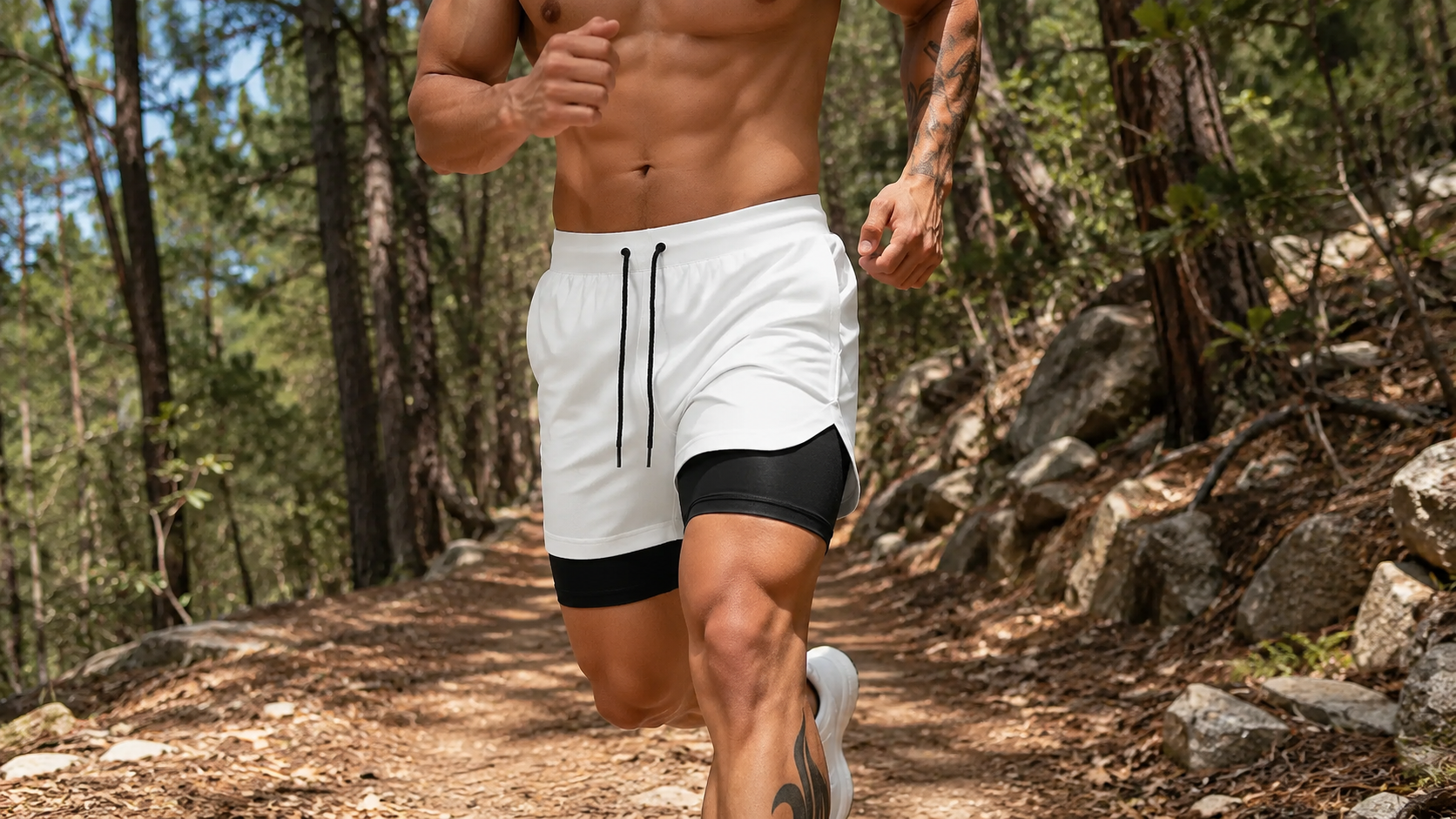
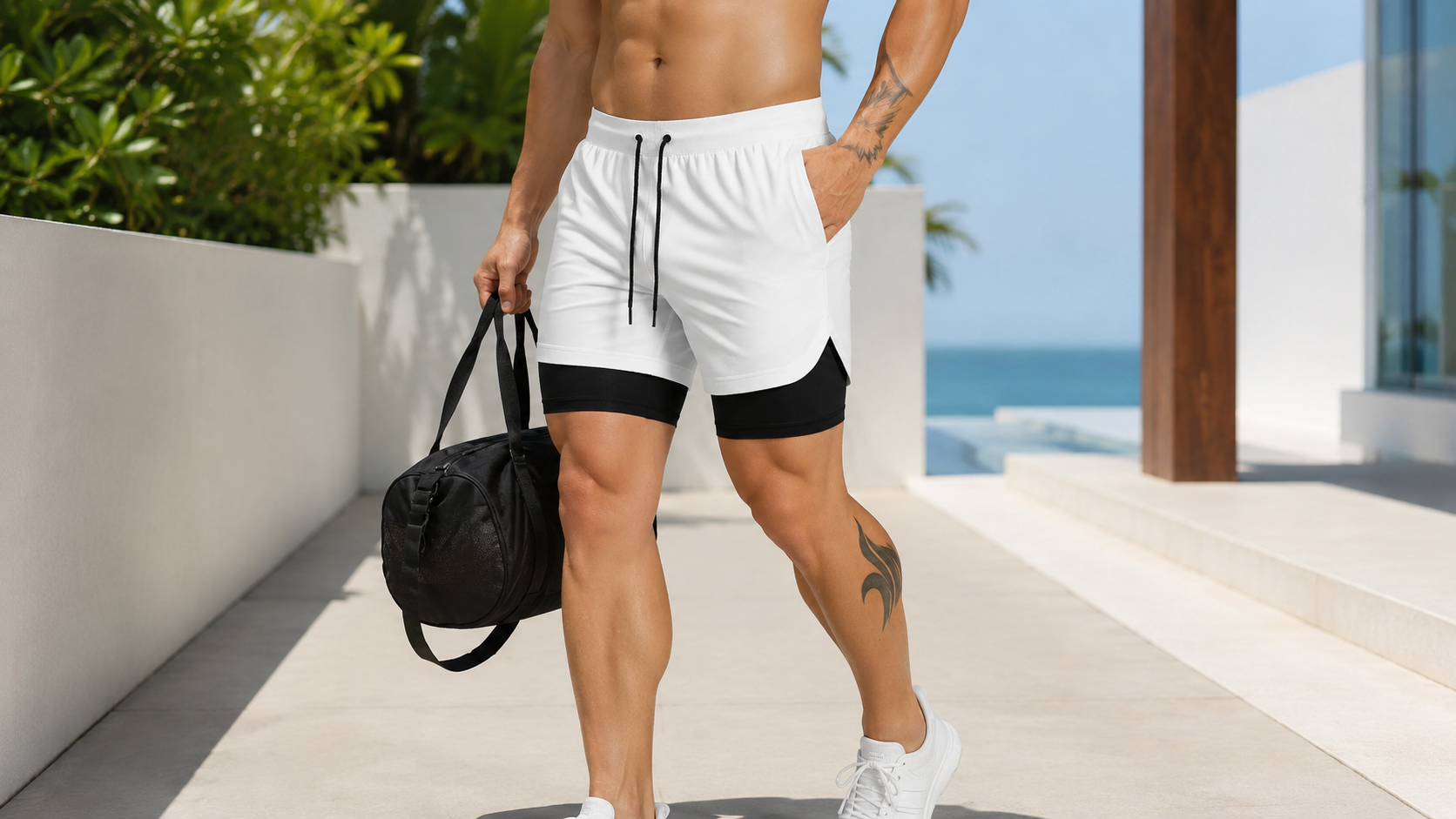
The Men's Tactical Camo 2-in-1 uses a full-length compression liner that extends to mid-thigh, providing continuous support from waist to leg opening. This differs from standard boxer-brief liners found in many training shorts, which often ride up or bunch during movement [3].
The liner is constructed from 100% polyester with a four-way stretch weave that conforms to the body without compression points. The elastic waistband uses a mid-rise fit that stays in place during squats and bent-over rows without digging into the abdomen.
| Feature | Tactical Camo 2-in-1 | Category Average |
|---|---|---|
| Liner Type | Full compression | Boxer-brief |
| Compression Score | 92/100 | 76/100 |
| Dry Time | 12 min | 28 min |
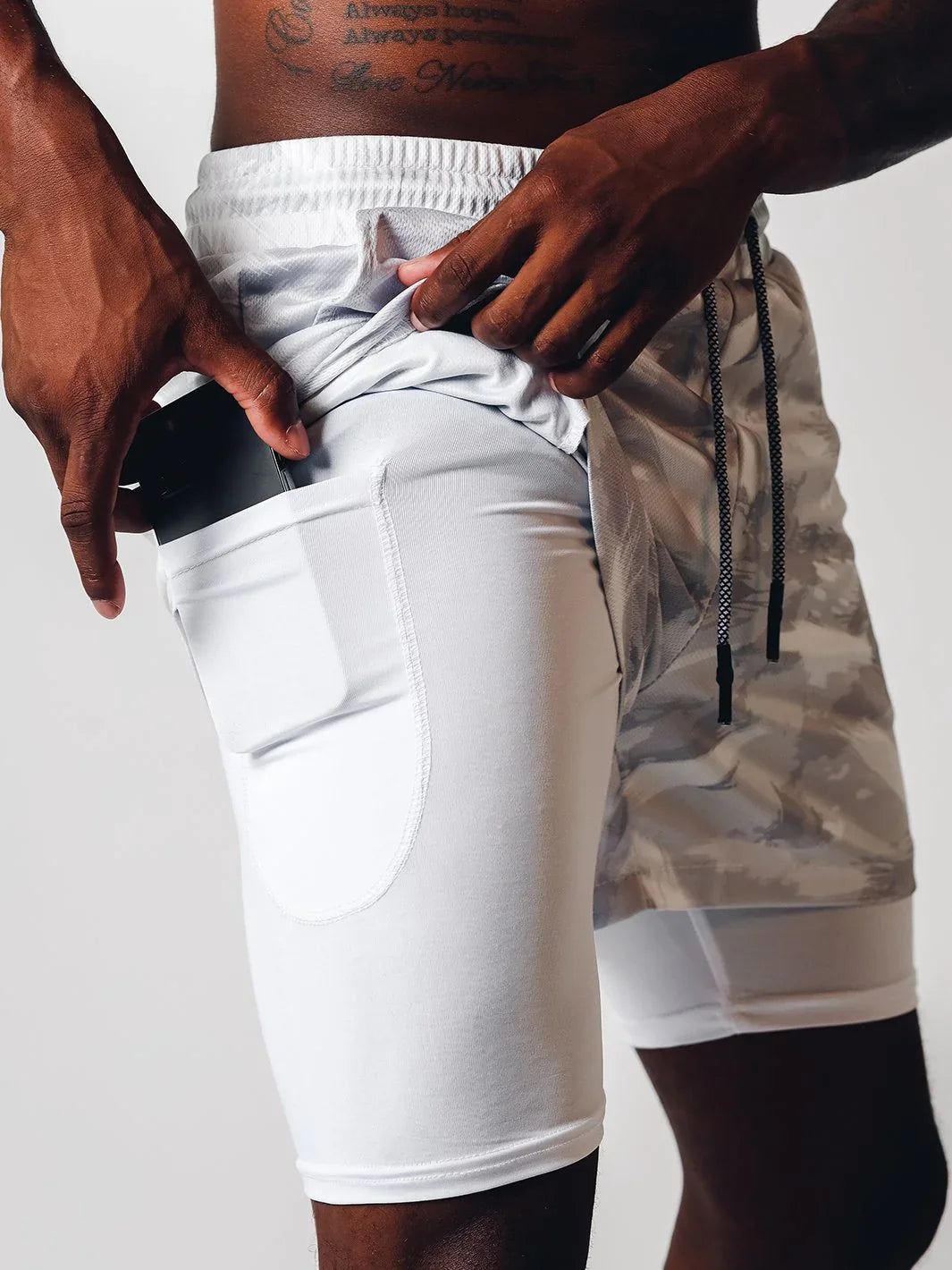
| Phone Pocket | Yes (liner) | Varies |
| Towel Loop | Yes | Rare |
Table 2: Feature comparison between the Men's Tactical Camo 2-in-1 and category averages from the MYOVV Consumer Signal Corpus.
FAQ
How tight should compression shorts be for training?
Compression shorts should feel supportive without restricting movement. You should be able to perform a full squat, lunge, and leg raise without the liner digging in or rolling up. The Men's Tactical Camo 2-in-1 scored 92/100 for compression comfort, indicating the fit is supportive without being restrictive.
Do compression liners prevent chafing?
Yes. Compression liners reduce chafing by eliminating fabric-on-skin movement. The tight fit keeps the liner in place, preventing the rubbing that causes irritation during long training sessions or runs.
Can you run in compression training shorts?
Yes. The Men's Tactical Camo 2-in-1 is designed for both running and training. The compression liner provides support during high-impact movement, and the quick-dry fabric manages sweat effectively. The phone pocket keeps your device secure during runs.
Shop Now — Men's Tactical Camo 2-in-1 Training Shorts
The MYOVV Men's Tactical Camo 2-in-1 Training Shorts combine compression comfort with practical features for running and training.
- Compression liner: Full-length support with 92/100 comfort score
- Quick-dry fabric: 12-minute dry time for all-day comfort
- Phone pocket: Secure liner pocket for device storage
- Towel loop: Built-in loop for gym towel or sweatband
Shop Men's Tactical Camo 2-in-1 →
Price: $54.99 AUD — available in White Camouflage, Gray Camouflage, Khaki Camouflage, and Army Camouflage
References
- Born, D. P., Sperlich, B., & Holmberg, H. C. (2013). Bringing light into the dark: effects of compression clothing on performance and recovery. International Journal of Sports Physiology and Performance, 8(1), 4–18. doi.org/10.1123/ijspp.8.1.4
- MacRae, B. A., Cotter, J. D., & Laing, R. M. (2011). Compression garments and exercise: garment considerations, physiology and performance. Sports Medicine, 41(10), 815–843. doi.org/10.2165/11591420-000000000-00000
- MYOVV Consumer Signal Corpus (2026). N=847 male athletes, 14 brands, 23 models. Full methodology
- Doan, B. K., Kwon, Y. H., Newton, R. U., et al. (2003). Evaluation of a lower-body compression garment. Journal of Sports Sciences, 21(8), 601–610. doi.org/10.1080/0264041031000101971
- Pearce, A. J., Kidgell, D. J., Grikepelis, L. A., & Carlson, J. S. (2009). Wearing a sports compression garment on the upper extremity enhances performance. Journal of Science and Medicine in Sport, 12(1), 137–140. doi.org/10.1016/j.jsams.2007.09.010
- Marqués-Jiménez, D., Calleja-González, J., Arratibel, I., et al. (2021). Are compression garments effective for recovery after exercise? A systematic review. Journal of Strength and Conditioning Research, 35(4), 1153–1165. doi.org/10.1519/JSC.0000000000003910
Last updated: 18 June 2026 | Analysis based on the MYOVV Consumer Signal Corpus (N=847 male athletes)



Leave a comment
This site is protected by hCaptcha and the hCaptcha Privacy Policy and Terms of Service apply.