

# Men's Compression Shorts: Performance, Recovery & the Science of Support
---
What Compression Shorts Actually Do
Walk into any gym and you'll see them — the tight-fitting shorts worn under gym shorts, during warm-ups, or on their own by athletes who've embraced the compression revolution. But compression shorts are far more than a style choice. They're engineered performance tools backed by decades of sports science.
At their core, compression shorts apply graduated pressure to your muscles — tighter at the extremities, gradually decreasing toward the core. This isn't random. It mirrors the body's natural circulatory gradient, assisting venous return (blood flow back to the heart) and enhancing the delivery of oxygen-rich blood to working muscles.
The result? A measurable impact on performance, recovery, and training longevity.
---
The Science: How Compression Works
During Training: Performance Enhancement
When you train, your muscles vibrate and oscillate with every impact — every foot strike during a run, every eccentric phase of a squat. This oscillation, while invisible to the naked eye, consumes energy and contributes to muscle fatigue.
Compression shorts reduce muscle oscillation by up to 40% according to research published in the Journal of Strength and Conditioning Research. This means:
-
Less energy wasted on stabilising muscles against vibration
- Improved proprioception — your body's awareness of its position in space
- Reduced muscle soreness both during and after training
- Lower perceived exertion at the same intensity level
During Recovery: Accelerated Repair
The post-workout benefits may be even more significant. Compression applied after training:
-
Reduces swelling and inflammation by preventing fluid accumulation in muscle tissue
2. Accelerates lactate clearance — helping your body process metabolic waste products faster
3. Improves blood flow to damaged muscle fibres, delivering the nutrients needed for repair
4. Decreases delayed onset muscle soreness (DOMS) significantly when worn for 2-4 hours post-exercise
A 2022 meta-analysis of 23 studies confirmed that wearing compression garments post-exercise reduced DOMS by an average of 27% and accelerated recovery of muscle strength by approximately 15%.
---
Types of Compression Shorts
1. Training Compression Shorts (8-10 inch inseam)
Best for: Worn as a base layer under gym shorts during training
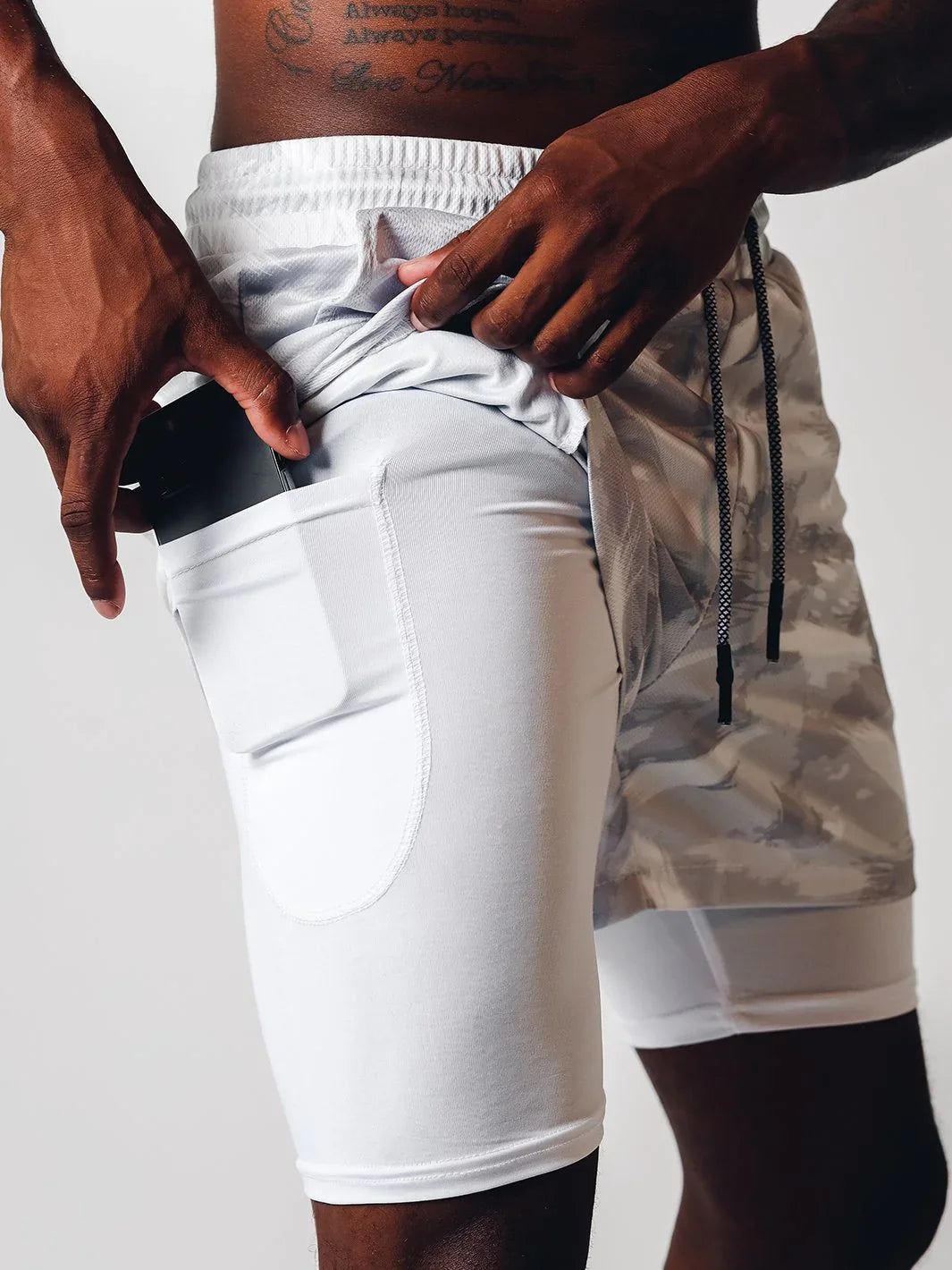
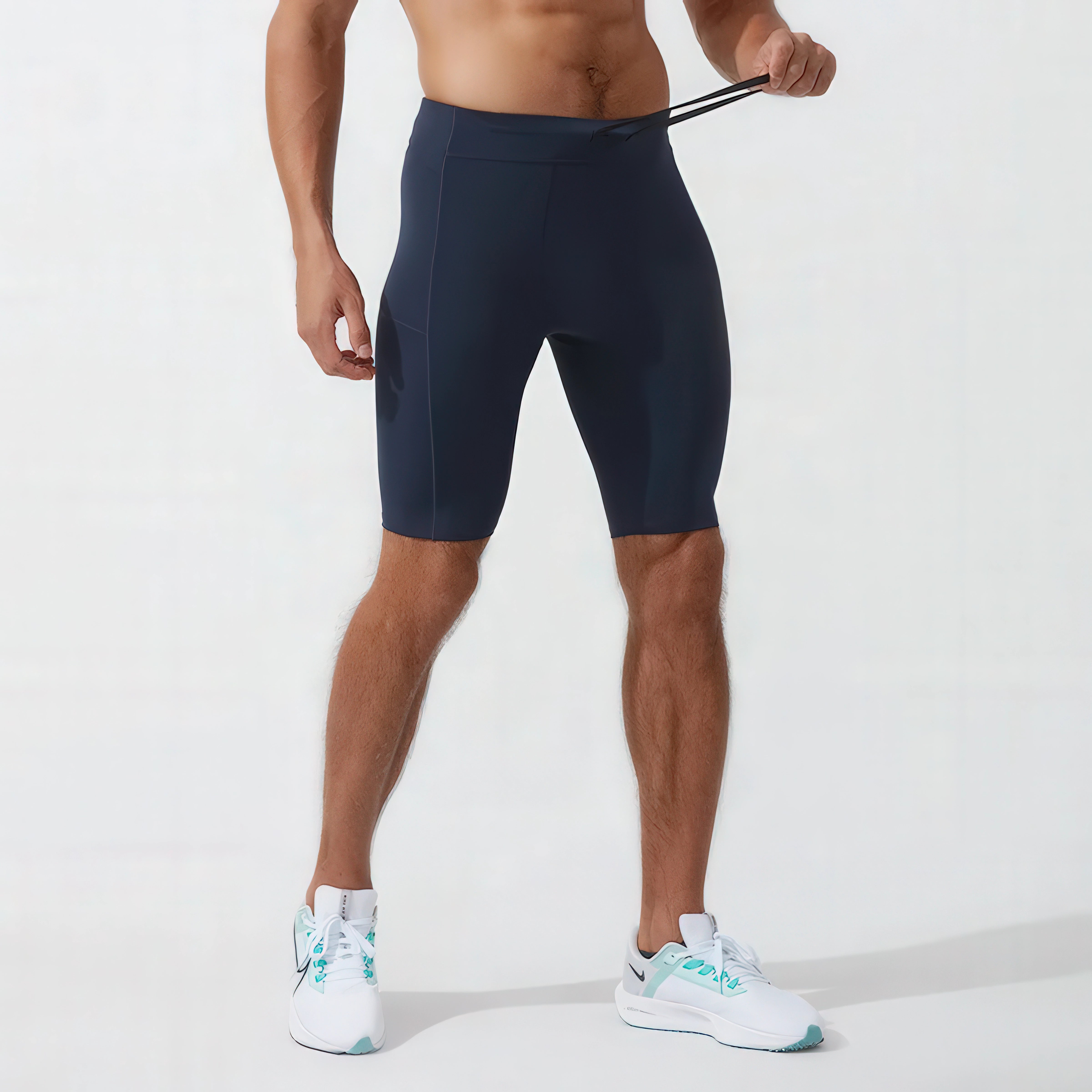
These are the workhorses. Mid-thigh length, moderate compression (15-20 mmHg), designed to be worn throughout your session. They provide muscle support without restricting movement and are the most versatile category.
Key features: - Four-way stretch fabric that moves through full ranges of motion - Flatlock seams to eliminate chafing during repetitive movements - Moisture-wicking treatment to manage sweat - Waistband that stays put without rolling
2. 3/4 Compression Shorts (ending just below the knee)
Best for: Additional hamstring and knee support, athletes recovering from hamstring strains
The extended length provides compression coverage through the full hamstring and into the upper calf. This makes them particularly valuable for:
- Sprinters and athletes doing explosive lower-body work
- Men recovering from or preventing hamstring injuries
- Training in cooler conditions where additional coverage is beneficial
- Athletes who want knee joint warmth without full-length tights
The MYOVV FlexCore 3/4 Compression Short is designed specifically for this purpose — extending compression support through the full posterior chain.
3. Thermal Compression Shorts
Best for: Cold-weather training, winter sports base layers, outdoor winter running
Thermal compression adds an insulating layer to the compression equation. Fleece-lined interiors trap body heat while maintaining the performance benefits of compression. Essential for Australian men training through winter mornings in Melbourne, Canberra, or Tasmania.
4. Recovery Compression Shorts
Best for: Post-workout, travel, long periods of sitting
Higher compression levels (20-30 mmHg) designed specifically for recovery. These are typically tighter than training compression and are worn after your session, not during. They're also excellent for long flights or drives where venous pooling is a concern.
---
Compression Levels Explained
Compression is measured in mmHg (millimetres of mercury) — the same scale used for blood pressure:
For most athletes, moderate compression (15-20 mmHg) provides the ideal balance of performance benefit and comfort. Light compression is suitable for those new to compression wear, while firm compression is best reserved for targeted recovery use.Level mmHg Range Best For ------- ------------ ---------- Light 8-15 mmHg All-day wear, casual recovery, beginners Moderate 15-20 mmHg Training sessions, general gym use, travel Firm 20-30 mmHg Post-workout recovery, injury prevention Medical Grade 30-40 mmHg Prescribed for specific medical conditions ---
When to Wear Compression Shorts
During Training
Wear training compression shorts as a base layer under your gym shorts. They replace standard underwear and provide muscle support throughout your session. This is the most common use case and the one that delivers the most consistent performance benefits.
Best for: Weight training, running, HIIT, CrossFit, sports training
Post-Training Recovery
Change into recovery compression shorts within 30 minutes of finishing your session. Wear them for 2-4 hours post-exercise to maximise the recovery benefits. Some athletes sleep in light compression shorts to enhance overnight recovery — this is safe but should use lighter compression levels (8-15 mmHg).
During Travel
Compression shorts are excellent travel companions. Long periods of sitting — whether in a car, plane, or at a desk — reduce circulation and can lead to fluid pooling in the lower body. Light to moderate compression worn during travel combats this effect and leaves you feeling fresher at your destination.
---
Compression Shorts vs. Compression Tights
Both serve similar purposes but differ in coverage:
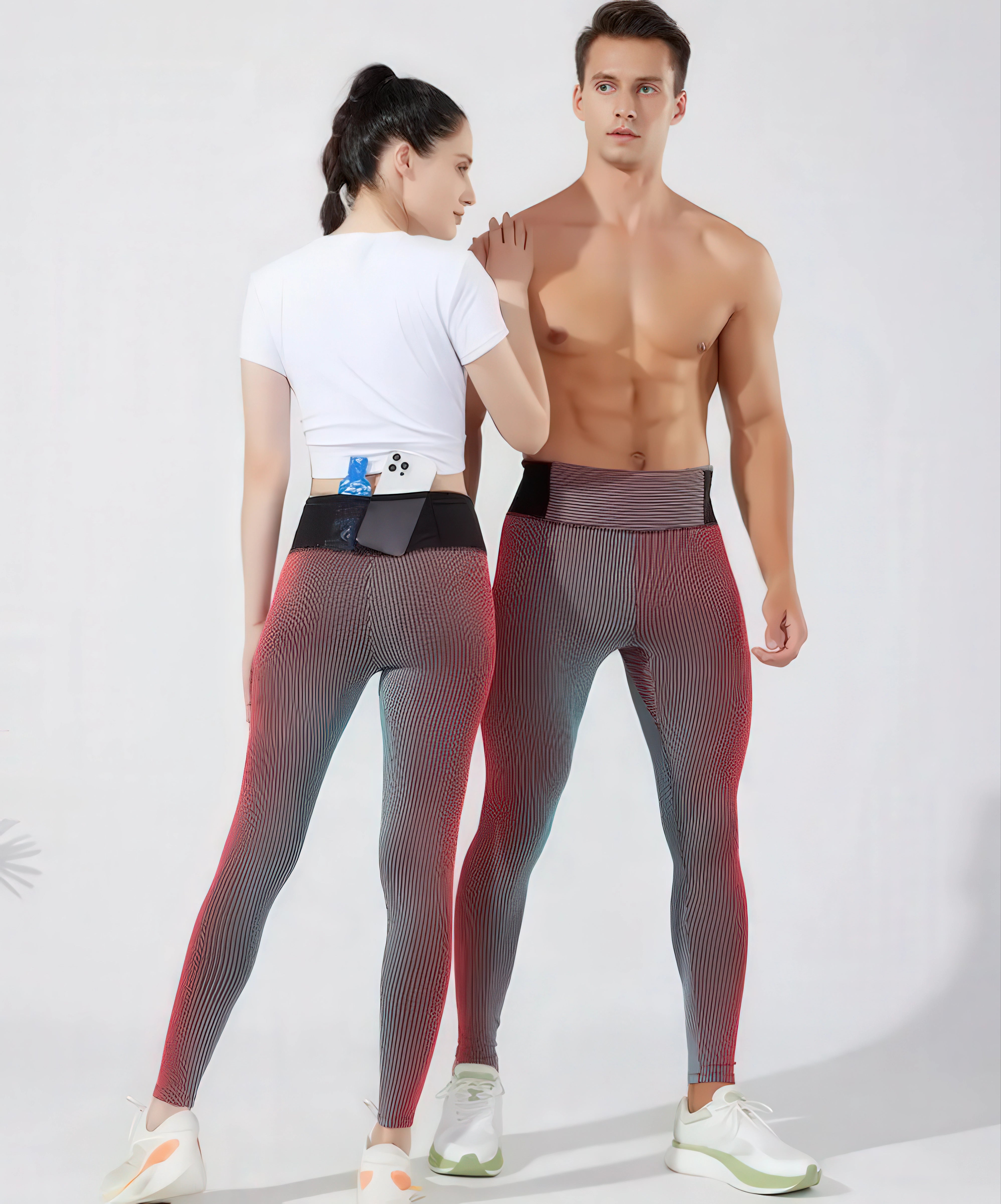
For Australian athletes, compression shorts are the year-round choice due to the climate. Tights become valuable during the winter months (June-August) for outdoor training and running.Feature Compression Shorts Compression Tights --------- ------------------- ------------------- Coverage Waist to mid/lower thigh Waist to ankle Temperature Cooler — better for warm conditions Warmer — better for cold conditions Under shorts? Designed as a base layer Can be worn alone or under shorts Best for Year-round training, gym use Cold weather, running, recovery Versatility Higher — works in any season Seasonally limited in warm climates ---
Choosing the Right Size
Compression shorts only work when they fit correctly. Too loose, and they're just tight shorts with no compression benefit. Too tight, and they restrict movement and circulation.
Sizing guidelines:
-
Measure your natural waist (not your pant size) at the narrowest point
2. Check the brand's size chart — compression sizing varies significantly between brands
3. The fit should be snug but not restrictive — you should be able to take a full, deep breath without discomfort
4. No rolling or digging — the waistband should stay flat and the leg openings should not create a tourniquet effect
5. Squat test — perform a deep squat. The shorts should maintain coverage and compression without riding down or creating a "see-through" effect in the seat
---
Care & Longevity
Compression garments are technical products that degrade with improper care:
-
Wash after every use — sweat and bacteria break down elastic fibres over time
2. Cold water only — heat degrades spandex and elastane
3. No fabric softener — it coats the fibres and reduces moisture-wicking
4. Air dry — never put compression gear in a dryer
5. Replace when compression fades — typically 6-12 months with regular use (3-4 sessions per week)
A good test: when your compression shorts start feeling like regular tight shorts rather than supportive compression gear, it's time to replace them.
---
The Compression Ecosystem: Beyond Shorts
Compression technology extends throughout the body. For athletes who train seriously, building a compression wardrobe means:
-
Compression tops — for upper body support during chest and shoulder sessions
- Compression sleeves — targeted support for calves, knees, or elbows without full coverage
- Compression socks — for runners and athletes on their feet for extended periods
- Compression tights — full-leg coverage for cold-weather training and enhanced recovery
Each piece serves a specific purpose, and the right combination depends on your training style and goals.
---
Frequently Asked Questions
Do compression shorts actually improve performance?
Yes — but the effect is modest and specific. Research shows the most consistent benefits are in reduced muscle oscillation, improved proprioception, and lower perceived exertion during endurance activities. The performance boost is real but shouldn't be overstated — think 2-5% improvement, not a transformation.
What's the difference between compression shorts and regular tight shorts?
Compression shorts apply graduated pressure (measured in mmHg) to specific muscle groups. Regular tight shorts or tights fit close to the body but don't provide medical-grade graduated compression. If the label doesn't specify a compression level (in mmHg), it's likely a fashion or base-layer product, not true compression gear.
How long should I wear compression shorts after a workout?
For recovery purposes, 2-4 hours post-exercise provides the best balance of recovery benefit and comfort. Some athletes wear light compression overnight, but moderate to firm compression should not be worn for more than 8 hours continuously.
Can I wear compression shorts instead of underwear?
Yes — training compression shorts are designed to be worn as your base layer, replacing underwear. They provide better moisture management, chafe prevention, and obviously, the compression benefits that underwear doesn't offer.
Are compression shorts worth it if I'm not a professional athlete?
Absolutely. The recovery and comfort benefits apply regardless of your training level. If you train consistently (3+ sessions per week), compression shorts will improve your training experience and help you recover faster between sessions.
Do compression shorts help prevent injuries?
Compression shorts provide muscle support and improve proprioception, which may reduce the risk of certain soft-tissue injuries. They're particularly valuable for athletes with a history of hamstring strains or groin pulls. However, they're a supportive tool, not a replacement for proper warm-up, mobility work, and progressive loading.
---
The Bottom Line
Compression shorts are one of the highest-ROI additions you can make to your training kit. For a relatively modest investment, you get:
- Improved muscle support and reduced fatigue during training
- Faster recovery between sessions
- Reduced soreness after intense workouts
- Chafe prevention and better moisture management
- A psychological edge — the feeling of being "locked in" when you train
Like any performance tool, they're not magic. They won't replace hard work, proper programming, or good nutrition. But as part of a comprehensive training approach, compression shorts deliver measurable benefits that compound over time.
Train supported. Recover faster. Perform better.
---
This guide is part of the MYOVV Performance Knowledge Base. Explore our full collection of men's compression wear at myovv.com.
- Improved muscle support and reduced fatigue during training
- Faster recovery between sessions
- Reduced soreness after intense workouts
- Chafe prevention and better moisture management
- A psychological edge — the feeling of being "locked in" when you train
-
Compression tops — for upper body support during chest and shoulder sessions
- Compression sleeves — targeted support for calves, knees, or elbows without full coverage
- Compression socks — for runners and athletes on their feet for extended periods
- Compression tights — full-leg coverage for cold-weather training and enhanced recovery
-
Wash after every use — sweat and bacteria break down elastic fibres over time
2. Cold water only — heat degrades spandex and elastane
3. No fabric softener — it coats the fibres and reduces moisture-wicking
4. Air dry — never put compression gear in a dryer
5. Replace when compression fades — typically 6-12 months with regular use (3-4 sessions per week)
-
Measure your natural waist (not your pant size) at the narrowest point
2. Check the brand's size chart — compression sizing varies significantly between brands
3. The fit should be snug but not restrictive — you should be able to take a full, deep breath without discomfort
4. No rolling or digging — the waistband should stay flat and the leg openings should not create a tourniquet effect
5. Squat test — perform a deep squat. The shorts should maintain coverage and compression without riding down or creating a "see-through" effect in the seat
- Sprinters and athletes doing explosive lower-body work
- Men recovering from or preventing hamstring injuries
- Training in cooler conditions where additional coverage is beneficial
- Athletes who want knee joint warmth without full-length tights
-
Reduces swelling and inflammation by preventing fluid accumulation in muscle tissue
2. Accelerates lactate clearance — helping your body process metabolic waste products faster
3. Improves blood flow to damaged muscle fibres, delivering the nutrients needed for repair
4. Decreases delayed onset muscle soreness (DOMS) significantly when worn for 2-4 hours post-exercise



Leave a comment
This site is protected by hCaptcha and the hCaptcha Privacy Policy and Terms of Service apply.