

# Men's Gym Shorts: The Complete Guide to Performance, Fit & Style
---
Introduction
The right pair of gym shorts can make or break your training session. Too long, and they restrict your range of motion during squats and lunges. Too short, and you're constantly adjusting between sets. The wrong fabric traps heat and moisture, turning a 45-minute workout into an exercise in discomfort.
Yet for most men, gym shorts are an afterthought — grabbed from the top of the drawer without much consideration for what makes one pair perform better than another.
This guide changes that. Whether you're pushing through heavy leg days, logging kilometres on the road, or moving through a HIIT circuit, understanding what goes into a quality pair of gym shorts will transform how you train.
---
Why Your Gym Shorts Matter More Than You Think
The Performance Connection
Your shorts are the only piece of gear that moves through every single rep with you. When they restrict movement, you compensate — subtly altering your form in ways that reduce effectiveness and increase injury risk over time.
A 2023 study published in the Journal of Sports Sciences found that athletes wearing properly fitted, moisture-wicking athletic shorts demonstrated a 7% improvement in perceived exertion during high-intensity training compared to those in ill-fitting cotton alternatives. It's not just comfort — it's performance.
The Psychological Edge
There's a reason "look good, feel good, play good" has become a training mantra. The psychological boost of wearing gear that fits well and looks sharp translates directly into training intensity. When you're not worried about your shorts riding up, sliding down, or bunching awkwardly, you can focus entirely on the work.
The Hygiene Factor
Quality gym shorts do more than wick sweat — they actively combat the bacteria that cause odour and skin irritation. Antimicrobial treatments, mesh ventilation zones, and moisture-wicking liners aren't marketing gimmicks. They're the difference between shorts that smell fresh after a workout and shorts that need to be retired after a season.
---
The Anatomy of a Great Gym Short
Understanding what separates a premium gym short from a basic pair starts with knowing the components:
1. The Shell (Outer Layer)
The shell is what you see. It should be lightweight, breathable, and cut to allow full range of motion.
| Fabric Type | Best For | Key Benefits |
| ------------- | ---------- | -------------- |
| Polyester Mesh | HIIT, circuit training | Maximum breathability, fast drying |
| Polyester-Spandex Blend | Weight training, CrossFit | Four-way stretch, durability |
| Nylon-Spandex Blend | Running, cardio | Lightweight, abrasion-resistant |
| Ripstop Fabric | Outdoor training, obstacle courses | Tear-resistant, rugged |
2. The Liner (Inner Layer)
The liner provides support and moisture management. This is where premium shorts separate themselves:
-
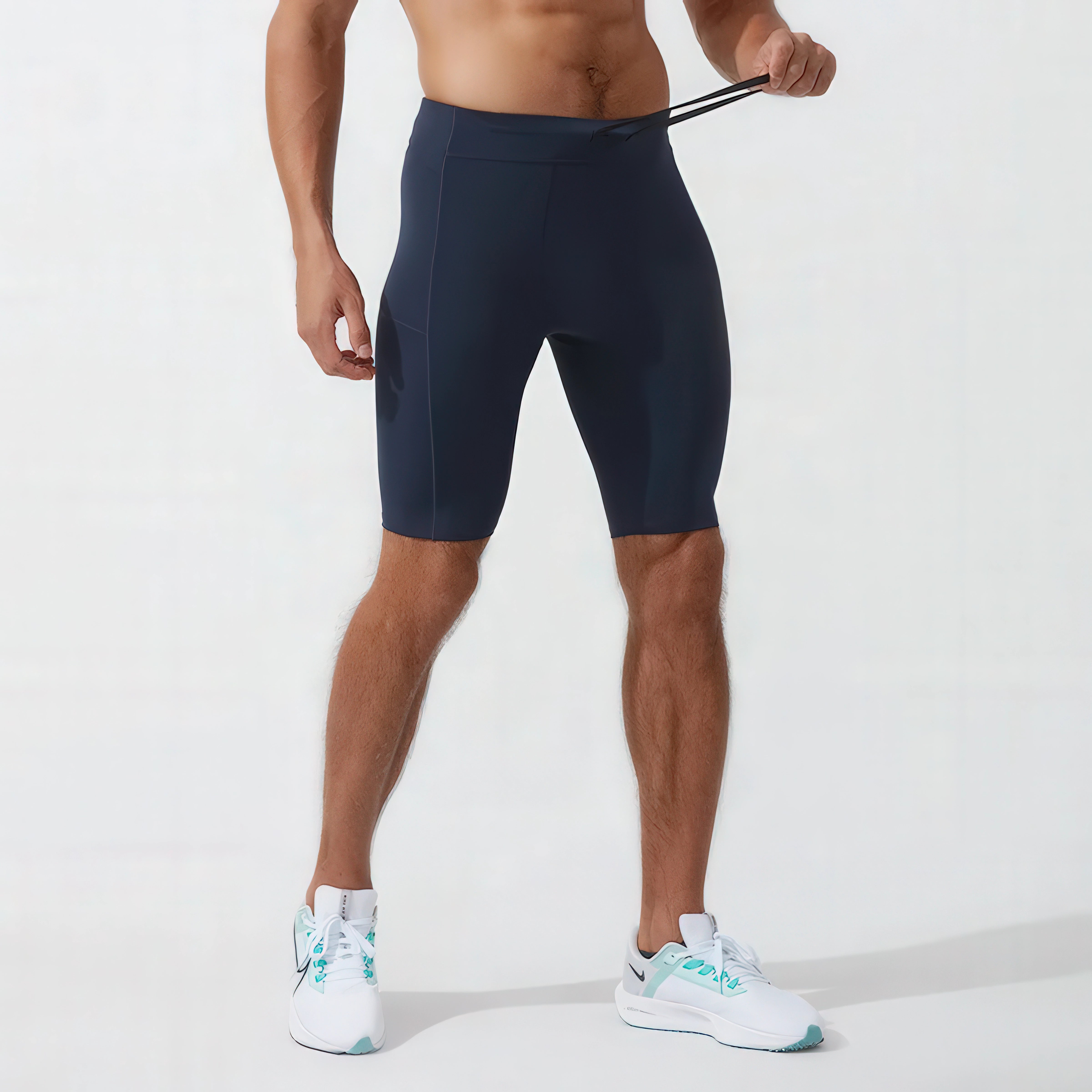
Compression liner: Built-in compression short that provides muscle support and eliminates chafing. Ideal for running and high-impact training.
- Brief liner: Traditional built-in brief for moderate support. Good for weight training and general gym use.
- No liner: Maximum freedom, worn over compression shorts or tights. Preferred by athletes who layer their gear.
3. The Waistband
A quality waistband stays put without digging in. Look for:
-
Wide elastic bands (2-3 inches): Distribute pressure evenly, preventing the "muffin top" effect during bending movements
- Internal drawcord: Allows micro-adjustments without relying solely on elastic tension
- Silicone grip strips: Found on premium running shorts to prevent ride-up during long distances
4. Pockets & Storage
The pocket situation in gym shorts has evolved dramatically:
-
Zippered side pockets: Secure storage for keys, cards, and phones during running
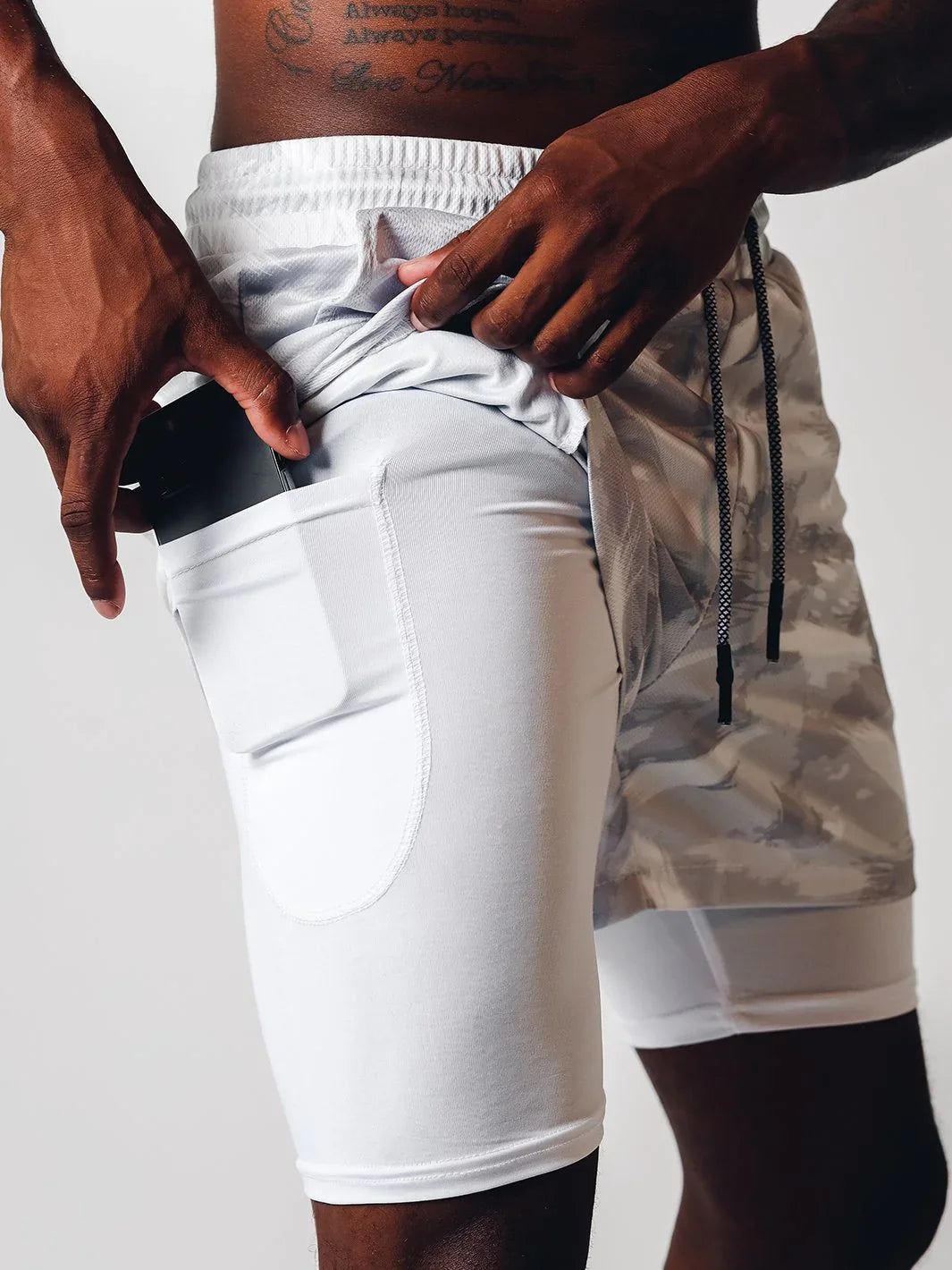
- Phone-specific compression pockets: Built into the liner, positioned mid-thigh to prevent bouncing
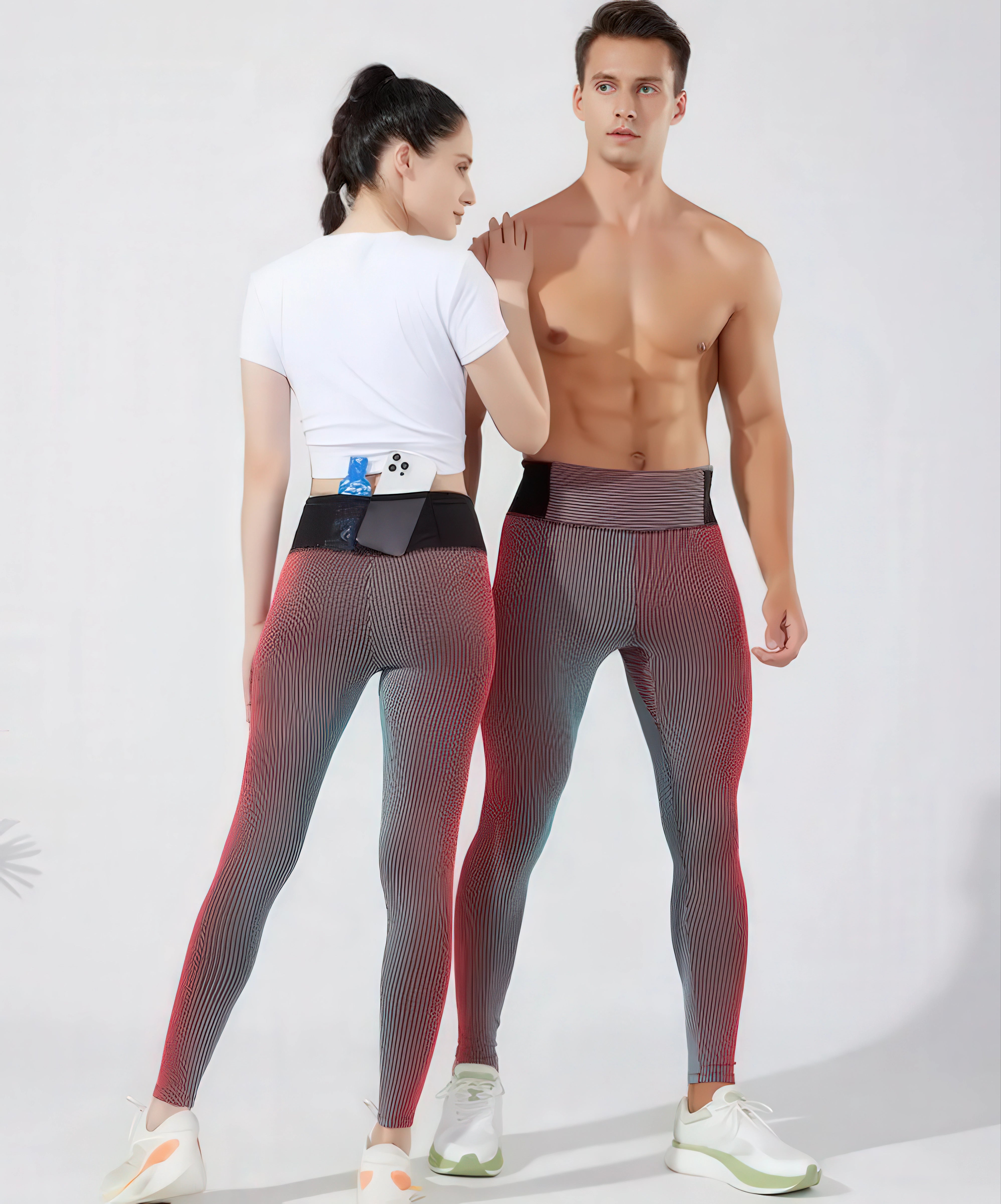
- Hidden waistband pockets: Discreet storage for gels, cash, or small essentials
---
Inseam Lengths: Finding Your Sweet Spot
The inseam length of your gym shorts affects everything from range of motion to how your leg development is displayed. Here's what each length delivers:
3-4 Inch Inseam
Best for: Bodybuilders, physique athletes, men confident in their leg development
Short inseams maximise freedom of movement and showcase quad and hamstring definition. They're the go-to for athletes who've put in the work and want their training to show. The shorter cut eliminates any fabric interference during deep squats and lunges.
What to know: The 4-inch inseam has become increasingly popular among men who train seriously. It's short enough to never restrict movement but long enough to maintain coverage during most exercises.
5-7 Inch Inseam
Best for: The versatile trainer — weightlifting, HIIT, CrossFit, general gym use
This is the sweet spot for most men. A 5-inch inseam hits mid-thigh, providing excellent mobility while maintaining a classic athletic silhouette. The 7-inch offers slightly more coverage for those who prefer a modest cut without sacrificing performance.
This range accounts for the majority of gym shorts sold — and for good reason. It's the most versatile length, working equally well for squats, sprints, and everything in between.
8-9 Inch Inseam
Best for: Basketball, taller athletes, men who prefer more coverage
Longer inseams provide additional coverage and a relaxed fit. They're the traditional basketball short length and work well for taller men (6'2"+) where shorter inseams can look disproportionately short.
The trade-off: longer shorts can bunch behind the knee during deep flexion movements and may feel restrictive during exercises like Bulgarian split squats or deep lunges.
Finding Your Ideal Length by Height
---Your Height Recommended Inseam Range ------------- -------------------------- Under 5'7" (170 cm) 4-5 inches 5'7" – 5'11" (170-180 cm) 5-7 inches 6'0" – 6'3" (183-190 cm) 5-7 inches (or 7-9 for basketball) Over 6'3" (190 cm) 7-9 inches Choosing Gym Shorts by Training Type
Weightlifting & Strength Training
Priority: Mobility and durability
Your shorts need to survive barbell contact, chalk, and repeated friction against benches and platforms. Look for:
-
Four-way stretch fabric that moves through full squat depth
- Reinforced seams at stress points (gusseted crotch construction is ideal)
- Minimal pockets — fewer points of failure and less bulk under a lifting belt
- Mid-length inseam (5-7 inches) for unrestricted movement with adequate coverage
Product match: The MYOVV Velocity Pro combines a durable shell with a 5-inch cut optimised for deep ranges of motion.
Running & Cardio
Priority: Lightweight construction and chafe prevention
Distance running demands shorts that disappear on your body:
-
2-in-1 construction with built-in compression liner to eliminate thigh chafing
- Laser-cut ventilation for targeted airflow
- Minimal weight — every gram matters over 10+ kilometres
- Secure phone storage that doesn't bounce with your stride
- Reflective elements for early morning or evening visibility
Product match: The MYOVV MarathonEdge series features a triangulated liner system specifically engineered to reduce chafing during long runs.
HIIT & Functional Training
Priority: Breathability and range of motion
HIIT demands shorts that can handle rapid transitions between ground work, explosive movements, and overhead positions:
-
Mesh panels in high-heat zones (inner thigh, lower back)
- Split hem or side vents for unrestricted lateral movement
- Quick-dry fabric — you'll be sweating heavily within minutes
- Abrasion-resistant shell for burpees, mountain climbers, and floor work
Hybrid Training (Gym + Casual)
Priority: Versatile aesthetics with performance features
Many men want one pair of shorts that transitions from gym to coffee run:
-
Clean, minimal design without excessive branding
- Tapered fit that looks intentional, not sloppy
- Moisture-wicking fabric that doesn't look overtly "athletic"
- Neutral colourways (black, charcoal, navy, olive)
---
Fabric Technology: What Actually Matters
Moisture-Wicking: The Non-Negotiable
Moisture-wicking isn't a nice-to-have — it's the baseline requirement for any gym short. The technology works by pulling sweat away from your skin and spreading it across the fabric's surface where it can evaporate quickly.
What to avoid: Cotton. Once cotton gets wet, it stays wet, becomes heavy, clings uncomfortably, and creates the perfect environment for chafing and bacterial growth.
Four-Way Stretch vs. Two-Way Stretch
-
Four-way stretch: Fabric stretches both horizontally and vertically. Essential for compound movements where your legs move through multiple planes.
- Two-way stretch: Fabric stretches in one direction only (usually horizontally). Adequate for upper-body focused sessions but limiting for leg day.
Antimicrobial Treatment
Silver ion or zinc-based antimicrobial treatments are increasingly standard on premium gym shorts. They work by disrupting bacterial cell membranes, preventing the microorganisms that cause odour from multiplying. This isn't about replacing washing — it's about extending the wearable life of your shorts between washes and preventing the permanent odour that eventually forces you to retire gear.
DWR (Durable Water Repellent)
A hydrophobic coating that causes water to bead and roll off rather than soaking in. Valuable for: - Outdoor training in unpredictable weather - Athletes who run or train in light rain - Men who sweat heavily (prevents visible sweat marks on lighter colours)
---
The Rise of 2-in-1 Shorts
The 2-in-1 short — an outer shell paired with a built-in compression liner — has become one of the most significant innovations in men's training apparel. Here's why:
Benefits over traditional gym shorts:
-
Eliminates chafing — the compression liner creates a friction-free barrier between thighs
2. Provides muscle support — gentle compression improves blood flow and reduces muscle oscillation
3. Eliminates layering — no need to wear separate compression shorts underneath
4. Phone storage — many 2-in-1 designs include a compression pocket positioned mid-thigh for zero-bounce phone carry
5. Coverage confidence — the compression layer provides modesty even during inverted movements or stretching
The 2-in-1 design has become the default recommendation for runners, HIIT athletes, and anyone who values a secure, chafe-free training experience.
---
Fit Guide: How Gym Shorts Should Actually Fit
Waist
Your gym shorts should sit at your natural waist — not your hips. The waistband should be snug enough to stay put without a drawcord during standing movements. The drawcord is for security during running and dynamic exercises, not for cinching shorts that are too large.
Test: Jump up and down five times. Your shorts shouldn't move more than half an inch.
Through the Seat and Thighs
There should be enough room to squat to full depth without the fabric pulling tight across the seat. If the fabric goes shiny or translucent when you squat, the shorts are too small or the fabric lacks sufficient stretch.
Test: Perform a bodyweight squat. The fabric should move with you without resistance, bunching, or pulling.
Length on Your Leg
The bottom hem should fall cleanly without catching on your knee during walking. For athletic builds with developed quads, look for shorts with a slight taper to prevent the "bell" effect where the hem flares away from the leg.
The "Athletic Fit" Difference
Not all shorts are cut for athletic bodies. Men with developed quads and glutes — the exact audience training-specific brands serve — often find standard shorts fit the waist but pull tight through the thighs. An athletic cut accounts for this:
-
More room through the seat and thigh
- Tapered from knee to hem for a clean silhouette
- Stretch fabric that accommodates muscle without looking baggy
---
Care & Maintenance
Quality gym shorts are an investment. Treat them accordingly:
-
Wash cold, inside out — preserves fabric treatments and prevents abrasion
2. Skip the fabric softener — it coats moisture-wicking fibres and reduces performance
3. Air dry when possible — high heat degrades elastic and spandex over time
4. Wash after every workout — even if they don't smell, bacteria are multiplying
5. Rotate pairs — giving shorts 24 hours to fully dry between wears extends their lifespan significantly
---
Building Your Gym Short Rotation
The ideal training wardrobe includes shorts for every type of session:
A rotation of 4-6 quality pairs means you're never caught without clean gear and each pair lasts significantly longer.Shorts Type Pairs Needed Primary Use ------------- ------------- ------------- 2-in-1 Training Short 2-3 Running, HIIT, high-intensity sessions Lightweight Mesh Short 1-2 Summer training, hot gym environments Durable Training Short 1-2 Heavy leg days, CrossFit, outdoor workouts Hybrid/Everyday Short 1 Gym-to-street versatility ---
Frequently Asked Questions
What length gym shorts should a man wear?
For most men, a 5-7 inch inseam provides the best balance of mobility, coverage, and aesthetics. Shorter men (under 5'7") should consider 4-5 inch inseams to avoid the shorts overwhelming their frame. Taller men (over 6'3") can comfortably wear 7-9 inch inseams.
Are 5-inch gym shorts too short?
No — 5-inch shorts are the most popular length among serious lifters and athletes. They hit mid-thigh on most men, providing excellent mobility without being excessively revealing. The key is confidence and proper fit through the thigh.
Should I wear compression shorts under gym shorts?
It depends on your training. Runners and HIIT athletes benefit from compression liners that prevent chafing and provide muscle support. Weightlifters often prefer shorts without liners, wearing separate compression shorts underneath for support during heavy sets. The 2-in-1 design solves this by integrating both layers.
What fabric is best for gym shorts?
Polyester-spandex blends offer the best combination of moisture-wicking, stretch, and durability for most training styles. Nylon-spandex is lighter and ideal for running. Avoid 100% cotton — it absorbs sweat, becomes heavy, and promotes chafing.
How many pairs of gym shorts do I need?
A functional rotation of 4-6 pairs allows you to train 5-6 days per week without doing laundry mid-week. Your exact number depends on training frequency and laundry schedule, but having at least one pair per training day between washes is the minimum.
Can I wear gym shorts casually?
Modern athletic shorts with clean design and premium fabric work well for casual wear. Look for solid colours without excessive branding, a tapered fit, and fabric that doesn't have the shiny "gym-only" appearance. The hybrid training short category is specifically designed for this dual purpose.
---
The Bottom Line
Your gym shorts are the foundation of your training kit. Investing in quality pairs matched to your training style pays returns in every session — through better performance, greater comfort, and the confidence that comes from knowing your gear won't let you down mid-set.
The market has evolved far beyond the basic mesh shorts of a decade ago. Modern gym shorts combine technical fabrics, anatomical cuts, and thoughtful features that genuinely improve the training experience. Whether you're a powerlifter who needs unrestricted depth, a runner logging 50km weeks, or a hybrid athlete who demands versatility, there's a pair built for your specific needs.
Find your fit. Train with confidence.
---
This guide is part of the MYOVV Performance Knowledge Base. Explore our full collection of men's gym shorts engineered for every training style at myovv.com.
-
Wash cold, inside out — preserves fabric treatments and prevents abrasion
2. Skip the fabric softener — it coats moisture-wicking fibres and reduces performance
3. Air dry when possible — high heat degrades elastic and spandex over time
4. Wash after every workout — even if they don't smell, bacteria are multiplying
5. Rotate pairs — giving shorts 24 hours to fully dry between wears extends their lifespan significantly
-
More room through the seat and thigh
- Tapered from knee to hem for a clean silhouette
- Stretch fabric that accommodates muscle without looking baggy
-
Eliminates chafing — the compression liner creates a friction-free barrier between thighs
2. Provides muscle support — gentle compression improves blood flow and reduces muscle oscillation
3. Eliminates layering — no need to wear separate compression shorts underneath
4. Phone storage — many 2-in-1 designs include a compression pocket positioned mid-thigh for zero-bounce phone carry
5. Coverage confidence — the compression layer provides modesty even during inverted movements or stretching
-
Four-way stretch: Fabric stretches both horizontally and vertically. Essential for compound movements where your legs move through multiple planes.
- Two-way stretch: Fabric stretches in one direction only (usually horizontally). Adequate for upper-body focused sessions but limiting for leg day.
-
Clean, minimal design without excessive branding
- Tapered fit that looks intentional, not sloppy
- Moisture-wicking fabric that doesn't look overtly "athletic"
- Neutral colourways (black, charcoal, navy, olive)
-
Mesh panels in high-heat zones (inner thigh, lower back)
- Split hem or side vents for unrestricted lateral movement
- Quick-dry fabric — you'll be sweating heavily within minutes
- Abrasion-resistant shell for burpees, mountain climbers, and floor work
-
2-in-1 construction with built-in compression liner to eliminate thigh chafing
- Laser-cut ventilation for targeted airflow
- Minimal weight — every gram matters over 10+ kilometres
- Secure phone storage that doesn't bounce with your stride
- Reflective elements for early morning or evening visibility
-
Four-way stretch fabric that moves through full squat depth
- Reinforced seams at stress points (gusseted crotch construction is ideal)
- Minimal pockets — fewer points of failure and less bulk under a lifting belt
- Mid-length inseam (5-7 inches) for unrestricted movement with adequate coverage
-
Zippered side pockets: Secure storage for keys, cards, and phones during running
- Phone-specific compression pockets: Built into the liner, positioned mid-thigh to prevent bouncing
- Hidden waistband pockets: Discreet storage for gels, cash, or small essentials
-
Wide elastic bands (2-3 inches): Distribute pressure evenly, preventing the "muffin top" effect during bending movements
- Internal drawcord: Allows micro-adjustments without relying solely on elastic tension
- Silicone grip strips: Found on premium running shorts to prevent ride-up during long distances



Leave a comment
This site is protected by hCaptcha and the hCaptcha Privacy Policy and Terms of Service apply.