


The verdict
If you train mostly in the gym, lift heavy or play cutting sports, start with a compression short like the PowerMove. If your week is steady cardio and everyday wear, a loose short or a 2-in-1 like the CoreTech covers more ground with one pair. Choose compression shorts when you want muscle support, sweat control and a locked-in feel for lifting, HIIT and long sessions. Pick loose gym shorts when you want airflow and freedom for casual cardio or rest days. A 2-in-1 short covers both jobs.
- Compression shorts hug the thigh, support the hip flexors and adductors, and wick sweat during high-output work.
- Loose gym shorts breathe better, feel cooler in heat and suit rest-day cardio, errands and post-training movement.
- A 2-in-1 short with a built-in liner gives you compression under breathability, so one pair covers most sessions.
- Match the short to the work: heavy lifts, sprints and cutting sports lean tight; steady jogging and hot rooms lean loose.
- Replace shorts when the elastic loses snap, the waistband rolls or the fabric stays damp after a session.
Which should you choose?
| Product | Best for | Key features | Colours |
|---|---|---|---|
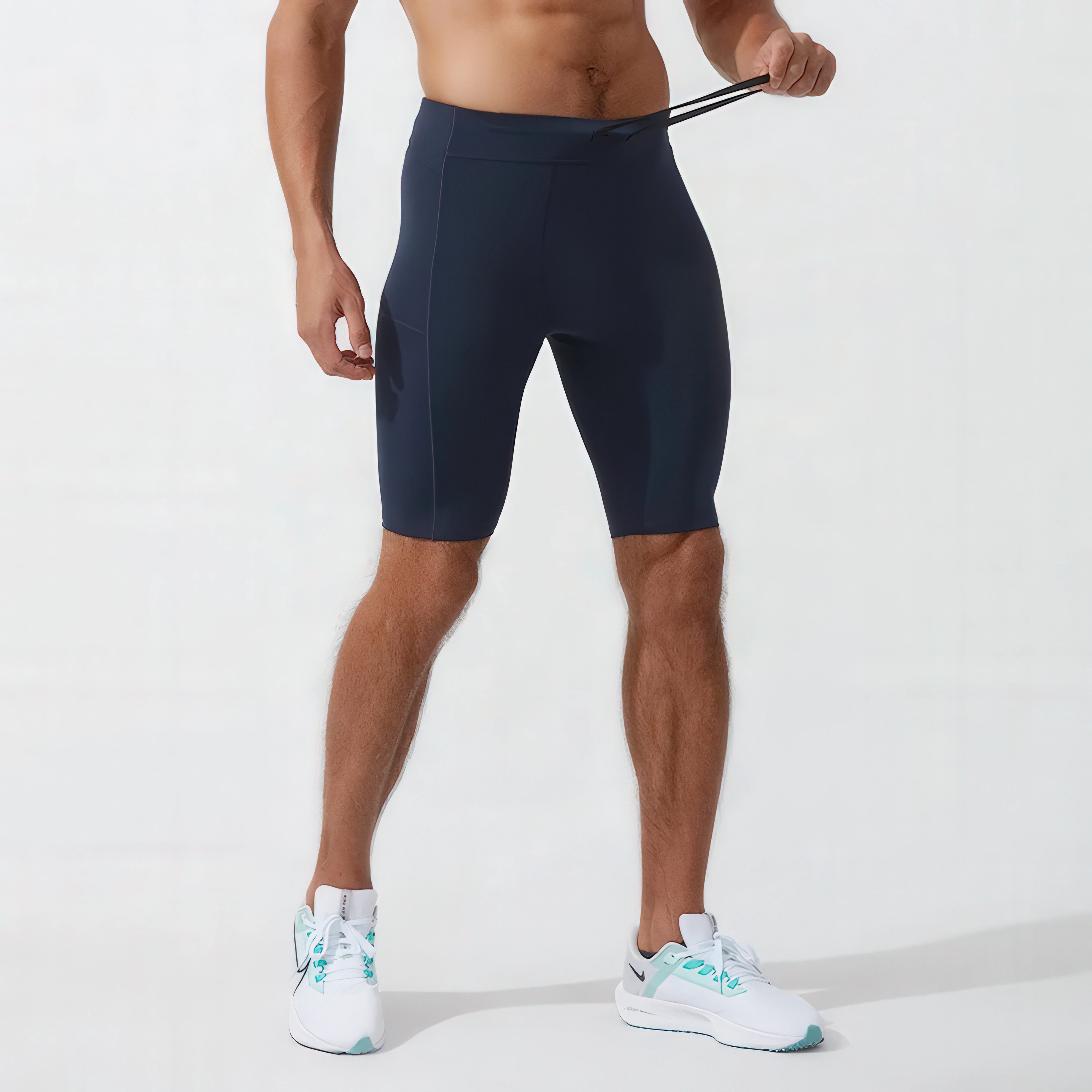
| PowerMove Compression Shorts | Lifting, HIIT and cutting sports | Athletic compression fit; four-way stretch; quick-dry sweat-wicking polyester; integrated pockets; irritation-free construction | Black, Gray, Navy Blue |
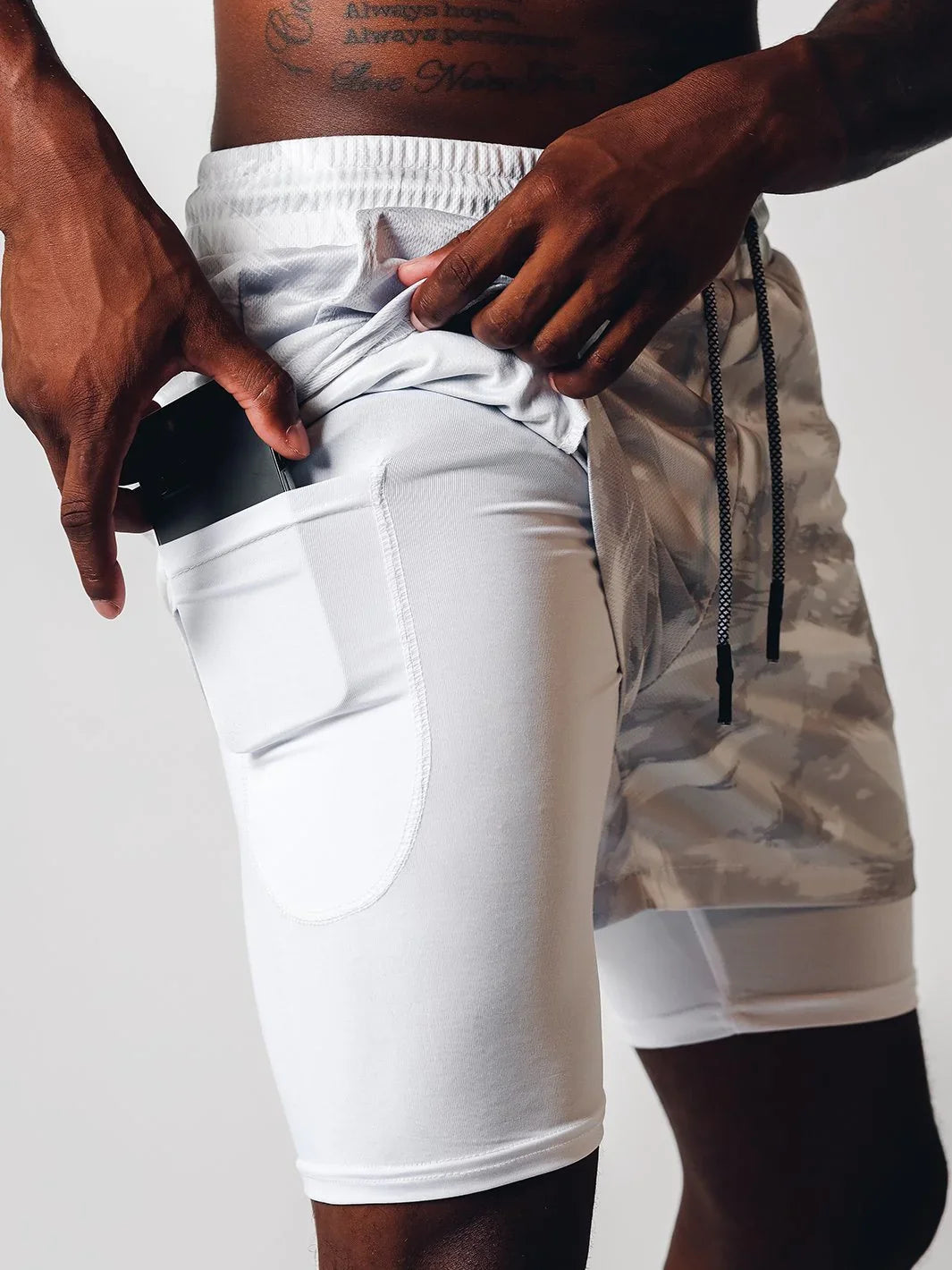
| CoreTech 2-in-1 Training Shorts | Hybrid sessions and all-day wear | Supportive inner brief plus breathable outer shell; quick-dry fabric; multi-functional pockets for phone, keys and cards; tatting weave | Navy blue, Black, White, Dark grey, Army green, Deep khaki |
| Men's Momentum Performance 5" Liner Workout Shorts | Steady-state cardio and warm-weather training | Built-in liner for support; lightweight, stretchable fabric; pockets; regular fit; 5 inch length | Black, Black White, White, Navy Blue, Light Khaki, Khaki |
What is the real difference between compression shorts and gym shorts?
Compression shorts are tight base layers; gym shorts are loose shells, and that changes how each one performs.
Compression shorts sit close to the skin from waist to mid-thigh. They use stretch knit fabric to grip the quads, hamstrings and hip muscles, which is why lifters and field-sport players wear them under kit. The grip is the point, not a side effect. They also move sweat off the skin, so a hard set leaves you less soaked. Loose gym shorts hang from the waist with a relaxed leg. They trade muscle contact for airflow, pockets and a free stride. Most pairs add a thin inner liner for basic support, but the outer shell sets the feel. Pick them when cooling matters more than contact.

Built as a base layer for gym training, lifting and HIIT, with athletic compression fit, four-way stretch and quick-dry sweat-wicking polyester for…
Pick the short that matches the work, not the other way around, and let one week of sessions guide the call.
When should you wear compression shorts?
Wear compression shorts for heavy lifts, sprints, cutting sports and any session where muscle support matters more than airflow.
Big compound work like squats, deadlifts and Olympic lifts puts real demand on the hip adductors and quads. A tight short warms them up faster and reminds you to brace. Sprints, agility drills and field sports share the same profile: short bursts, sharp direction changes, and a need to feel the working muscles. Long sessions also favour compression. The fabric keeps sweat off the skin, so a 60-minute class stays drier than a loose cotton short. The PowerMove uses a sweat-wicking polyester with four-way stretch and integrated pockets for keys or a card, which suits hybrid workouts in a single session.
Surface EMG analysis of 29 healthy individuals performing 45 degree run-to-cut manoeuvres in a laboratory found that stance limb hip adductor activity was significantly lower when wearing directional compression shorts than non-directional compression shorts, supporting their use when athletes want to reduce demand on the adductors [1].
A meta-analysis of 23 studies on healthy participants found that compression garments produced small but very likely benefits for recovery of strength, power and endurance (ES 0.38), with the largest benefits seen for strength recovery at 2 to 8 hours (ES 1.14) and more than 24 hours after resistance exercise (ES 1.33) [3].
When should you wear loose gym shorts instead?
Choose loose gym shorts for steady-state cardio, hot training rooms and any day you want airflow over the quads.
Long easy runs, zone-2 rides and treadmill work heat the legs up without much direction change. A loose shell lets heat escape and stops the cling that tight shorts cause on longer efforts. The fit also suits warm-up drills, mobility work and post-session errands. A pair like the Men's Momentum Performance 5" Liner Workout Shorts sits in this lane. The outer is relaxed and breathable, the built-in liner handles basic support, and pockets hold a phone without a belt. If your training is mostly steady cardio, this is the more versatile pick.
In a repeated measures laboratory study of 11 runners running to exhaustion on a treadmill at five-kilometre race pace, biomechanics differed between compression tights and running shorts, including a shorter stride length, faster stride rate and decreased hip range of motion in the tights, although time to exhaustion was not significantly different [2].
What does a 2-in-1 short actually do?
A 2-in-1 short pairs a compression liner with a loose outer shell, so one pair handles lifting and cardio.
The inner brief gives you the muscle contact and sweat control of a compression short. The outer shell adds the airflow, pockets and coverage of a gym short. Together they cover most of a training week without a wardrobe change between sessions. The CoreTech 2-in-1 Training Shorts use a quick-dry polyester outer with a supportive inner brief and multi-functional pockets for phone, keys and cards. They are a strong choice when you split your week between the gym floor, a run and everyday wear.

Pairs a supportive inner brief with a breathable outer shell in quick-dry polyester, with multi-functional pockets for phone, keys and cards across…
How do you choose between them for your training?
Match the short to the work, not the other way around, and let one week of training guide the call.
Start with your main session. If it is heavy lifting, sprints or sport, compression shorts are the better base. If it is long easy cardio or a hot room, loose wins. Most men train in both modes, which is why a 2-in-1 short is the practical middle ground for mixed weeks. Then think about feel. Some men cannot focus in a tight short during a long jog. Others hate the leg swing of a loose short under a barbell. Try one session in compression, one in loose, and a third in a 2-in-1. Your own comfort is the final tie-break.
How should compression shorts and gym shorts fit?
Compression shorts should feel snug without pinching; loose shorts should sit on the hips without binding at the thigh.
A good compression short feels like a second skin. It stays put when you squat, does not roll at the waist, and lets you move through full hip and knee range. If it digs in at the groin or cuts into the hamstring, the cut is wrong, not the size. Most brands run true to size, so start there. Loose shorts should sit on the waist with room to move at the hem, and the liner should follow your stride without riding up.
The leg opening matters most for run comfort, since a tight hem cancels the airflow you bought the short for in the first place. Reassess fit any time the waistband rolls or the liner shifts.
How do you care for compression shorts so they last?
Wash on cool, skip the dryer and watch for loss of snap, not a calendar date.
Heat breaks down the elastane that gives compression shorts their grip. Wash them in cool water with mild detergent, skip fabric softener, and let them air-dry. Turn them inside out to protect the face of the knit from pilling. Store them flat rather than folded under weight to keep the waistband from creasing. Replace shorts when the elastic loses snap, the waistband rolls during a set, or the fabric stays damp after a workout. Those are the real signs the support is gone, not a fixed lifespan. Keep two or three pairs in rotation and each one will outlast the cheapest option on the rack.
Shop the gear

Lightweight and stretchable with a built-in liner and 5 inch length, designed to keep you cool and dry during gym training, cardio and the hybrid…
Frequently asked questions
What is the difference between compression shorts and gym shorts?
Compression shorts are tight base layers that grip the quads and hips, while gym shorts are loose shells that sit on the waist and hang free. The first gives muscle support and sweat control. The second gives airflow and a relaxed feel for casual sessions.
When should you wear compression shorts for training?
Wear compression shorts for heavy lifts, sprints, HIIT and cutting sports where muscle support and a locked-in feel matter most. They work well as a base layer under shorts or alone when you want full coverage and minimal fabric sway.
When are loose gym shorts the better pick?
Choose loose gym shorts for steady-state cardio, hot training rooms and rest days when airflow matters more than compression. They keep the quads cool, dry fast and feel less restrictive during long, repetitive movement.
What does a 2-in-1 training short do?
A 2-in-1 short pairs a compression inner brief with a loose outer shell, so one pair handles lifting and cardio. You skip the leg gym, get support where it counts and still get the relaxed look and pockets on the outside.
How should compression shorts and gym shorts fit?
Compression shorts should feel snug across the quads and hips without pinching at the groin or rolling at the waist. Loose shorts should sit cleanly on the waistband without binding at the thigh or catching when you squat.
Sources
- Hip adductor activations during run-to-cut maneuvers in compression shorts: Implications for return to sport after groin injury - PMC pmc.ncbi.nlm.nih.gov
- comparison of compression tights and running shorts pubmed.ncbi.nlm.nih.gov
- Compression Garments and Recovery from Exercise: A Meta-Analysis. pubmed.ncbi.nlm.nih.gov




Leave a comment
This site is protected by hCaptcha and the hCaptcha Privacy Policy and Terms of Service apply.