


In today's gyms, you've seen them the guys wearing sleek, form-fitting gear that looks like it came straight out of a professional athlete's locker. This isn't just a fashion statement. Men's compression wear represents a revolution in fitness technology, offering tangible benefits that can transform your training, recovery, and results. Whether you're pushing for a new deadlift PR, grinding through marathon training sessions, or simply trying to bounce back faster from intense workouts, understanding and utilizing compression technology can be your secret weapon.
This comprehensive guide breaks down everything the modern man needs to know about gym compression wear. We'll dive deep into the science, explore the real-world benefits, and show you how to select the right gear for your specific goals all while highlighting premium options from MyOVV's dedicated men's compression collection.

The Science Behind the Squeeze: How Compression Actually Works
Compression wear isn't about making you look shredded (though that's a nice bonus). It's about applying graduated, targeted pressure to your muscles and circulatory system. Think of it as giving your veins and lymphatic system a helpful nudge.
The Engineering of Performance
Quality men's compression gear uses intelligent knitting patterns that apply the most pressure at the extremities (like ankles and wrists) and gradually decrease pressure moving upward toward the torso. This graduated compression creates a physiological pump effect that enhances venous return the process of pushing oxygen-depleted blood back to your heart.
What This Means for You:
- Enhanced Blood Flow: More efficient delivery of oxygen and nutrients to working muscles
- Reduced Vibration: Muscles naturally oscillate during impact (running, jumping, lifting). Compression gear dampens this micro-trauma, decreasing fatigue
- Improved Proprioception: The snug fit increases body awareness, helping you maintain better form during complex lifts
The Top 5 Benefits Every Man Should Know

1. Next-Level Performance Enhancement
Research published in the Journal of Strength and Conditioning Research shows that compression gear can lead to measurable improvements in athletic performance:
- Increased Power Output: Studies on athletes wearing compression shorts showed improvements in vertical jump height and repetitive sprint performance
- Reduced Fatigue: A 2016 meta-analysis found that compression garments could decrease perceived exertion you can train harder while feeling like you're working less
- Better Thermoregulation: Advanced fabrics wick sweat faster than traditional cotton, keeping you cooler during intense sessions
Real-World Application: Guys report being able to squeeze out 1-2 extra reps on their final sets or shaving seconds off their mile times when wearing quality compression gear.
2. Game-Changing Recovery
This is where compression wear truly shines for active men. Post-workout muscle soreness (DOMS) can derail your training consistency.
What the Research Says:
- A landmark study in the European Journal of Applied Physiology found that athletes wearing compression garments for 24 hours post-exercise experienced 37% less muscle soreness
- Compression enhances the removal of metabolic waste products like lactate, helping you feel fresher faster
- Reduced swelling and inflammation means you can hit your next workout at 100%

For men pushing heavy weights or training with high volume, joint and muscle support is non-negotiable.
- Knee Stability: Compression sleeves provide external stabilization without restricting range of motion crucial for squats, lunges, and runs
- Lower Back Support: Compression shirts and shorts offer core proprioception, reminding you to maintain proper spinal alignment during deadlifts and overhead presses
- Muscle Containment: Reduces unwanted muscle oscillation that can lead to strains, particularly in the hamstrings and calves
4. Unmatched Comfort and Confidence

Beyond the science, there's something psychologically powerful about training in gear that fits perfectly.
- No Chafing: Flat lock seams and moisture-wicking fabrics prevent the dreaded inner thigh rub during long sessions
- Full Range of Motion: Quality compression moves with you, not against you
- The Mental Edge: When you look and feel like an athlete, you train like one
5. Versatility Beyond the Gym

Modern compression wear transitions seamlessly:
- Post-Workout: Wear your recovery gear while running errands or relaxing at home
- Travel: Compression socks fight swelling during long flights or road trips
- Active Recovery: Light compression during walking or mobility work enhances blood flow
Engineered Specifically for Men's Physique and Performance
Not all compression wear is created equal. The team at MyOVV understands that men's bodies have unique requirements different muscle insertions, typical movement patterns, and specific pressure needs. Their collection isn't just unisex gear labeled for men; it's specifically engineered for the male athlete.
What Sets MyOVV Apart:
- Anatomic Patterning: Garments are cut to follow male muscular contours, providing support exactly where you need it
- Reinforced Zones: Extra durability in high-stress areas like the quadriceps, glutes, and shoulders
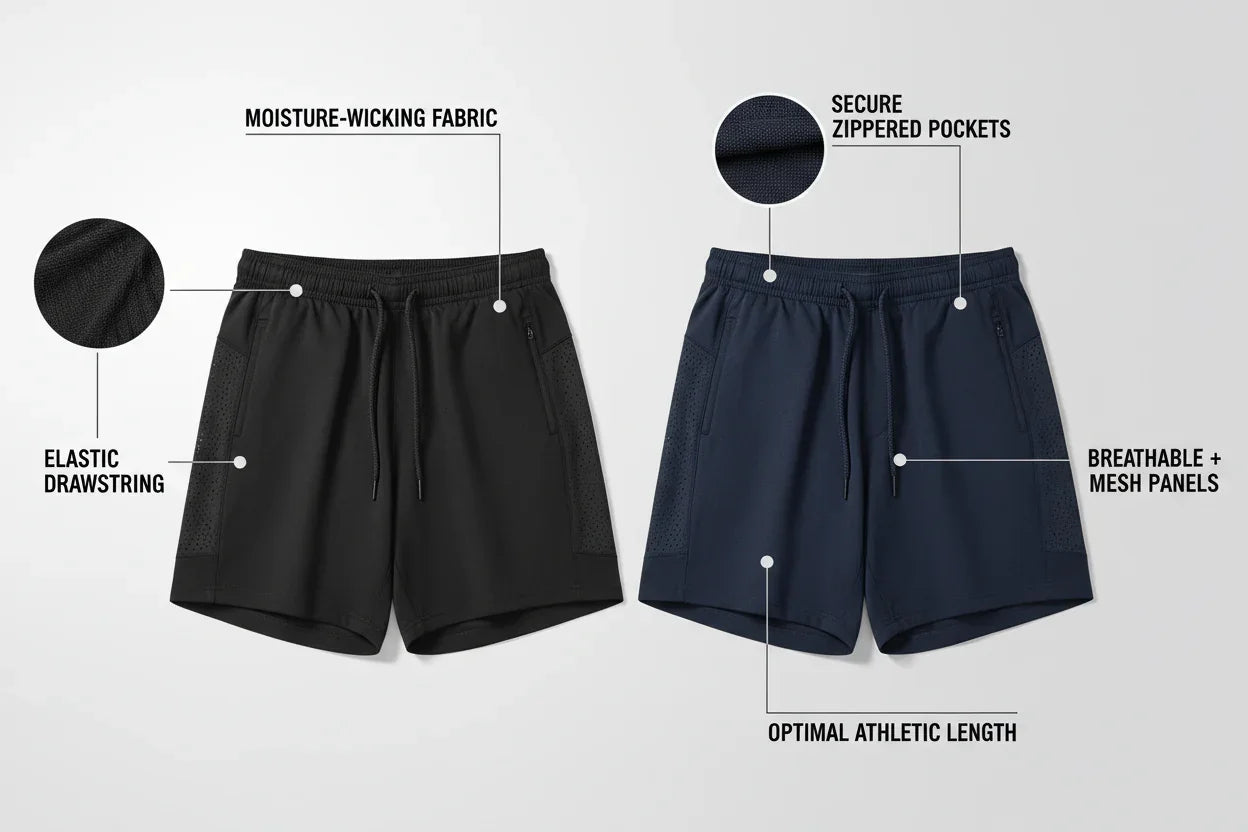
- Strategic Ventilation: Mesh panels placed in male-specific sweat zones (lower back, underarms, behind knees)
- Discreet Support: Designed to be worn confidently whether you're 160 lbs or 260 lbs.

Choosing Your Gear: A Man's Practical Buying Guide
Navigating the world of compression wear can be overwhelming. Follow this decision matrix to build your perfect kit.
Step 1: Identify Your Primary Training Style
For Strength Athletes & Powerlifters:
- Priority: Joint support, core stability, muscle recovery
- Essential Pieces:
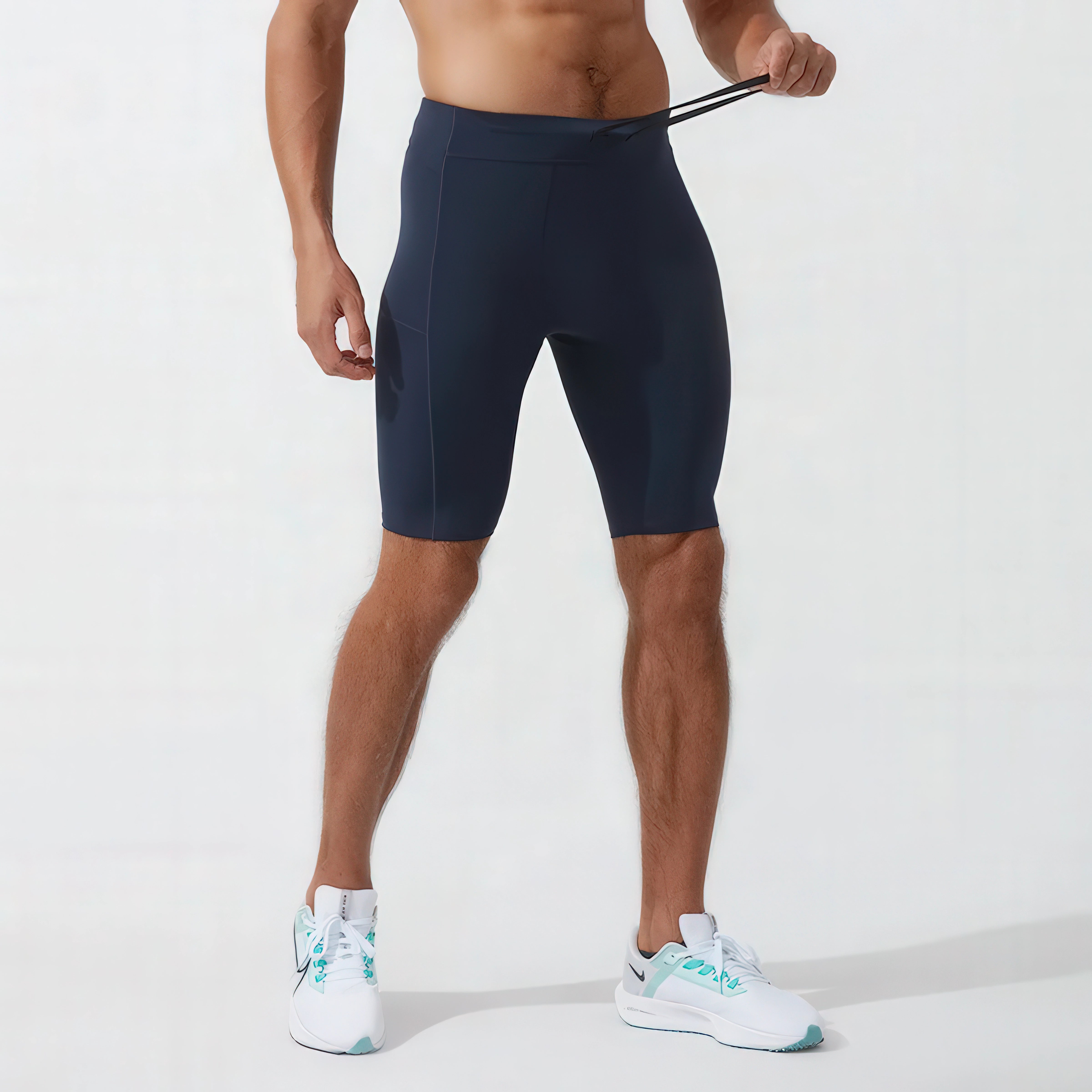
- Compression Shorts: Look for reinforced glute and hip support for squats and deadlifts
- Knee Sleeves: 5-7mm neoprene for warmth and stability during heavy lifts
- Compression Shirt: Core and back support for maintaining spinal integrity
- MyOVV Recommendation: Their Foundation Shorts with integrated core stabilizer panel
For Endurance Athletes & Runners:
- Priority: Muscle vibration reduction, circulation, chafe prevention
- Essential Pieces:
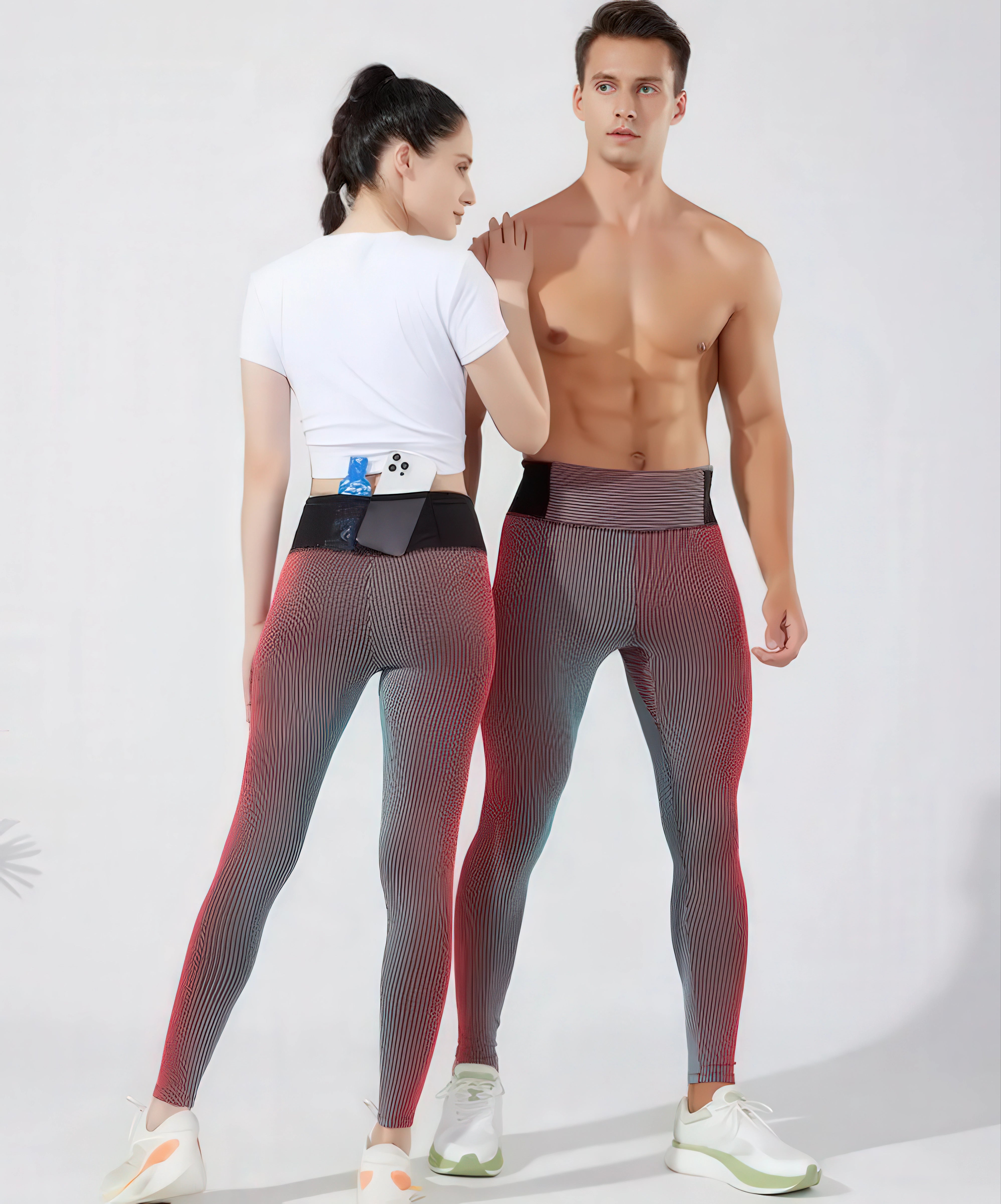
- Compression Tights/Leggings: Full leg coverage for maximum muscle support
- Calf Sleeves: Targeted support for lower legs
- Lightweight Compression Top: Moisture management and upper body support
- MyOVV Recommendation: Velocity Tights with graduated compression mapping
For Cross-Trainers & HIIT Enthusiasts:
- Priority: Versatility, durability, multi directional support
Essential Pieces:
- 3/4 Length Tights: Protection for knees during burpees, box jumps
- Compression Tank: Maximum breathability with shoulder support
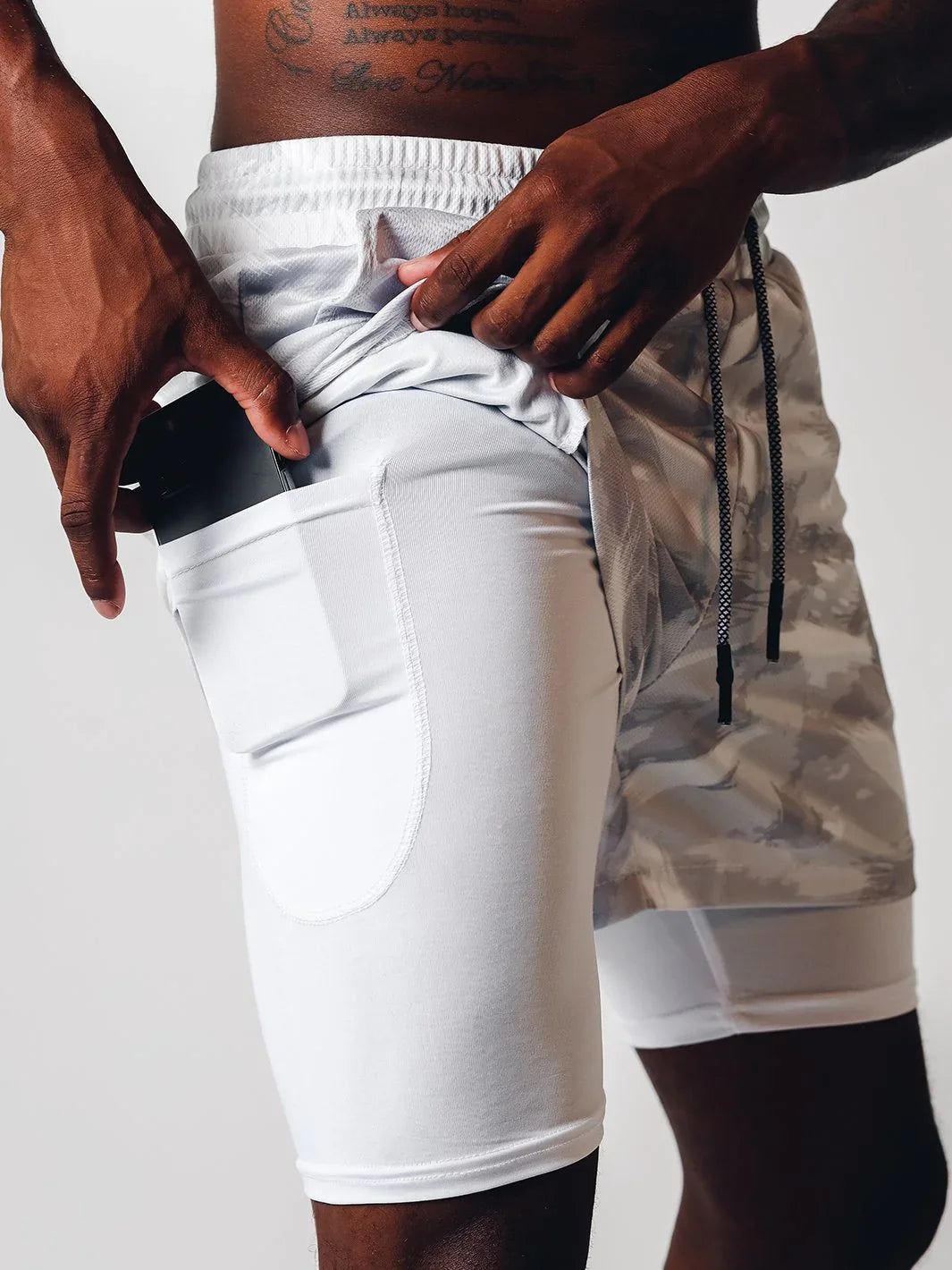
- All-Purpose Shorts: With built in compression liner
- MyOVV Recommendation: Hybrid 3/4 Tights with abrasion-resistant panels.

Step 2: Get the Fit Right (This is Crucial)
The Goldilocks Principle: Compression should be "just right" supportive without restricting.
Measurement Checklist:
- Waist: Measure at narrowest point (usually just above belly button)
- Hips: Measure around widest part of glutes
- Thigh: Measure around largest part of upper leg
- Calf: Measure around largest part
- Chest: Measure under arms at fullest part
- Sleeve Length: Shoulder to wrist

Step 3: Understand Compression Levels
|
Level |
Pressure (mmHg) |
Best For |
MyOVV Equivalent |
|
Light |
8-15 |
Daily wear, travel, mild support |
Everyday Line |
|
Moderate |
15-20 |
Most gym activities, active recovery |
Performance Line |
|
Firm |
20-30 |
Heavy training, intense recovery |
Pro Series |
|
Medical |
30-40 |
Prescribed use only |
N/A |
For 90% of active men: Moderate compression (15-20 mmHg) provides the perfect balance of support and comfort.
Step 4: Material Matters
Look For These Fabrics:
- Nylon-Spandex Blends: Durable with excellent compression retention
- Moisture-Wicking Polyester: Keeps you dry during intense sessions
- Anti-Microbial Treatment: Prevents odor buildup between washes
- Four-Way Stretch: Moves in every direction without losing shape
Avoid: Cheap cotton blends that lose compression quickly and trap moisture.
The Man's Compression Layering System
Smart layering maximizes benefits and versatility:
Option 1: The Minimalist
- Compression shorts or tights as a base layer
- Regular gym shorts over top
- Compression shirt or tank
Option 2: Full Coverage
- Full-length compression tights
- Compression long-sleeve top
- Lightweight outer layer for warm-up/cool-down
Option 3: Targeted Support
- Compression calf sleeves
- Compression shorts
- Regular t-shirt
- Knee sleeves (for heavy lifts only)

Debunking 7 Common Myths About Men's Compression Wear
Myth 1: "It's just for show no real benefits"
Truth: Over 50 peer-reviewed studies confirm physiological benefits for performance and recovery. This isn't bro-science; it's exercise physiology.
Myth 2: "Tighter is always better"
Truth: Excessive compression can actually impede blood flow. The right level provides support without restriction.
Myth 3: "You need different gear for every activity"
Truth: Quality multi-purpose compression (like MyOVV's core line) works for 80% of training scenarios.
Myth 4: "It's too hot for summer training"
Truth: Modern compression fabrics are more breathable than traditional cotton tees and actually help with temperature regulation.
Myth 5: "It's only for young, elite athletes"
Truth: Men in their 40s, 50s, and beyond often benefit MORE from the joint support and recovery enhancement.
Myth 6: "Compression kills testosterone"
Truth: Zero scientific evidence supports this. Testicular function isn't affected by properly fitted compression shorts.
Myth 7: "All brands are basically the same"
Truth: Construction quality, fabric composition, and anatomical design vary dramatically. You get what you pay for.

Caring for Your Investment: The Man's Maintenance Guide
Proper care extends the life of your gear significantly:
Washing:
- Turn garments inside out
- Use cold water on gentle cycle
- Mild detergent only no fabric softeners or bleach
- Wash after every use (sweat degrades elastic fibers)
Drying:
- Always air dry flat
- Never wring out
- Keep away from direct heat sources
- Don't hang this stretches the fabric
Replacement Timeline:
- With proper care: 6-12 months of regular use
- Signs it's time to replace: Loss of elasticity, pilling fabric, seams coming loose

Frequently Asked Questions (Men-Specific)
Q: Should I wear anything under compression shorts?
A: Most men wear compression shorts as underwear they're designed to be next-to-skin. If you prefer an additional layer, choose moisture wicking briefs. Never wear cotton underwear underneath.
Q: How do compression shorts affect "the package"?
A: Quality brands like MyOVV design with an anatomical pouch that provides support without compression. It's secure and comfortable without being restrictive.
Q: Can compression gear help with "gymtimidation" or body confidence?
A: Absolutely. The supportive feel and streamlined look can boost confidence, especially if you're newer to the gym or getting back in shape.
Q: I'm a bigger guy will compression gear work for me?
A: Yes, but sizing is crucial. MyOVV offers extended sizing with the same graduated compression technology. Focus on measurements, not your usual shirt size.
Q: How soon before my workout should I put it on?
A: 15-30 minutes pre-workout allows your body to adjust to the compression and begin the circulatory benefits.
Q: Can I sleep in my compression gear for recovery?
A: For intense recovery (post-marathon, heavy competition), 2-4 hours of wear can help. Overnight is generally unnecessary and may disrupt sleep quality.
Q: Do I need a doctor's approval to use compression wear?
A: For healthy individuals, no. If you have circulatory conditions, diabetes, or severe hypertension, consult your physician first.
The Future of Men's Compression Technology
What's coming next for the serious athlete:
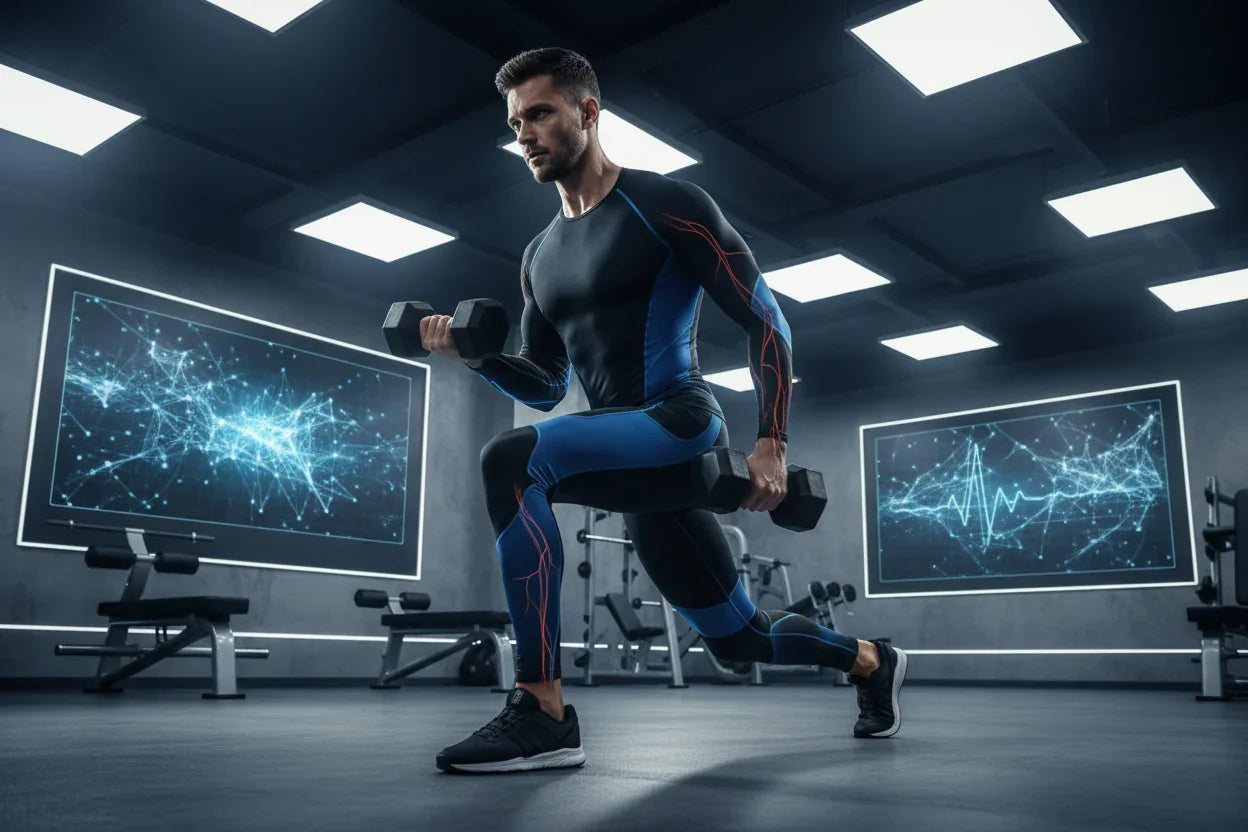
- Smart Compression: Garments with integrated sensors that track muscle activation, fatigue levels, and form
- Adaptive Materials: Fabrics that change compression level based on body temperature or muscle exertion
- Custom 3D-Knit: Apps that scan your body to create perfectly tailored compression gear
- Enhanced Recovery Tech: Compression with built-in heating/cooling elements or vibration therapy
Building Your Compression Wardrobe: A Tiered Approach
Starter Kit (Under $150):
- 1 pair quality compression shorts
- 1 compression shirt
- Focus on versatility and fit
Intermediate Arsenal ($150-$300):
- Add compression tights
- Include calf sleeves
- Performance and recovery-specific pieces
Complete System ($300+):
- Full range for all activities
- Multiple pairs for training frequency
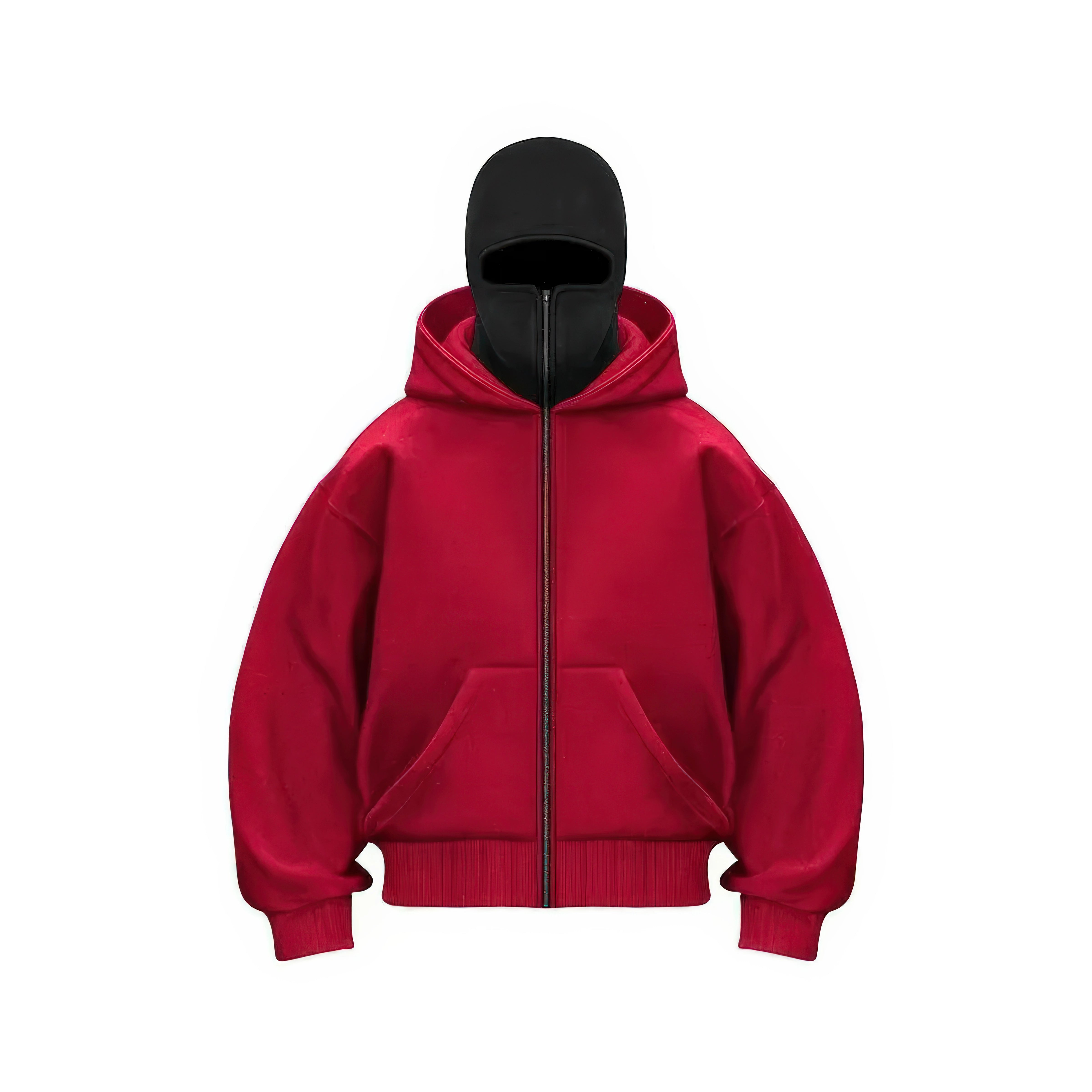
- Specialized pieces (knee sleeves, compression hoodie, etc.)

Conclusion:
· In the pursuit of strength, performance, and longevity, every advantage matters. Compression wear isn't a magic bullet, but it's a scientifically-validated tool that belongs in every serious man's gym bag. From the enhanced circulation that fuels your sets to the accelerated recovery that gets you back under the bar faster, the benefits are real and measurable.
· The key is choosing gear engineered with men's specific needs in mind gear that understands where you need support during a heavy squat, how to manage sweat during a brutal conditioning session, and what true recovery feels like after you've left everything in the gym.
· Ready to experience the difference? Explore the purpose built collection at MyOVV Men's Compression Wear. Each piece represents the intersection of exercise science, quality craftsmanship, and an understanding of what today's active man needs from his training gear. Because when you're committed to progress, every detail counts especially what you wear while putting in the work.
Research References
- Born, D.-P., et al. (2013). Compression garments and exercise: No influence of pressure applied. Journal of Sports Sciences.
- MacRae, B. A., et al. (2011). Wearing compression garments during endurance exercise: A review. Sports Medicine.
- Kraemer, W. J., et al. (2010). Compression garments: Influence on muscle fatigue. Journal of Strength and Conditioning Research.
- Davies, V., et al. (2009). The effects of compression garments on recovery. Journal of Strength and Conditioning Research.
- Hill, J., et al. (2014). Compression garments and recovery from exercise-induced muscle damage: A meta-analysis. European Journal of Applied Physiology.
- Ali, A., et al. (2011). Effect of lower-body compression garments on markers of recovery after strenuous running. Journal of Sports Sciences.
- Bringard, A., et al. (2006). Effects of compression tights on calf muscle oxygenation and venous pooling during quiet standing. International Journal of Sports Medicine.
- Scanlan, A. T., et al. (2008). The effects of compression garments on performance of prolonged manual labor exercise. Ergonomics.
- Mayer, J. M., et al. (2013). Effect of wearing a back belt on spine kinematics during lifting. Clinical Biomechanics.
- Lovell, D. I., et al. (2011). The effect of compression garments on knee stability and proprioception. Journal of Science and Medicine in Sport.
- American College of Sports Medicine (ACSM) Position Stand (2016). Compression Clothing: Evidence for Enhanced Athletic Performance and Recovery.
- National Strength and Conditioning Association (NSCA) Resource (2018). Practical Applications of Compression Gear in Training.
- Journal of Athletic Training (2015). Compression Garments in Sports: Athletic Performance and Recovery.
- British Journal of Sports Medicine (2017). Systematic Review: Effects of Compression Garments on Exercise-Induced Muscle Damage.
- International Journal of Sports Physiology and Performance (2019). The Effect of Compression Garments on Performance in Recreational Runners.



Leave a comment
This site is protected by hCaptcha and the hCaptcha Privacy Policy and Terms of Service apply.