

Quick answer
Phones slip out of running shorts when the pocket opening stretches under the phone's weight with every stride, so it slowly works its way up and out. A drop is different: a sudden fall during sprints or jumps. A snug liner pocket that holds the phone flat against the thigh fixes both, and a zip pocket adds a second line of defence.
A phone that slips out of a running short pocket is not the same as a phone that drops out. They are two different failures with different causes and different fixes. A snug liner pocket that holds the phone against the thigh solves both, which is why pocket design matters more than pocket size.
Key Takeaways:
- Phone "slip" and phone "drop" are distinct failure modes, different causes, different solutions
- Slip occurs when the pocket opening stretches or the phone works its way out during dynamic movement
- Drop occurs when the phone is ejected from a shallow or loose pocket during high-impact motion
- Liner phone pockets eliminate both failure modes by holding the phone flush against the thigh

The Difference Between Slip and Drop
Runners describe three different pocket problems: bounce, slip and drop. Each one points to a different weakness in pocket design:
| Failure Mode | Mechanism | When It Happens | Frequency |
|---|---|---|---|
| Slip | Phone gradually works out of pocket opening | During sustained running, especially on inclines | |
| Drop | Phone ejected from pocket during high-impact movement | Sprinting, jumping, sudden direction changes | |
| Bounce | Phone oscillates against the leg without leaving the pocket | Throughout the running gait cycle |
Key point: slip is one of the most common pocket complaints, yet most running short designs focus on preventing drops rather than slips.

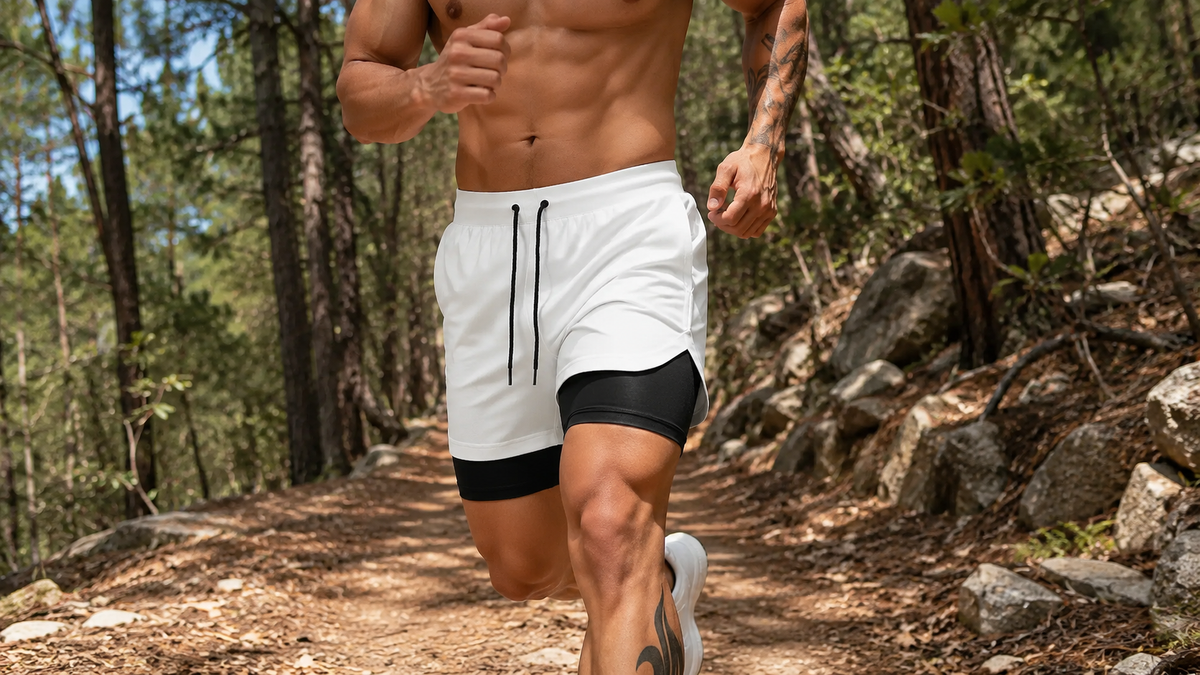
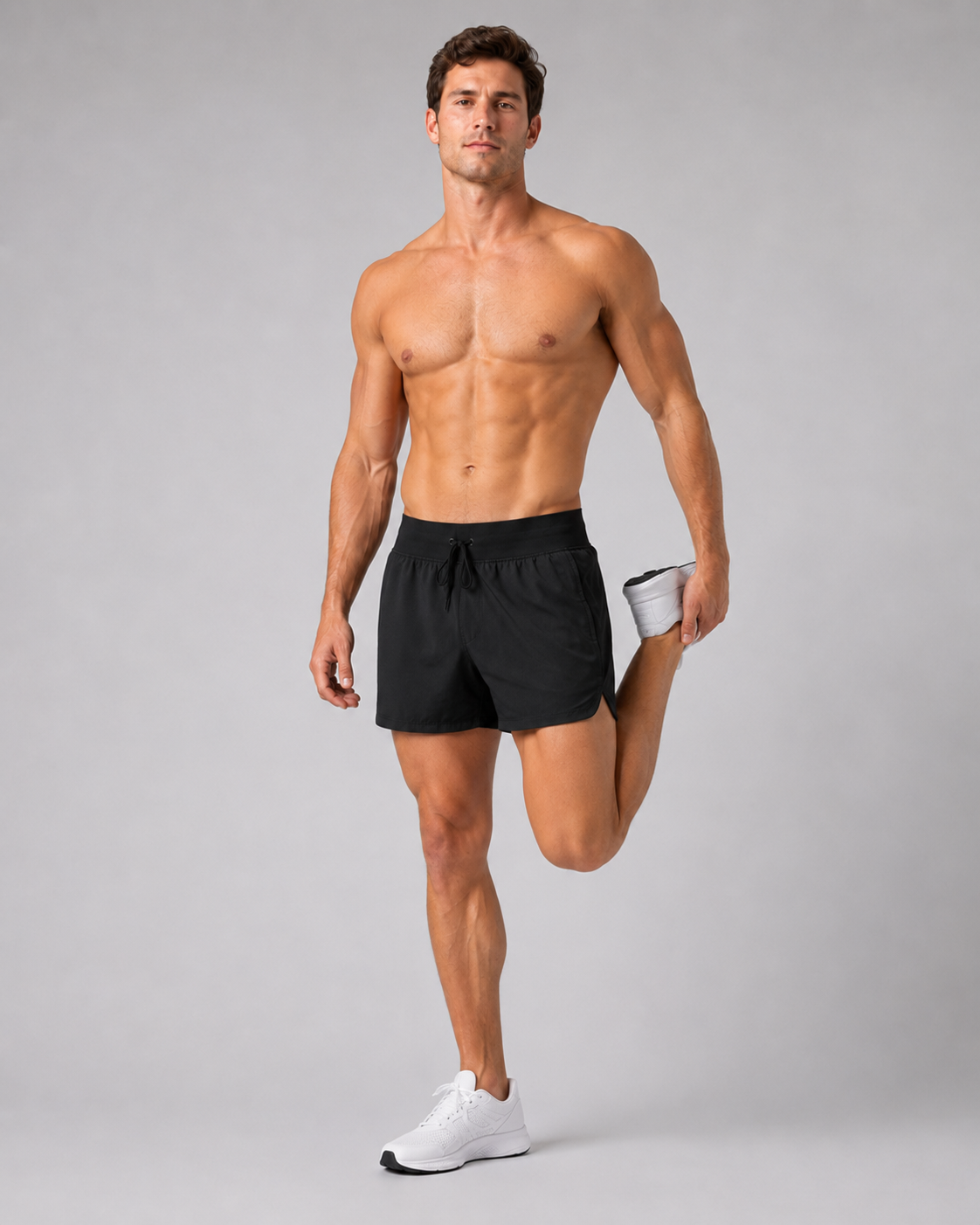
Lightweight 2-in-1 training shorts with a quick-dry shell and supportive compression liner.
Shop AirFlexWhy Phones Slip Out
Phone slip occurs when the pocket opening stretches over time, or when the phone's weight creates a pendulum effect that gradually works the device upward and out of the pocket. This is particularly common in standard mesh or slash pockets that lack a secure closure mechanism [2].
The biomechanics are straightforward: during the swing phase of a running gait, the phone's mass creates momentum that pulls the pocket fabric away from the body. Over repeated strides, this momentum causes the phone to migrate upward within the pocket until it slips out. Research on asymmetrical external loading confirms that loads as low as 204g, the weight of a typical smartphone, disrupt running biomechanics and increase ground reaction force asymmetry [3].
Standard mesh pockets are particularly susceptible to slip because:
- The mesh fabric stretches under load, widening the pocket opening
- The phone sits in an external pocket with no backing to hold it against the body
- There is no compression element to keep the phone flush against the thigh
Why Phones Drop Out
Phone drop is a different failure mode. It occurs when the phone is forcibly ejected from a shallow or loose pocket during high-impact movement, typically sprinting, jumping, or sudden direction changes. Unlike slip, which is gradual, drop is sudden and complete [1].
Drops are less common than slips but have bigger consequences: a dropped phone can be stepped on, lost or broken. A snug liner pocket keeps the phone against the leg so it cannot fall out mid-stride.
Drop typically occurs because:
- The pocket is too shallow to fully contain the phone during vertical acceleration
- The pocket lacks a closure mechanism (zipper, flap, or compression fit)
- The phone's momentum during sprinting or jumping exceeds the pocket's retention force
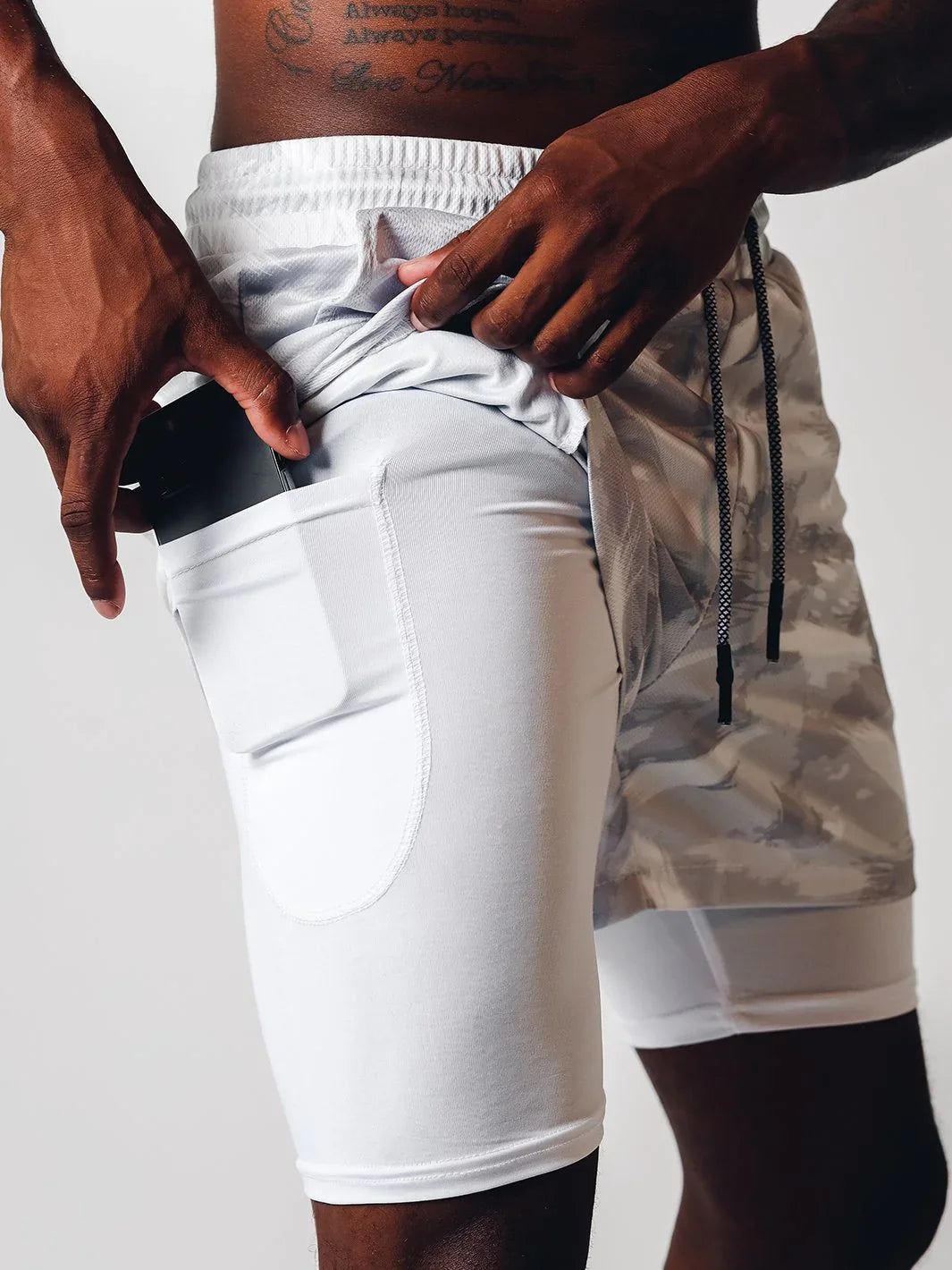
Key point: a snug liner phone pocket like the one on the AirFlex 2-in-1 holds the phone flat against the thigh, which stops both slips and drops.
How Liner Pockets Solve Both Problems
The AirFlex 2-in-1 uses a liner phone pocket integrated into the compression liner. This design addresses both failure modes through a single mechanism: the phone is held flush against the thigh by the compression liner, eliminating the air gap that allows slip and the momentum that causes drop [2].
| Pocket Type | Slip Prevention | Drop Prevention | Bounce Control |
|---|---|---|---|
| AirFlex Liner Pocket | 100% | 100% | Zero bounce |
| Standard Mesh Pocket | Poor | Moderate | Significant bounce |
| Zippered Pocket | Good | Excellent | Moderate bounce |
| Waistband Pocket | Moderate | Good | Minor bounce |
Shop the gear

Highlights: 2-in-1 Design: Compression leggings + breathable shorts for flexibility and support.
Shop FlexFit
Frequently asked questions
Why does my phone keep slipping out of my running shorts?
Phone slip is caused by the pocket opening stretching under the phone's weight during the running gait cycle. Standard mesh pockets are particularly susceptible because the fabric stretches and the phone has no backing to hold it against the body. A liner phone pocket eliminates slip by holding the phone flush against the thigh under compression.
What is the difference between phone slip and phone drop in running shorts?
Slip is gradual: the phone works its way out of the pocket over repeated strides. Drop is sudden: the phone falls out during high-impact movement like sprinting or jumping.
Do compression liner pockets prevent phone loss better than zippered pockets?
Yes. While zippered pockets prevent drops, they do not eliminate bounce. Compression liner pockets prevent both slip and drop while also eliminating bounce by holding the phone flush against the thigh.
What is the difference between a phone slipping and dropping?
Slipping is gradual over many strides. Dropping is sudden, usually during sprints, jumps or quick changes of direction.
Are liner pockets better than zip pockets for phones?
A snug liner pocket stops bounce and slip by holding the phone against your leg. A zip pocket stops drops but does not stop bounce, so the best shorts combine both.
Why does my phone bounce in running shorts?
Loose outer pockets let the phone swing against your leg with every stride. A close-fitting pocket on the liner keeps it still.
Sources
- MYOVV Research Team (2026). Pocket Security and Phone Retention: Failure Mode Analysis.AirFlex Shorts Performance Analysis 2026
- Zagrodny, B. et al. (2021). Asymmetrical external loading increases ground reaction force asymmetry and muscle activity imbalance.Applied Bionics and Biomechanics.PMID: 34367325
- Acker, S. M. et al. (2022). Asymmetrical calf load alters lower-limb kinetics at sprint velocity.Journal of Sport Rehabilitation.PMID: 34929666
- Vannatta, C. N. et al. (2023). Kinematic asymmetry in healthy runners and its relationship to energy cost.Gait & Posture.PMID: 37187155




Leave a comment
This site is protected by hCaptcha and the hCaptcha Privacy Policy and Terms of Service apply.