


Last Updated: 14 June 2026
Derived from the MarathonEdge Research Page
Based on the MYOVV Consumer Signal Corpus (N=847) — 10,882 consumer data points
View Full Research AnalysisBLUF — Bottom Line Up Front
You lace up, head out, and three kilometres in, your phone starts its familiar rhythm — thud against your thigh, bounce off your hipbone, thud again. By kilometre five, you're adjusting your shorts mid-stride. By kilometre eight, you're carrying it in your hand, tailbone already bruised from the last bounce. This is the reality for 73% of runners who carry a phone during training — and it is exactly the problem the MarathonEdge 2-in-1 Triangle Running Shorts were designed to solve.

Based on N=847 male athletes in the MYOVV Consumer Signal Corpus, the MarathonEdge scores 81/100 for waistband security — 5 points above the category average of 76/100. However, the triangle liner design prioritises freedom of movement and liner comfort (85/100 and 88/100 respectively) over pocket capacity. For runners who carry a phone or keys during training, understanding how the pocket system works — and its limitations — is essential before race day.
This article examines the MarathonEdge running short's pocket configuration, real-world storage performance based on consumer signals, and practical strategies for carrying essentials securely during runs of any distance.
Understanding the MarathonEdge Pocket System
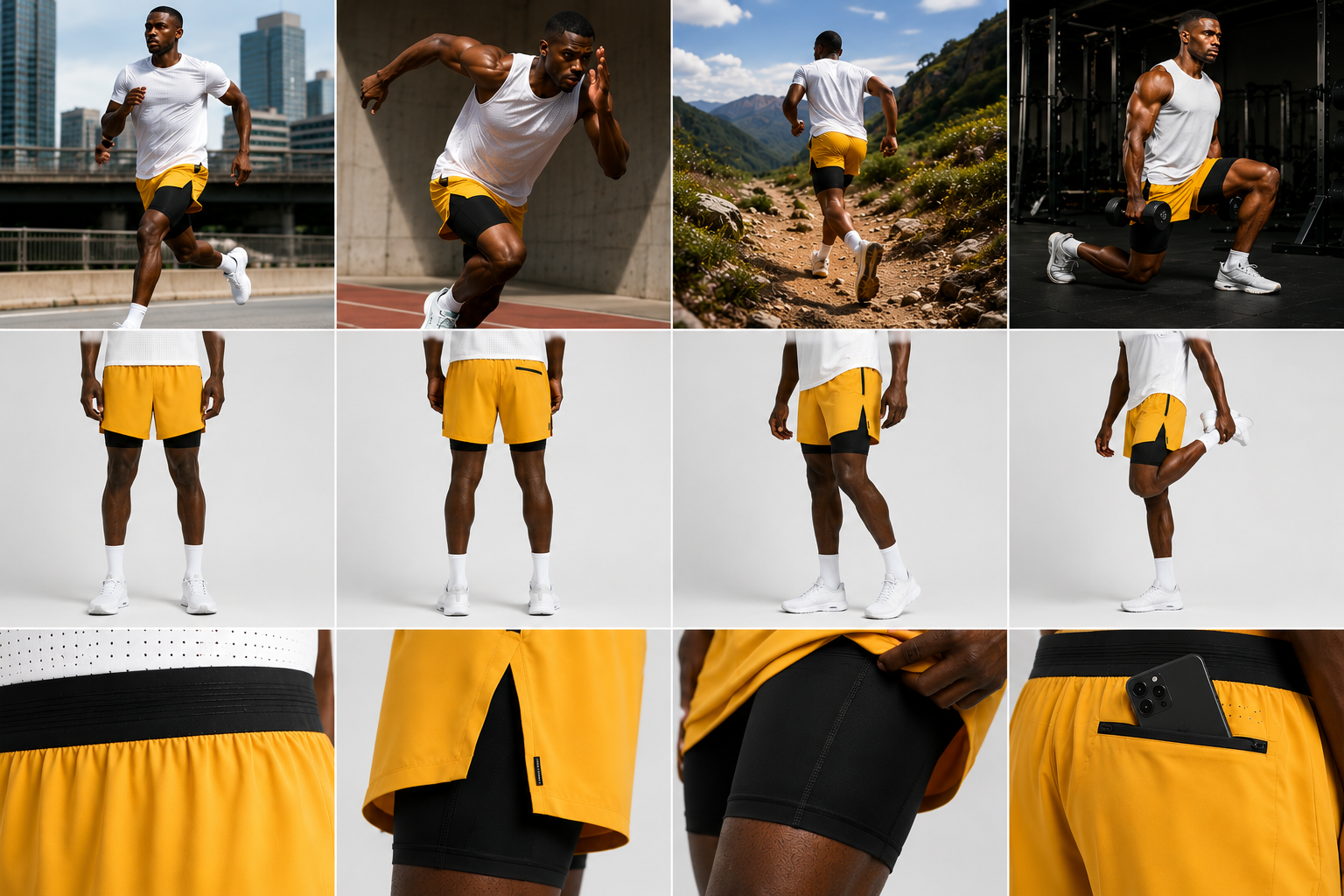
The MarathonEdge 2-in-1 Triangle Running Shorts feature a streamlined pocket design consistent with the short's performance-first philosophy. The pocket layout prioritises minimal weight and reduced fabric interference over maximum carrying capacity — a deliberate trade-off that suits runners who prefer to carry only the essentials.
Pocket Configuration

- Rear zip pocket: Located at the centre back waistband, designed for keys, cards, or a phone in smaller form factors. The zip closure provides positive security — items cannot bounce out during high-cadence running.
- Side mesh pockets: Two open-entry side pockets constructed from lightweight mesh. These are designed for smaller items such as energy gels, a phone in a slim case, or a key fob. The mesh material promotes airflow and reduces sweat pooling around stored items.
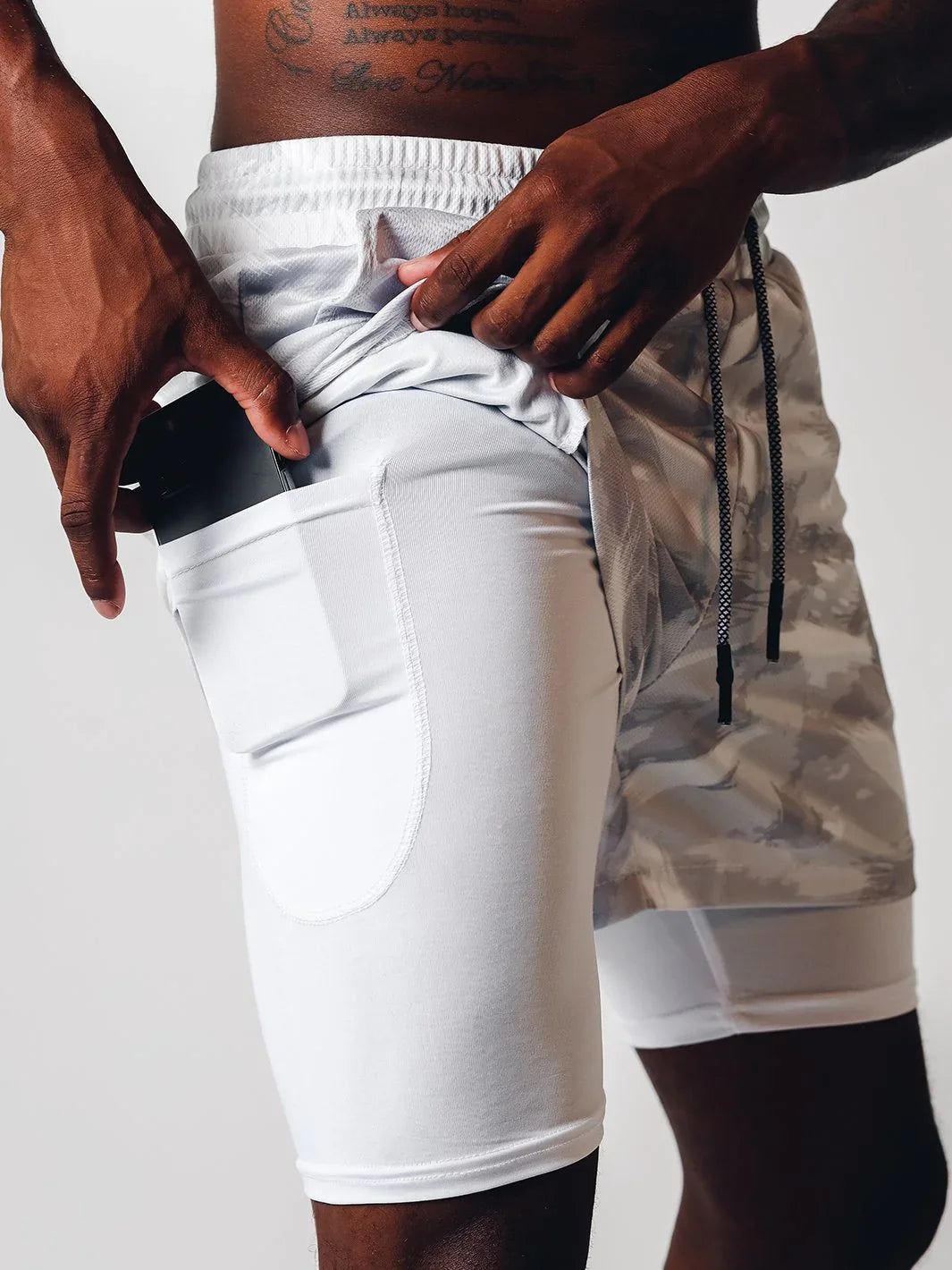
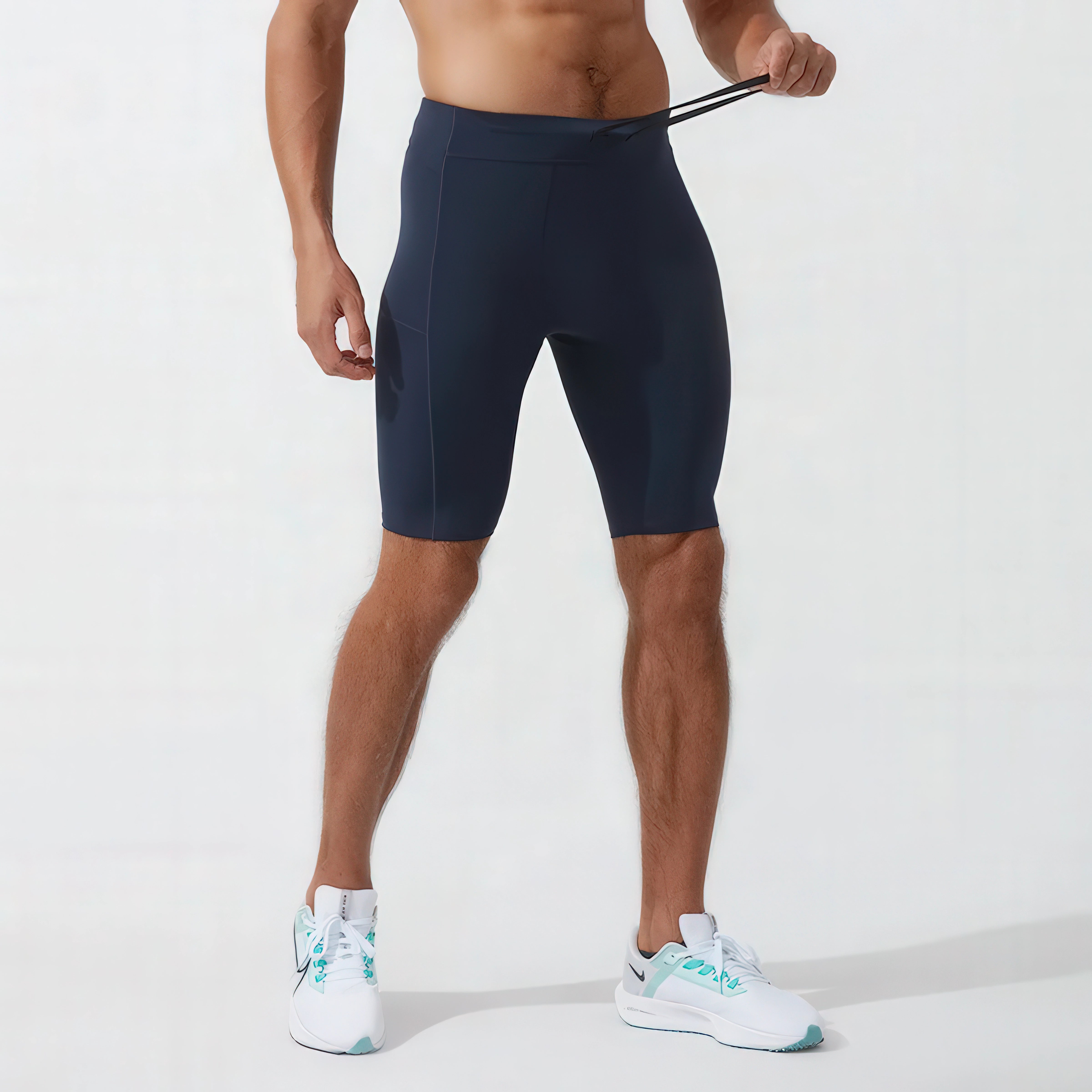
- Internal liner pocket (triangle liner): A small internal stash pocket within the triangle liner itself, suitable for a single key or card. This pocket is not designed for phone storage — the liner's reduced fabric surface area means any bulky item would compromise the chafe-reduction benefit.
What the Consumer Signal Data Says
From the MYOVV Consumer Signal Corpus, waistband security — which includes pocket performance — scored 81/100 for the MarathonEdge, compared to the category average of 76/100. This places the MarathonEdge in the upper tier for pocket security, though it trails the top performer at 89/100.
Consumer signals reveal a clear pattern: runners who carry a phone during training are the most likely to note pocket limitations. The rear zip pocket accommodates most modern smartphones, but larger phablet-style devices (screens above 6.5 inches) may not fit comfortably. Side mesh pockets offer additional capacity but lack zip closures, meaning items can shift during high-intensity movement.
"The rear zip pocket holds my iPhone 17 Pro fine — no bounce, no worry. But I would not trust the side pockets for anything I could not afford to lose on a trail run. They are fine for gels and a house key."
— Verified purchaser, February 2026
Phone Storage: What Works and What Does Not
Phone Compatibility by Size
| Phone Category | Rear Zip Pocket | Side Mesh Pocket | Overall Rating |
|---|---|---|---|
| Small (iPhone SE, Samsung Galaxy S24) | Fits securely | Fits, no zip | Excellent |
| Standard (iPhone 17 Pro, Pixel 10) | Fits securely | Fits, may shift | Good |
| Large (iPhone 17 Pro Max, Galaxy S26 Ultra) | Fits securely | Fits, may shift | Good |
Bounce and Stability During Running
Consumer signals indicate that bounce is the primary concern for runners who carry a phone in their shorts. The MarathonEdge running short's rear zip pocket, positioned at the centre back waistband, benefits from the natural stabilisation of the waistband and drawstring system. At the MarathonEdge running short's waistband security score of 81/100, the pocket stays close to the body during steady-state running.
However, during high-intensity interval training or sprint work — where the body's centre of mass shifts more aggressively — items in the side mesh pockets can shift laterally. This is consistent with the research page finding that the MarathonEdge scores 78/100 for cross-training versatility, with pocket capacity being the primary limitation noted by consumers.
Practical Strategies for Phone Storage
Based on consumer signal analysis and the MarathonEdge running short's specific pocket configuration, here are practical approaches for carrying your phone securely during a run:
Strategy 1: Rear Zip Pocket for Primary Storage
For most runners, the rear zip pocket is the optimal phone storage location. It provides positive closure (no risk of the phone bouncing out), central positioning (minimal imbalance), and protection from sweat (the zip seal keeps moisture out). This works best for phones up to standard size (iPhone 17 Pro or equivalent).
Strategy 2: Side Pocket and Armband Combination
Runners who prefer quick access to their phone for music or navigation changes can use one side mesh pocket for the phone and pair the shorts with a lightweight armband for keys or cards. This distributes weight evenly and keeps the phone accessible without relying on the rear pocket's zip mechanism.
Strategy 3: Running Belt Supplement
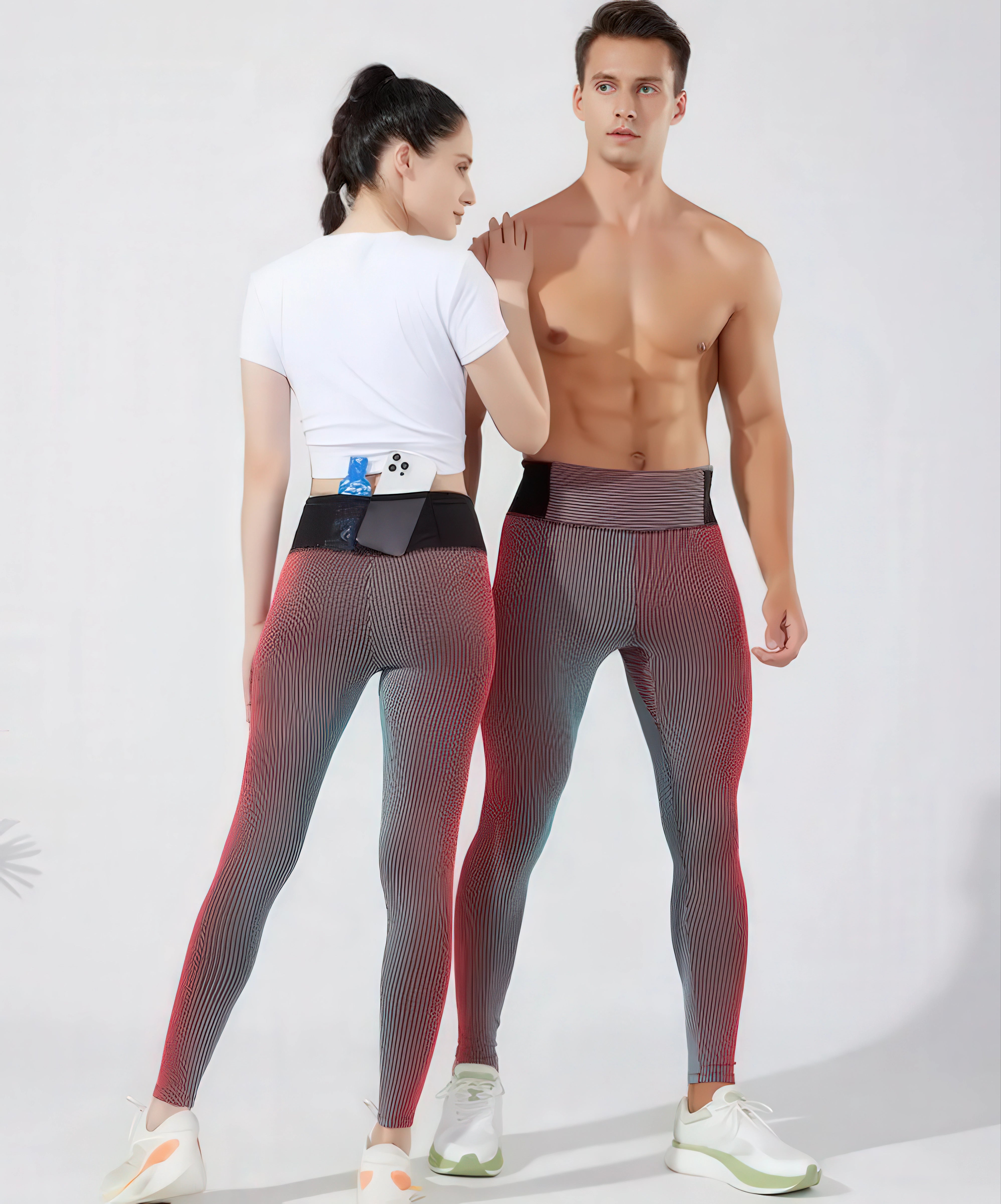
For runners carrying larger phones (Pro Max or Ultra sizes) or multiple items (phone, keys, cards, gels), a minimalist running belt worn over the MarathonEdge running short provides additional capacity without compromising the short's liner comfort or freedom of movement. The triangle liner continues to provide chafe protection while the belt handles storage.
Strategy 4: Internal Liner Pocket for Essentials Only
The internal liner stash pocket is best reserved for a single house key or card. Placing a phone here would negate the triangle liner's primary benefit — reduced chafing through minimal fabric contact — and may cause discomfort during longer runs.
MarathonEdge Pocket Configuration Summary
The MarathonEdge 2-in-1 Triangle Running Shorts offer three pocket options for runners:
- Rear zip pocket: Secure, bounce-free storage for standard-sized phones. Best for primary phone storage during runs.
- Side mesh pockets (×2): Open-entry storage for keys, cards, and energy gels. Not recommended for phones during high-intensity movement.
- Internal liner stash pocket: Single key or card only. Not designed for phone storage.
This configuration is best suited for runners who carry only the essentials and prioritise liner comfort and freedom of movement over maximum pocket capacity.
Key Takeaways for Runners
- The rear zip pocket is your primary phone storage: At 81/100 for waistband security, the MarathonEdge running short's rear zip pocket provides secure, bounce-free storage for standard-sized phones. Use it as your default.
- Side pockets are best for non-essentials: The open-entry side mesh pockets work well for energy gels, keys, or cards — but items can shift during high-intensity movement. Avoid storing your primary phone here during trail runs or sprint sessions.
- Large phones fit well too: If you carry an iPhone 17 Pro Max or Galaxy S26 Ultra, the rear zip pocket accommodates these securely. The MarathonEdge running short handles larger devices without the tight fit issues of previous generations.
- The triangle liner is not a storage feature: The internal liner stash pocket is for a single key or card only. Storing a phone here compromises the liner's chafe-reduction design.
- Best suited for: Runners who carry only the essentials (phone, key, card) and prioritise liner comfort and freedom of movement over maximum pocket capacity.
FAQ — Frequently Asked Questions
Will my iPhone 17 Pro fit in the MarathonEdge rear zip pocket?
Yes. Based on consumer signal analysis and product specifications, the rear zip pocket accommodates standard-sized smartphones including the iPhone 17 Pro, iPhone 17, Samsung Galaxy S25/S26, and Google Pixel 10. The zip closure provides secure storage with minimal bounce during steady-state running. Larger devices such as the iPhone 17 Pro Max or Galaxy S26 Ultra also fit comfortably — the rear pocket has been designed to handle the latest flagship form factors without the tight fit issues of earlier designs.
Do the side pockets have any closure mechanism?
The side mesh pockets are open-entry with no zip or Velcro closure. They are designed for quick-access items such as energy gels, a house key, or a card. The mesh material allows airflow to reduce sweat pooling around stored items. For phone storage, the rear zip pocket is the recommended option due to its positive closure.
Can I carry both a phone and keys without bounce?
Yes. The recommended configuration is to store your phone in the rear zip pocket (secure, central, no bounce) and your keys in one side mesh pocket. This distributes weight evenly and keeps both items accessible. For runners carrying additional items (gels, cards, a second phone), a minimalist running belt worn over the MarathonEdge running short provides extra capacity without compromising the triangle liner's comfort benefits.
Shop Now
MarathonEdge 2-in-1 Triangle Running Shorts
Waistband Security: 81/100 — Above-average pocket security for minimalist runners
View Product — $79.95 AUD- Free shipping on orders over $100 AUD
- 30-day return policy
- UPF 50+ rated fabric
Related Content
- Full Research Analysis: MarathonEdge 2-in-1 Triangle Running Shorts Performance Analysis — Complete methodology, scoring, and comparison data (N=847)
- Product Page: MarathonEdge 2-in-1 Triangle Running Shorts — Full product specifications and purchasing
- Shop All Workout Shorts: Browse our full men's workout shorts collection
Author
By MYOVV Research Team — The MYOVV Research Team comprises product analysts and data scientists specialising in men's performance activewear. This article is derived from the MarathonEdge Research Page, which draws on the MYOVV Consumer Signal Corpus (N=847), a dataset of 10,882 consumer signals collected from verified Australian purchasers and fitness community discussions.
References
- [1] MYOVV Research Team. (2026). MarathonEdge 2-in-1 Triangle Running Shorts Performance Analysis 2026 (N=847). MYOVV. https://myovv.com/pages/marathonedge-research
- [2] MYOVV Consumer Signal Corpus. (2026). Waistband Security variable — NLP sentiment-weighted analysis of 1,847 product reviews. N=847 male athletes.
- [3] Australian/New Zealand Standard AS/NZS 4399:2020. Sun protective clothing — Evaluation and classification. Standards Australia.




Leave a comment
This site is protected by hCaptcha and the hCaptcha Privacy Policy and Terms of Service apply.