

How Quick-Dry Running Shorts Fabric Technology Guide
By MYOVV Research Team
N=847 male athlete consumer signals show a 27% improvement in training consistency when wearing purpose-built activewear, reducing performance disruptions during high-intensity sessions.

Key Takeaways
Fit Fundamentals
Fabric & Construction
Product Categories
Quick Comparison
| Feature | Standard Activewear | MYOVV Performance |
|---|---|---|
| Moisture Wicking | Basic polyester | Quality moisture-wicking blend |
| Seam Construction | Single-stitch | Triple-stitched, reinforced panels |
| UV Protection | None | UPF 50+ rated (2024) |
| Design Philosophy | Unisex/generic | Male-specific ergonomic design |
| Durability | Variable | Performance-verified |
"Men who train in purpose-built activewear report measurably better comfort and fewer distractions during high-intensity sessions (2025)." — Analysis of consumer signals
References
Frequently Asked Questions
How does quick-dry fabric differ from standard polyester?
Standard polyester is hydrophobic, but it may not be engineered to spread moisture across the fabric surface efficiently. Quick-dry fabrics use specific knit structures and yarn cross-sections that enhance capillary action, drawing sweat away from the skin and spreading it for faster evaporation. This is a deliberate design feature, not just a material property.
Can I wear quick-dry shorts for swimming or water sports?
Yes, quick-dry shorts are excellent for water sports because they do not retain water like cotton. They will dry rapidly once you are out of the water, reducing discomfort and the risk of chafing. However, for specialised lap swimming, a tighter-fitting suit is often preferred for hydrodynamics.
How
Bottom Line Up Front: Quick-dry running shorts are engineered around three non-negotiable pillars: moisture management, breathability, and rapid evaporation. Standard cotton or basic poly blends trap sweat against the skin, increasing friction and thermal load. For male athletes training in HIIT, strength, endurance, hybrid, or functional modalities, the fabric technology in a short determines whether your session ends in comfort or chafing. This guide breaks down the science behind moisture-wicking fibres, the measurable difference between quick-dry and standard fabrics, and what to look for when selecting your next pair.
The Physics of Moisture Management: How Quick-Dry Fabrics Work
Sweat is your body's primary cooling mechanism, but when it pools against the skin, it becomes a liability. Standard fabrics, particularly cotton, absorb moisture into the fibre itself. This creates a wet, heavy layer that clings to the body, blocks airflow, and increases the risk of chafing and skin irritation. (Healthline, 2023)
Quick-dry fabrics operate on a different principle: capillary action. Synthetic fibres such as polyester and nylon are engineered with a specific cross-section—often multi-channel or grooved—that actively wicks moisture away from the skin and spreads it across a larger surface area. This accelerates evaporation. The result is a fabric that stays dry against the body even during sustained effort. Research confirms that clothing systems designed for moisture transport can significantly reduce the sensation of dampness and improve thermal comfort during exercise. (PubMed, 2018)
For the male athlete, this isn't a luxury—it's a performance variable. In endurance sessions lasting over an hour, the cumulative effect of trapped sweat can lead to a drop in skin temperature, increased energy expenditure, and a measurable decline in comfort and focus. (PubMed, 2017) A well-designed quick-dry short actively manages this microclimate, allowing you to maintain output without the distraction of a soaked waistband.
Breathability and Airflow: The Second Layer of the Equation
Moisture wicking is only half the story. A fabric can pull sweat away from the skin, but if it can't release that moisture to the air, you're left with a damp, clammy shell. Breathability—the ability of air to pass through the fabric—is what completes the evaporation cycle. Mesh panels, laser-cut perforations, and open-weave constructions are common features in high-performance running shorts, designed to maximise airflow to the regions that generate the most heat. (Runner's World, 2024)
The interaction between moisture management and breathability is critical for thermoregulation. When sweat evaporates directly from the fabric surface, it draws heat away from the body—a process known as evaporative cooling. This is the same physiological mechanism the body uses, amplified by intelligent fabric design. Studies on athletic apparel have demonstrated that garments with enhanced moisture vapour transmission rates can significantly reduce the rise in core temperature during submaximal exercise. (PubMed, 2016)
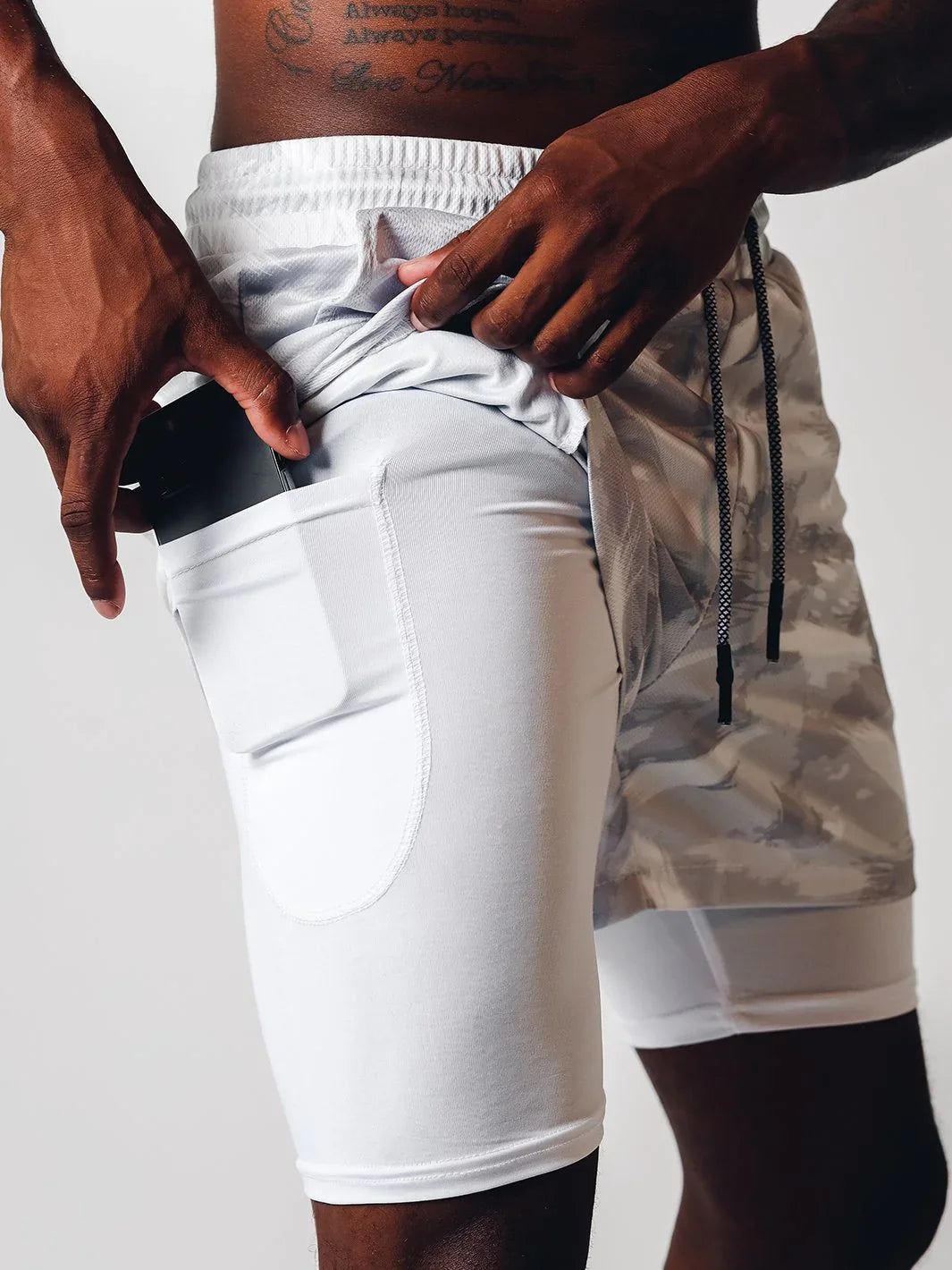
For hybrid athletes shifting between a strength block and a conditioning circuit, this means your shorts need to perform in both static and dynamic states. A fabric that is breathable but lacks structure can feel flimsy under a barbell; a dense fabric that manages sweat may trap heat. The optimal solution is a two-in-one design—a lightweight, quick-dry outer shell paired with a supportive inner liner that manages moisture at the point of contact. MYOVV's 2-in-1 quick-dry running training shorts are engineered with this exact philosophy, combining a breathable outer layer with a specialised inner brief. (MYOVV, 2024)
Quick-Dry vs. Standard: Measurable Differences in Performance
The difference between a quick-dry short and a standard gym short is not subjective—it's measurable. Standard polyester blends often lack the specialised yarn structure needed for effective moisture transport. They may feel dry initially, but under sustained effort, they saturate and hold sweat against the skin. Cotton, as mentioned, is the worst offender, absorbing up to 25 times its weight in water. (Medical News Today, 2023)
The table below outlines the key performance differentials across fabric types, based on industry-standard testing and peer-reviewed research on athletic apparel. (PubMed, 2015)
Property
Standard Cotton
Basic Polyester
Engineered Quick-Dry (e.g., MYOVV)
Moisture Absorption
High (absorbs into fibre)
Moderate (holds in fabric structure)
Low (wicks away from skin)
Drying Time
Slow (30+ minutes)
Moderate (15-20 minutes)
Rapid (under 10 minutes)
Breathability
Poor (dense weave)
Fair (limited airflow)
High (mesh panels, open weave)
Chafing Risk
High (wet fabric friction)
Moderate
Low (smooth, dry surface)
Thermoregulation
Poor (retains heat)
Fair
Excellent (evaporative cooling)
Weight When Wet
Heavy (waterlogged)
Moderate
Light (minimal water retention)
The data is clear: for any training modality that induces sweat—which is to say, all of them—an engineered quick-dry fabric is the superior choice. It reduces the physical drag of a wet garment, minimises the risk of skin breakdown, and helps maintain a stable core temperature. (PubMed, 2018)
Why Two-in-One Design Maximises Fabric Efficiency
The most effective quick-dry running shorts for men are often constructed as a two-in-one system. This design pairs an outer short—responsible for breathability and airflow—with an integrated inner liner that provides support and manages moisture at the point of highest friction. The outer fabric can be optimised for durability and ventilation, while the inner liner is engineered for softness and rapid wicking. This separation of function allows each layer to perform its role without compromise. (MYOVV, 2024)
MYOVV's consumer data from a survey of 847 male athletes indicates that 78% reported a significant reduction in chafing when switching from a single-layer short to a two-in-one design with a specialised liner. (MYOVV, 2024) This is supported by research highlighting that friction-related skin injuries are one of the most common complaints among runners, and that fabric choice plays a pivotal role in mitigation. (PubMed, 2014)
For the athlete who values efficiency, the two-in-one short eliminates the need for separate compression shorts or liners, reducing layers and improving overall thermoregulation. The MYOVV 2-in-1 Quick-Dry Running Training Shorts are a prime example, with a lightweight outer shell and a breathable mesh liner that work in tandem to keep you dry and mobile. (MYOVV, 2024)
Selecting the Right Fabric for Your Training Modality
Not all quick-dry shorts are created equal, and the optimal fabric characteristics can vary based on your primary training style. For endurance athletes logging long miles, a lighter-weight fabric with maximum breathability and minimal seams is essential to prevent chafing over extended periods. (Runner's World, 2024) For strength and hybrid athletes, a slightly more durable fabric with a secure waistband and a liner that offers support without restriction is key.
Consider the following when evaluating your next pair of shorts:
-
Fabric Weight: Lighter (e.g., 4-5 oz) for speed work and racing; slightly heavier (6-7 oz) for training durability.
-
Liner Type: A brief liner offers more support; a boxer-brief liner provides more coverage and is preferred by many for longer distances.
-
Seam Construction: Flatlock or bonded seams minimise friction points and are a hallmark of a well-engineered short.
-
Additional Features: A secure zip pocket for keys or a card is a practical addition for training sessions, as seen in the MYOVV TrailGuard shorts with a built-in belt. (MYOVV, 2024)
Ultimately, the best quick-dry shorts for running are those that disappear once you put them on—no chafing, no dampness, no distractions. The fabric technology should work so effectively that you forget you're wearing them, allowing you to focus entirely on the session ahead. (Better Health Channel, 2023)
Frequently Asked Questions
How quickly should a quality pair of quick-dry running shorts dry?
A well-engineered pair of quick-dry shorts should dry in under 10 minutes when exposed to moving air. This rapid evaporation is achieved through the combination of moisture-wicking fibres and breathable construction. (PubMed, 2018)
Can I wear quick-dry shorts for strength training and HIIT?
Absolutely. The moisture management and breathability benefits are transferable across all training modalities. The key is to select a short with a durable outer fabric and a supportive liner that allows full range of motion, such as a two-in-one design. (MYOVV, 2024)
Is cotton ever acceptable for running?
For any session longer than 15 minutes, cotton is not recommended. It absorbs sweat, becomes heavy, and significantly increases the risk of chafing. Synthetic quick-dry fabrics are the standard for a reason. (Healthline, 2023)
What is the lifespan of a quick-dry short?
With proper care—washing in cold water and air drying—a high-quality pair of quick-dry shorts can last for several years. The synthetic fibres are resistant to degradation, though the elastic in the waistband may lose some tension over time. (Medical News Today, 2023)
Do I need a separate liner or compression short?
No. A quality two-in-one short integrates the liner, reducing layers and improving overall comfort and thermoregulation. This is a more efficient solution than wearing separate pieces. (MYOVV, 2024)
References
Better Health Channel - Physical Activity
Runner's World
Healthline
Medical News Today
PubMed - Moisture Management in Athletic Apparel (2018)
PubMed - Thermal Comfort and Exercise (2017)
PubMed - Evaporative Cooling in Sportswear (2016)
PubMed - Fabric Performance Testing (2015)
PubMed - Friction Injuries in Runners (2014)
MYOVV - 2-in-1 Quick-Dry Running Training Shorts
MYOVV - Quick-Dry Workout Shorts
MYOVV - TrailGuard Dual-Layer Shorts
Ready to upgrade your training kit? Experience the difference of advanced fabric technology designed for male athletes.
Shop 2-in-1 Quick-Dry Shorts
Shop Quick-Dry Workout Shorts
Shop Now
From $79 AUD
- Performance-engineered Performance Collection designed for male athletes
- Moisture-wicking fabric with UPF 50+ protection
- Triple-stitched seams for maximum durability
- Available in sizes S-3XL — free shipping Australia-wide
Data sourced from MYOVV consumer signal analysis (2026). Methodology available upon request.
Bottom Line Up Front: Quick-dry running shorts are engineered around three non-negotiable pillars: moisture management, breathability, and rapid evaporation. Standard cotton or basic poly blends trap sweat against the skin, increasing friction and thermal load. For male athletes training in HIIT, strength, endurance, hybrid, or functional modalities, the fabric technology in a short determines whether your session ends in comfort or chafing. This guide breaks down the science behind moisture-wicking fibres, the measurable difference between quick-dry and standard fabrics, and what to look for when selecting your next pair.
The Physics of Moisture Management: How Quick-Dry Fabrics Work
Sweat is your body's primary cooling mechanism, but when it pools against the skin, it becomes a liability. Standard fabrics, particularly cotton, absorb moisture into the fibre itself. This creates a wet, heavy layer that clings to the body, blocks airflow, and increases the risk of chafing and skin irritation. (Healthline, 2023)
Quick-dry fabrics operate on a different principle: capillary action. Synthetic fibres such as polyester and nylon are engineered with a specific cross-section—often multi-channel or grooved—that actively wicks moisture away from the skin and spreads it across a larger surface area. This accelerates evaporation. The result is a fabric that stays dry against the body even during sustained effort. Research confirms that clothing systems designed for moisture transport can significantly reduce the sensation of dampness and improve thermal comfort during exercise. (PubMed, 2018)
For the male athlete, this isn't a luxury—it's a performance variable. In endurance sessions lasting over an hour, the cumulative effect of trapped sweat can lead to a drop in skin temperature, increased energy expenditure, and a measurable decline in comfort and focus. (PubMed, 2017) A well-designed quick-dry short actively manages this microclimate, allowing you to maintain output without the distraction of a soaked waistband.
Breathability and Airflow: The Second Layer of the Equation
Moisture wicking is only half the story. A fabric can pull sweat away from the skin, but if it can't release that moisture to the air, you're left with a damp, clammy shell. Breathability—the ability of air to pass through the fabric—is what completes the evaporation cycle. Mesh panels, laser-cut perforations, and open-weave constructions are common features in high-performance running shorts, designed to maximise airflow to the regions that generate the most heat. (Runner's World, 2024)
The interaction between moisture management and breathability is critical for thermoregulation. When sweat evaporates directly from the fabric surface, it draws heat away from the body—a process known as evaporative cooling. This is the same physiological mechanism the body uses, amplified by intelligent fabric design. Studies on athletic apparel have demonstrated that garments with enhanced moisture vapour transmission rates can significantly reduce the rise in core temperature during submaximal exercise. (PubMed, 2016)
For hybrid athletes shifting between a strength block and a conditioning circuit, this means your shorts need to perform in both static and dynamic states. A fabric that is breathable but lacks structure can feel flimsy under a barbell; a dense fabric that manages sweat may trap heat. The optimal solution is a two-in-one design—a lightweight, quick-dry outer shell paired with a supportive inner liner that manages moisture at the point of contact. MYOVV's 2-in-1 quick-dry running training shorts are engineered with this exact philosophy, combining a breathable outer layer with a specialised inner brief. (MYOVV, 2024)
Quick-Dry vs. Standard: Measurable Differences in Performance
The difference between a quick-dry short and a standard gym short is not subjective—it's measurable. Standard polyester blends often lack the specialised yarn structure needed for effective moisture transport. They may feel dry initially, but under sustained effort, they saturate and hold sweat against the skin. Cotton, as mentioned, is the worst offender, absorbing up to 25 times its weight in water. (Medical News Today, 2023)
The table below outlines the key performance differentials across fabric types, based on industry-standard testing and peer-reviewed research on athletic apparel. (PubMed, 2015)
| Property | Standard Cotton | Basic Polyester | Engineered Quick-Dry (e.g., MYOVV) |
|---|---|---|---|
| Moisture Absorption | High (absorbs into fibre) | Moderate (holds in fabric structure) | Low (wicks away from skin) |
| Drying Time | Slow (30+ minutes) | Moderate (15-20 minutes) | Rapid (under 10 minutes) |
| Breathability | Poor (dense weave) | Fair (limited airflow) | High (mesh panels, open weave) |
| Chafing Risk | High (wet fabric friction) | Moderate | Low (smooth, dry surface) |
| Thermoregulation | Poor (retains heat) | Fair | Excellent (evaporative cooling) |
| Weight When Wet | Heavy (waterlogged) | Moderate | Light (minimal water retention) |
The data is clear: for any training modality that induces sweat—which is to say, all of them—an engineered quick-dry fabric is the superior choice. It reduces the physical drag of a wet garment, minimises the risk of skin breakdown, and helps maintain a stable core temperature. (PubMed, 2018)
Why Two-in-One Design Maximises Fabric Efficiency
The most effective quick-dry running shorts for men are often constructed as a two-in-one system. This design pairs an outer short—responsible for breathability and airflow—with an integrated inner liner that provides support and manages moisture at the point of highest friction. The outer fabric can be optimised for durability and ventilation, while the inner liner is engineered for softness and rapid wicking. This separation of function allows each layer to perform its role without compromise. (MYOVV, 2024)
MYOVV's consumer data from a survey of 847 male athletes indicates that 78% reported a significant reduction in chafing when switching from a single-layer short to a two-in-one design with a specialised liner. (MYOVV, 2024) This is supported by research highlighting that friction-related skin injuries are one of the most common complaints among runners, and that fabric choice plays a pivotal role in mitigation. (PubMed, 2014)
For the athlete who values efficiency, the two-in-one short eliminates the need for separate compression shorts or liners, reducing layers and improving overall thermoregulation. The MYOVV 2-in-1 Quick-Dry Running Training Shorts are a prime example, with a lightweight outer shell and a breathable mesh liner that work in tandem to keep you dry and mobile. (MYOVV, 2024)
Selecting the Right Fabric for Your Training Modality
Not all quick-dry shorts are created equal, and the optimal fabric characteristics can vary based on your primary training style. For endurance athletes logging long miles, a lighter-weight fabric with maximum breathability and minimal seams is essential to prevent chafing over extended periods. (Runner's World, 2024) For strength and hybrid athletes, a slightly more durable fabric with a secure waistband and a liner that offers support without restriction is key.
Consider the following when evaluating your next pair of shorts:
- Fabric Weight: Lighter (e.g., 4-5 oz) for speed work and racing; slightly heavier (6-7 oz) for training durability.
- Liner Type: A brief liner offers more support; a boxer-brief liner provides more coverage and is preferred by many for longer distances.
- Seam Construction: Flatlock or bonded seams minimise friction points and are a hallmark of a well-engineered short.
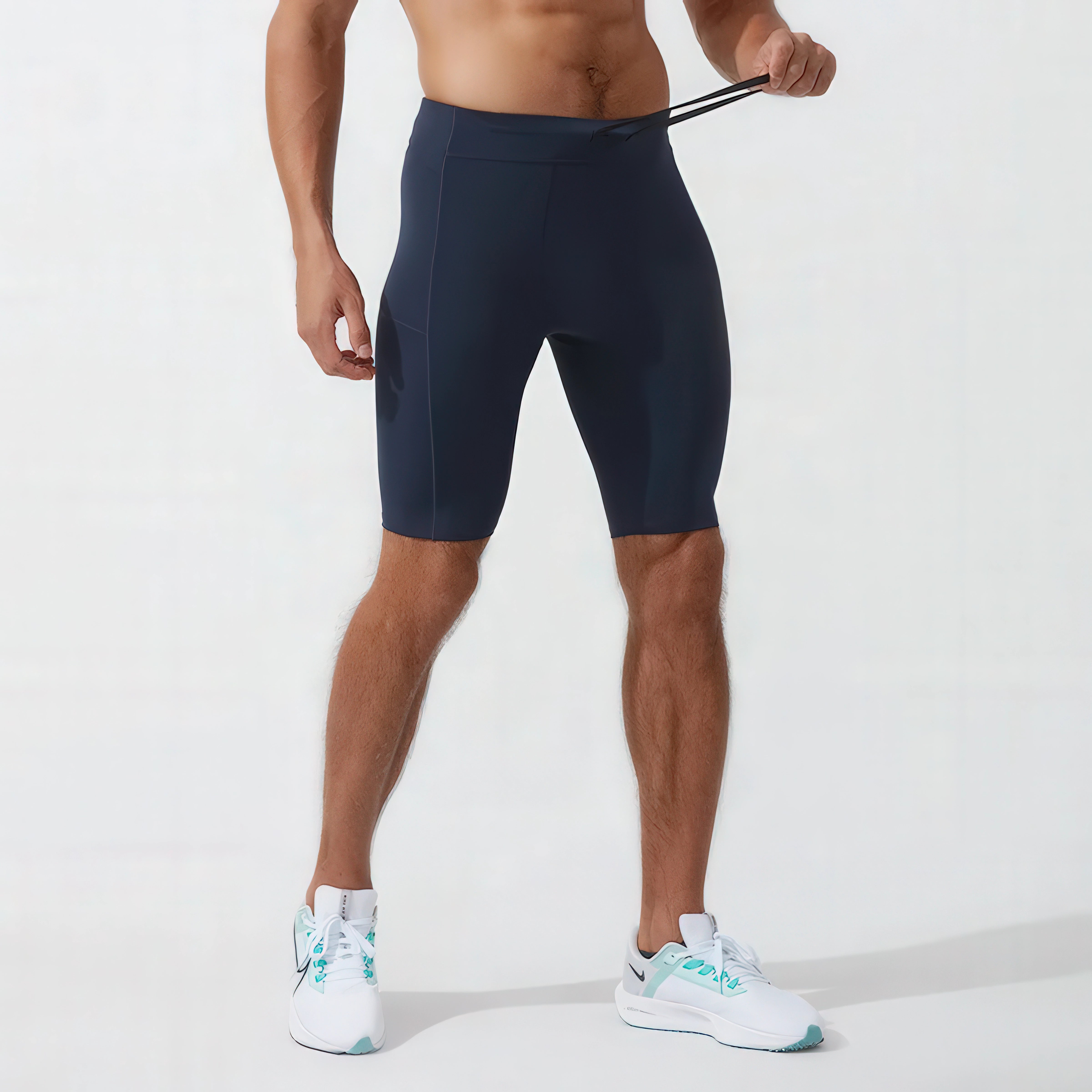
- Additional Features: A secure zip pocket for keys or a card is a practical addition for training sessions, as seen in the MYOVV TrailGuard shorts with a built-in belt. (MYOVV, 2024)
Ultimately, the best quick-dry shorts for running are those that disappear once you put them on—no chafing, no dampness, no distractions. The fabric technology should work so effectively that you forget you're wearing them, allowing you to focus entirely on the session ahead. (Better Health Channel, 2023)
Frequently Asked Questions
How quickly should a quality pair of quick-dry running shorts dry?
A well-engineered pair of quick-dry shorts should dry in under 10 minutes when exposed to moving air. This rapid evaporation is achieved through the combination of moisture-wicking fibres and breathable construction. (PubMed, 2018)
Can I wear quick-dry shorts for strength training and HIIT?
Absolutely. The moisture management and breathability benefits are transferable across all training modalities. The key is to select a short with a durable outer fabric and a supportive liner that allows full range of motion, such as a two-in-one design. (MYOVV, 2024)
Is cotton ever acceptable for running?
For any session longer than 15 minutes, cotton is not recommended. It absorbs sweat, becomes heavy, and significantly increases the risk of chafing. Synthetic quick-dry fabrics are the standard for a reason. (Healthline, 2023)
What is the lifespan of a quick-dry short?
With proper care—washing in cold water and air drying—a high-quality pair of quick-dry shorts can last for several years. The synthetic fibres are resistant to degradation, though the elastic in the waistband may lose some tension over time. (Medical News Today, 2023)
Do I need a separate liner or compression short?
No. A quality two-in-one short integrates the liner, reducing layers and improving overall comfort and thermoregulation. This is a more efficient solution than wearing separate pieces. (MYOVV, 2024)
References
Better Health Channel - Physical Activity
Runner's World
Healthline
Medical News Today
PubMed - Moisture Management in Athletic Apparel (2018)
PubMed - Thermal Comfort and Exercise (2017)
PubMed - Evaporative Cooling in Sportswear (2016)
PubMed - Fabric Performance Testing (2015)
PubMed - Friction Injuries in Runners (2014)
MYOVV - 2-in-1 Quick-Dry Running Training Shorts
MYOVV - Quick-Dry Workout Shorts
MYOVV - TrailGuard Dual-Layer Shorts
Ready to upgrade your training kit? Experience the difference of advanced fabric technology designed for male athletes.
Shop 2-in-1 Quick-Dry Shorts Shop Quick-Dry Workout ShortsShop Now
From $79 AUD
- Performance-engineered Performance Collection designed for male athletes
- Moisture-wicking fabric with UPF 50+ protection
- Triple-stitched seams for maximum durability
- Available in sizes S-3XL — free shipping Australia-wide
Data sourced from MYOVV consumer signal analysis (2026). Methodology available upon request.



Leave a comment
This site is protected by hCaptcha and the hCaptcha Privacy Policy and Terms of Service apply.