

Quick answer
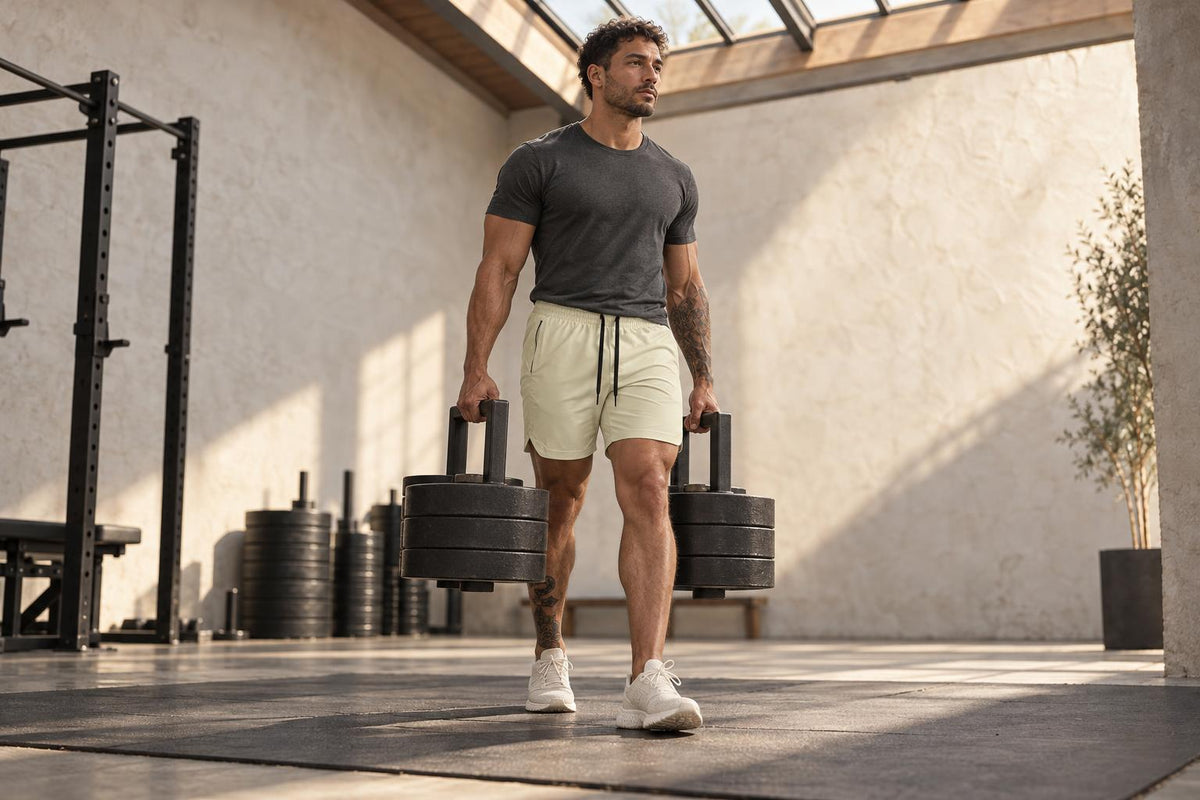
Athletic shorts are purpose-built shorts made from performance fabrics with features that support training. They use lightweight, breathable, quick-drying materials, a stretchable construction, and a fit that allows full movement for gym work, lifting, running, and hybrid training.
- Athletic shorts use performance fabrics like polyester with stretch, not heavy cotton or casual blends.
- Fit is activity-specific: compression for support, regular fit for lifting, and split hems for running.
- Inseam length changes function: shorter for stride freedom, longer for thigh coverage and support.
- Look for moisture management, stretch, and secure pockets when comparing training shorts.
- Match the short to the session: lifting, HIIT, running, and hybrid work each favour different builds.
Part of our research on Men's Gym and Workout Shorts: MYOVV Research.
What are considered athletic shorts?
Athletic shorts are shorts engineered for movement, built from technical fabrics with a fit that supports training.
The defining trait is purpose. Athletic shorts exist to help you train, lift, run, or work through hybrid sessions without the fabric getting in the way. That means lightweight materials, a stretchable construction, and a cut that moves when you move. Casual shorts can look similar, but they are cut for style and everyday wear, not for repeated sweat and high output sessions.
Performance fabric is the second pillar. Most training shorts use polyester or polyester blends because the fibres pull sweat off the skin and dry fast. A small share of elastane or spandex adds stretch, which matters for deep squats, lunges, and overhead work. The waistband sits flat or stays anchored, the seams are positioned to reduce irritation, and pockets, when present, are placed so they do not bounce.
- Performance fabric, usually polyester based, that wicks and dries quickly.
- Stretch built into the weave for full range of motion.
- A fit and inseam matched to the activity you train for.
Athletic shorts are defined by what they do in motion, not by what they look like on the rack.
What features separate athletic shorts from casual shorts?
Athletic shorts earn their name through moisture management, stretch, secure construction, and activity-matched fit.
Casual shorts prioritise cotton, structure, and a clean look. Athletic shorts do the opposite. They use synthetic fibres that move sweat away from the skin so you do not train in a wet, heavy garment. Quick-dry fabric matters because damp cotton stays damp, sags, and rubs, which is the opposite of what you want during a long set or a long run.
Construction tells the rest of the story. Look for a stretch build, often labelled as four-way stretch, that returns to shape after deep movement. A lined or compression inner short supports the thigh and reduces friction. Flat or minimal seams lower the chance of chafing. Pockets that close or sit flush against the body stop keys and phones from bouncing during hill sprints or box jumps.
A review of exercise physiology notes that exercise increases heat production and the body must dissipate that heat, so garment construction matters for thermoregulation during training [1].

Ultra-light 100% polyester with a quick-dry, breathable build and a fitness-focused fit, suited to gym training, lifting, HIIT, hybrid workouts, and…
How does inseam length change what a short does?
Inseam length controls how much thigh shows, how much the short moves with you, and what the short is best used for.
Short inseams, around three to five inches, free the thigh and suit running, sprint work, and any session where stride length matters. They feel light, run cool, and let the skin breathe. The trade-off is less coverage, which means more upper thigh exposure to sweat and friction on longer efforts. Longer inseams, seven to nine inches, give more coverage, more support, and a slightly compressive feel through the quad.
Lifters often prefer this length because it keeps the shorts in place under a bar, and the extra fabric does not ride up during hip hinges. Mid-length shorts around five to seven inches are the everyday training compromise: enough room to move, enough coverage to feel stable under load.

Are compression shorts considered athletic shorts?
Compression shorts are a core athletic short category built to support the muscles and reduce friction.
Compression shorts sit close to the skin and apply even pressure across the thigh and hip. That pressure supports blood flow during work, holds the muscles in place, and limits the fabric-on-skin movement that causes chafing. They work well as a base layer under a looser outer short, or on their own for lifting and HIIT sessions where a tight line through the leg is an advantage.
The materials lean on elastane and stretch polyester blends rather than loose weaves. A four-way stretch construction lets the short move with deep knee travel without losing its shape. Runners often wear them for track work and tempo sessions, and lifters wear them under a regular-fit short for squat days.

Four-way stretch construction with quick-dry, lightweight, breathable fabric and a smooth, irritation-free compression fit designed for gym training…
What about 2-in-1 shorts and hybrid training?
2-in-1 shorts combine an outer shell with a compression liner, giving coverage and support in one garment.
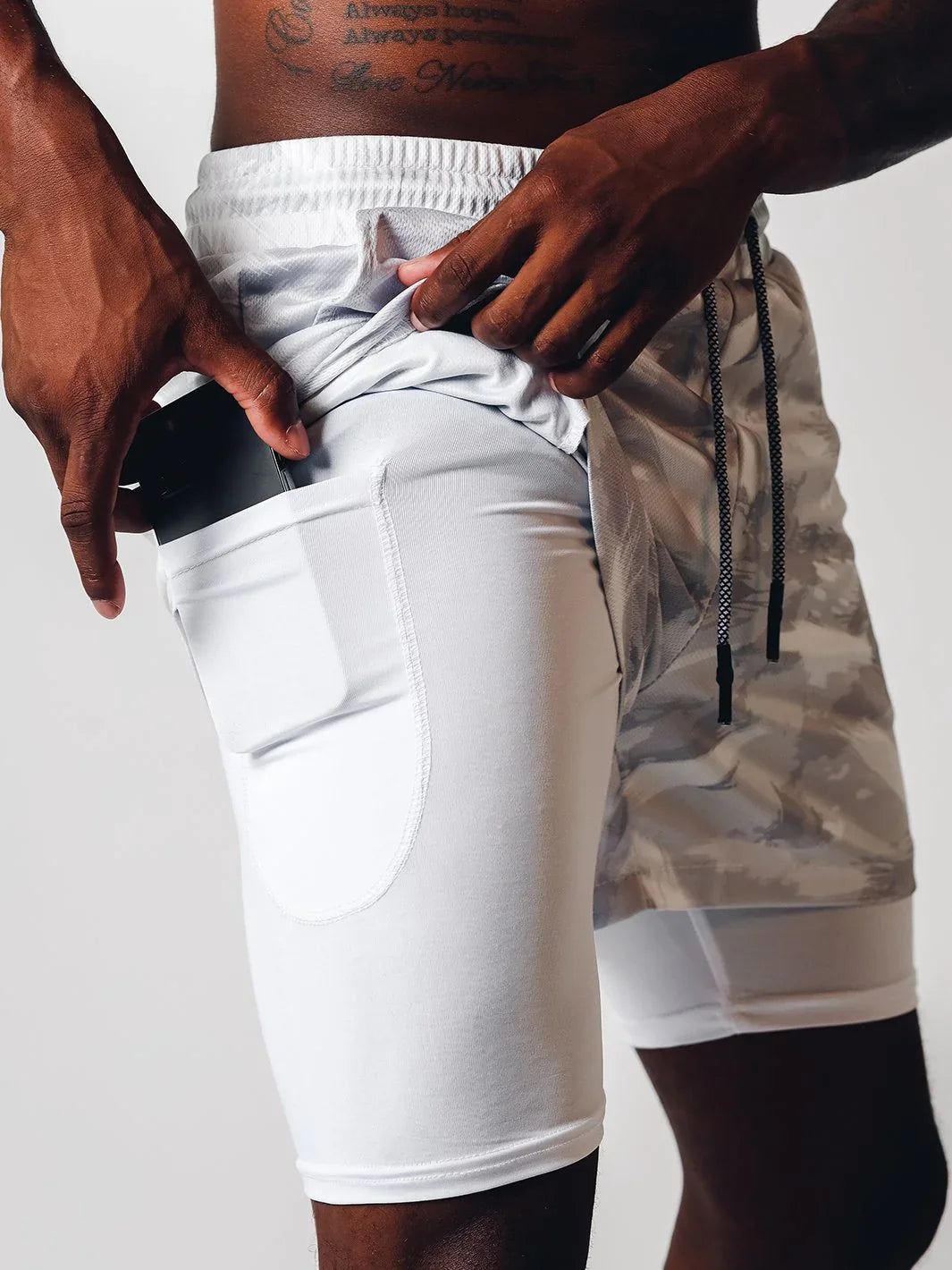
Hybrid training shifts constantly between lifting, conditioning, and short bursts of cardio, so the short has to keep up. A 2-in-1 build pairs a regular-fit outer short with a built-in compression inner. The outer carries pockets, handles the look, and gives thigh coverage. The inner does the support work and keeps the short anchored during jumps, cleans, and box steps. For men who train across disciplines in a single session, this format removes the need to choose between a loose short and a tight short. Look for lightweight outer fabric, stretch through both layers, and pockets placed where they do not press into the hip under a loaded barbell.
How do you pick the right athletic shorts for your training?
Match the short's fabric, fit, and length to the work you do most often, then check the details.
Start with the dominant session in your week. Runners want a short, lightweight build with split hems or a liner. Lifters want a regular fit with a flat waistband and enough length to cover the upper thigh under a squat. Hybrid athletes usually do best with a 2-in-1 build that handles both demands. Then check the details. Stretch fabric that snaps back after a deep lunge, a waistband that stays put without a drawcord tug every set, and pockets that close or sit flat. Pick a neutral colour that fits your training environment. The right pair should disappear once the warm-up is over.
A textile study examining polyester fabric found that repeated laundering and ageing caused measurable changes in tensile strength and surface morphology, supporting careful washing to preserve the life of polyester athletic shorts [2].
- Runners: short inseam, lightweight fabric, liner or split hem.
- Lifters: regular fit, longer inseam, flat waistband.
- Hybrid athletes: 2-in-1 with a compression inner and a stretch outer.
How they compare
| Product | Best for | Key features | Colours |
|---|---|---|---|
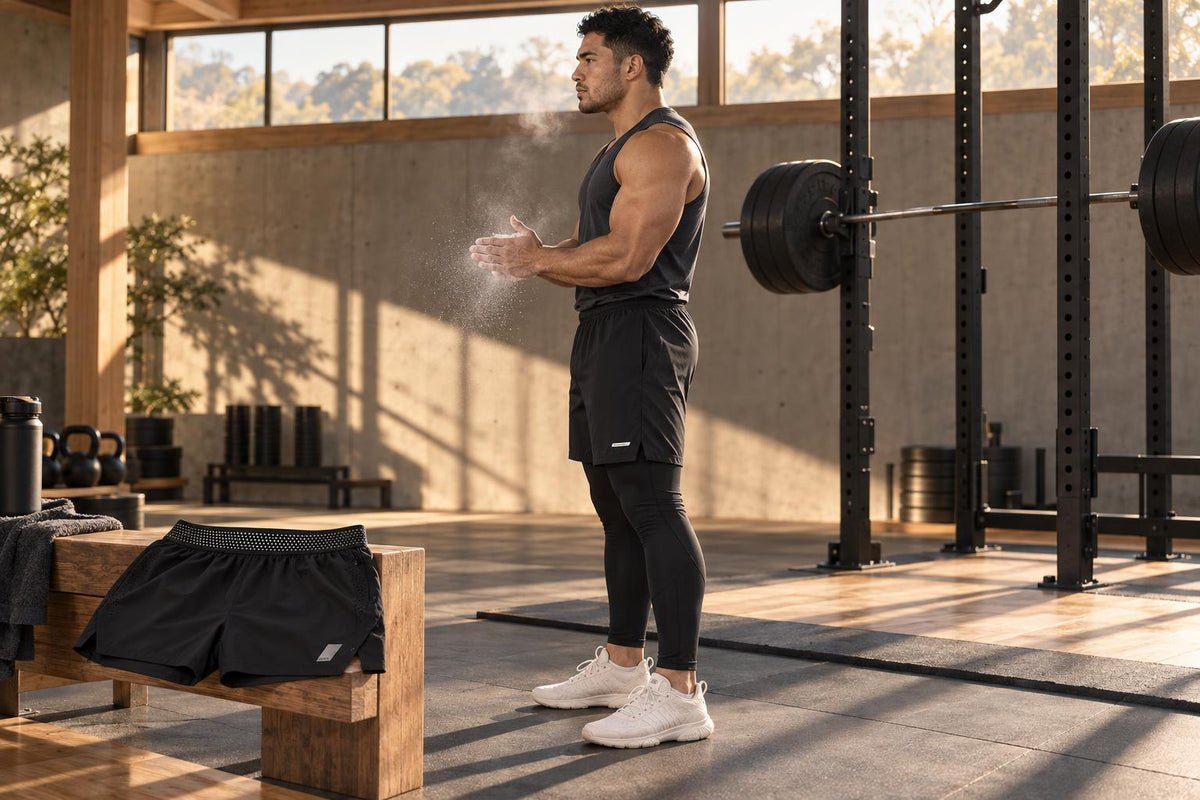
| SwiftDry Performance Training Shorts | Gym sessions and cardio days | Ultra-light 100% polyester, quick-dry, breathable, fitness-focused fit | Grey Camo, Black, Khaki |
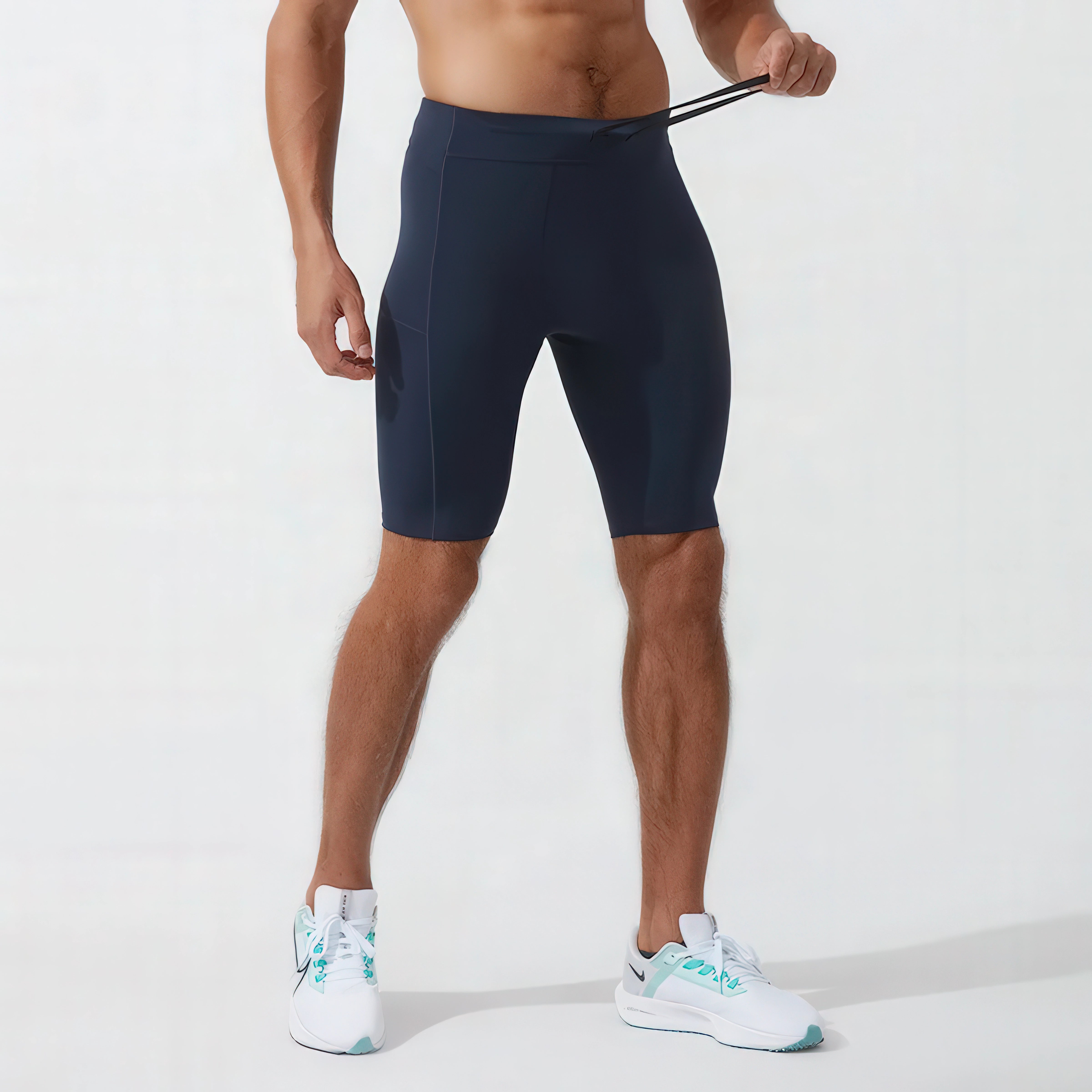
| AirFlex Training Compression Shorts | Base layer and muscle support | Four-way stretch, lightweight breathable fabric, quick-dry, irritation-free compression fit | Camouflage Black |
| Men's Tactical Camo 2-in-1 Training Shorts | Hybrid training and lifting | Stretchable, lightweight, pockets, moisture control, regular fit with built-in liner | White Camouflage, Gray Camouflage, Khaki Camouflage |
Shop the gear
Ultra-light 100% polyester with a quick-dry, breathable build and a fitness-focused fit, suited to gym training, lifting, HIIT, hybrid workouts, and…
Four-way stretch construction with quick-dry, lightweight, breathable fabric and a smooth, irritation-free compression fit designed for gym training…

Stretchable, lightweight design with pockets, moisture control, and a regular fit, engineered for gym training, lifting, HIIT, hybrid workouts, and…
Frequently asked questions
What counts as an athletic short versus a casual short?
Athletic shorts are purpose-built for training, using technical fabrics, stretch construction, and features that support movement and moisture control. Casual shorts focus on everyday style and comfort, with cotton or cotton blends, simpler construction, and no performance features. If the short is designed for the gym, it is athletic.
Are compression shorts really athletic shorts?
Compression shorts are a core category of athletic shorts. They use stretchy, supportive fabric to hug the muscles, reduce friction during movement, and manage sweat. They are common as base layers or worn alone for lifting, running, and high-intensity work, which makes them fully athletic.
What inseam length works best for gym and workout shorts?
A 5 to 7 inch inseam is the common sweet spot for gym training and lifting. It gives enough thigh coverage to move under a barbell, stays clear of deep squats, and still feels mobile for HIIT and hybrid work. Shorter inseams suit running; longer ones suit longer lift sessions.
How do 2-in-1 shorts differ from regular training shorts?
2-in-1 shorts combine an outer shell with a built-in compression liner. The shell gives the look and pocket space of a regular short, while the liner adds support and reduces inner-thigh friction. They are a single garment solution for athletes who want coverage and compression at once.
What fabric features should I look for in men's workout shorts?
Look for quick-dry, breathable material with four-way stretch and a secure waistband. A gusseted crotch and flat seams help during deep movement, and a lined or liner-friendly inner removes the need for separate base layers. These features keep the short functional across gym sessions and cardio work.
Sources
- Clothing and thermoregulation during exercise. pubmed.ncbi.nlm.nih.gov
- Aging and Modified Washing Process for Polyester Fabrics-Environmental Impact. pubmed.ncbi.nlm.nih.gov
- Thermo-Physiological Comfort Properties of Sportswear with Different Combination of Inner and Outer Layers. pubmed.ncbi.nlm.nih.gov



Leave a comment
This site is protected by hCaptcha and the hCaptcha Privacy Policy and Terms of Service apply.