

What Is a Built-in Belt in Running Shorts?
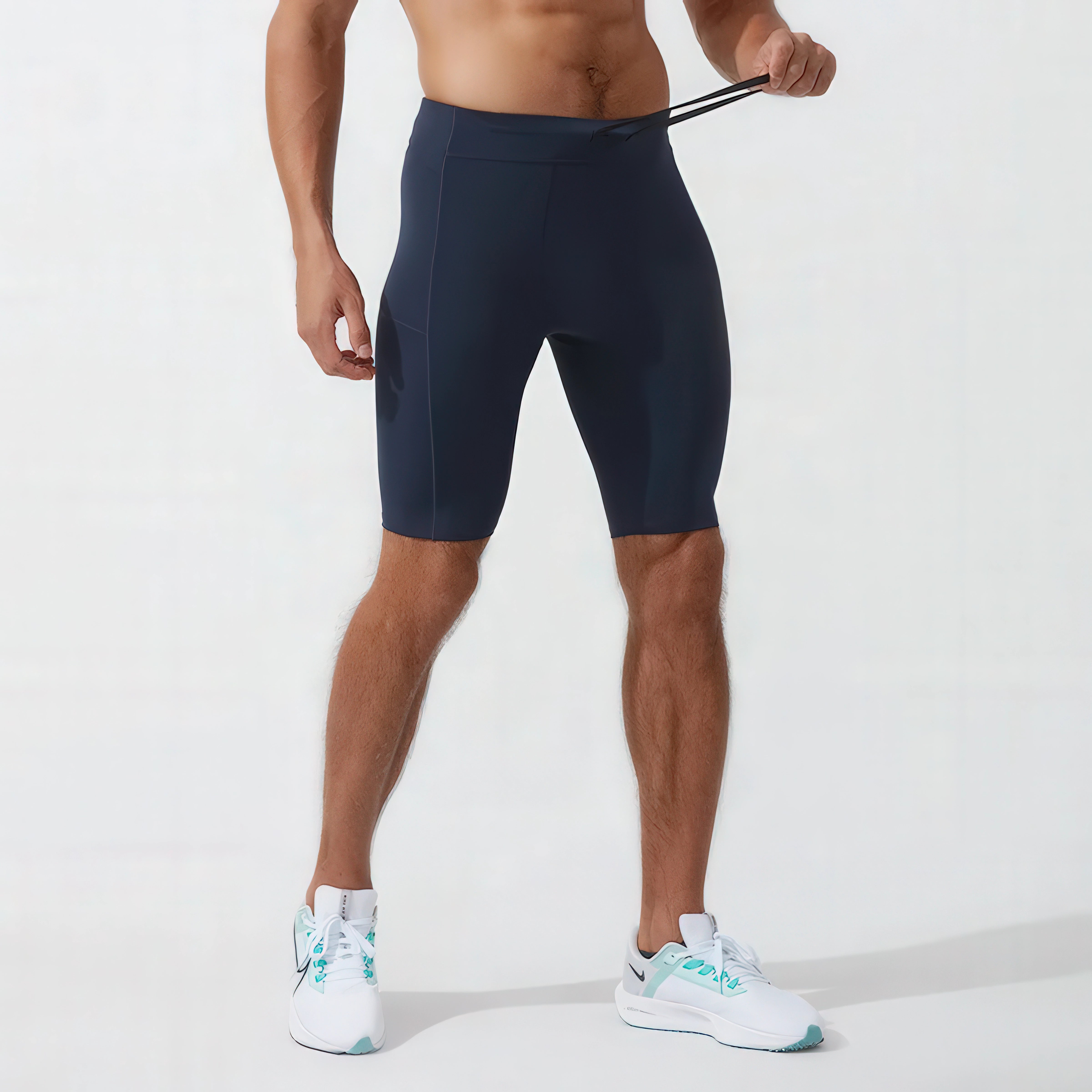
A built-in belt is a wide elastic waistband — typically 1.5 to 3 inches wide — with internal grip elements that keep your shorts in place without relying on a drawcord. These grip elements can be silicone dots or strips, powermesh panels, or bonded elastic that creates friction against your skin or compression liner.
This is fundamentally different from a standard elastic waistband. Regular elastic bands lose tension over time as the fabric stretches and sweat reduces friction. A built-in belt uses active grip technology that maintains hold even when wet. It also distributes pressure evenly across your waist rather than concentrating it at a single drawcord point.
It's also different from a separate running belt. A running belt is an accessory you put on over your shorts — it can bounce, shift, and create an extra layer of heat and bulk. A built-in belt is integrated into the short itself, so there's nothing extra to adjust or carry.
Why Standard Running Shorts Fail
Standard running shorts rely on a simple elastic waistband and a drawcord. This works fine for casual wear, but running introduces repetitive motion, sweat, and weight from pocket contents — all of which work against the waistband's ability to stay put.
The slide problem: Standard elastic loses tension after 20-30 minutes of running. Body heat softens the elastic fibres, and sweat reduces the friction between the waistband and your skin. The result is a slow, creeping slide that requires constant adjustment.
The drawcord fail: A drawcord tightens at a single point — the front centre of your waist. This creates a tourniquet effect: tight enough to hold at that one point, but loose everywhere else. As you run, the cord loosens, and the shorts shift. Tighten it again, and you're back to the pressure point problem.
The bounce equation: When you put your phone in a standard pocket, every stride creates a pendulum effect. The weight swings, the pocket pulls on the waistband, and the shorts gradually work their way down. The heavier the phone, the faster the slide.
The adjustment cycle: Pull up, run, slide down, repeat. This constant micro-interruption breaks your running rhythm and your mental focus. Every time you reach down to adjust your shorts, you're not thinking about your form, your breathing, or your pace.
How Built-in Belt Technology Works
The engineering behind built-in belts is straightforward but effective. A wide waistband creates more surface area in contact with your body, which means more friction holding the shorts in place. The grip elements — silicone dots or strips — add mechanical friction that doesn't depend on the elastic tension alone.
Silicone grip is the most common technology. Tiny silicone dots or continuous strips are bonded to the inside of the waistband. Silicone has high friction against skin and fabric, even when wet. It doesn't absorb sweat, so its grip doesn't degrade during a run. The dots are spaced to allow airflow while maintaining hold.
Compression-moulded waistbands take a different approach. Instead of adding grip to a separate waistband, the waistband itself is constructed from a compression-grade material that provides both hold and support. These are common in 2-in-1 shorts where the compression liner and waistband are one piece.
Bonded construction eliminates the bulk of sewn waistbands. Instead of folding over elastic and stitching it in place, bonded waistbands use heat and adhesive to join the waistband to the short fabric. This creates a smooth, flat waistband that sits flush against the body without the ridge of a sewn seam.
Key Features to Look For
When shopping for running shorts with a built-in belt, focus on these features:
- Waistband width: Wider is better. A 2-inch or wider waistband distributes hold across more surface area. Narrow waistbands (under 1.5 inches) don't provide enough grip surface to be effective.
- Grip material: Silicone dots or strips are the gold standard. They maintain grip when wet and don't degrade over time. Some brands use rubberised prints, which are less durable.
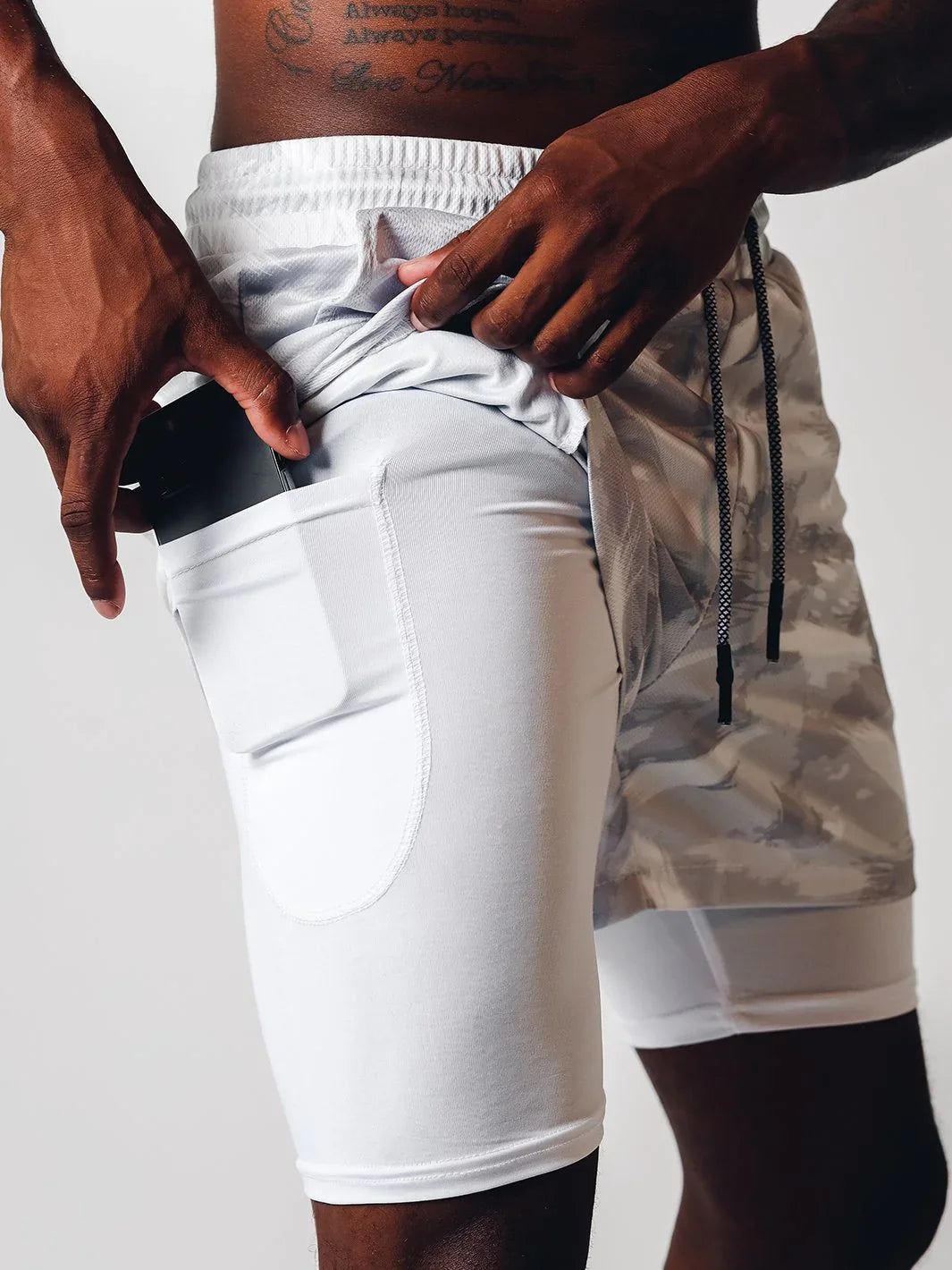
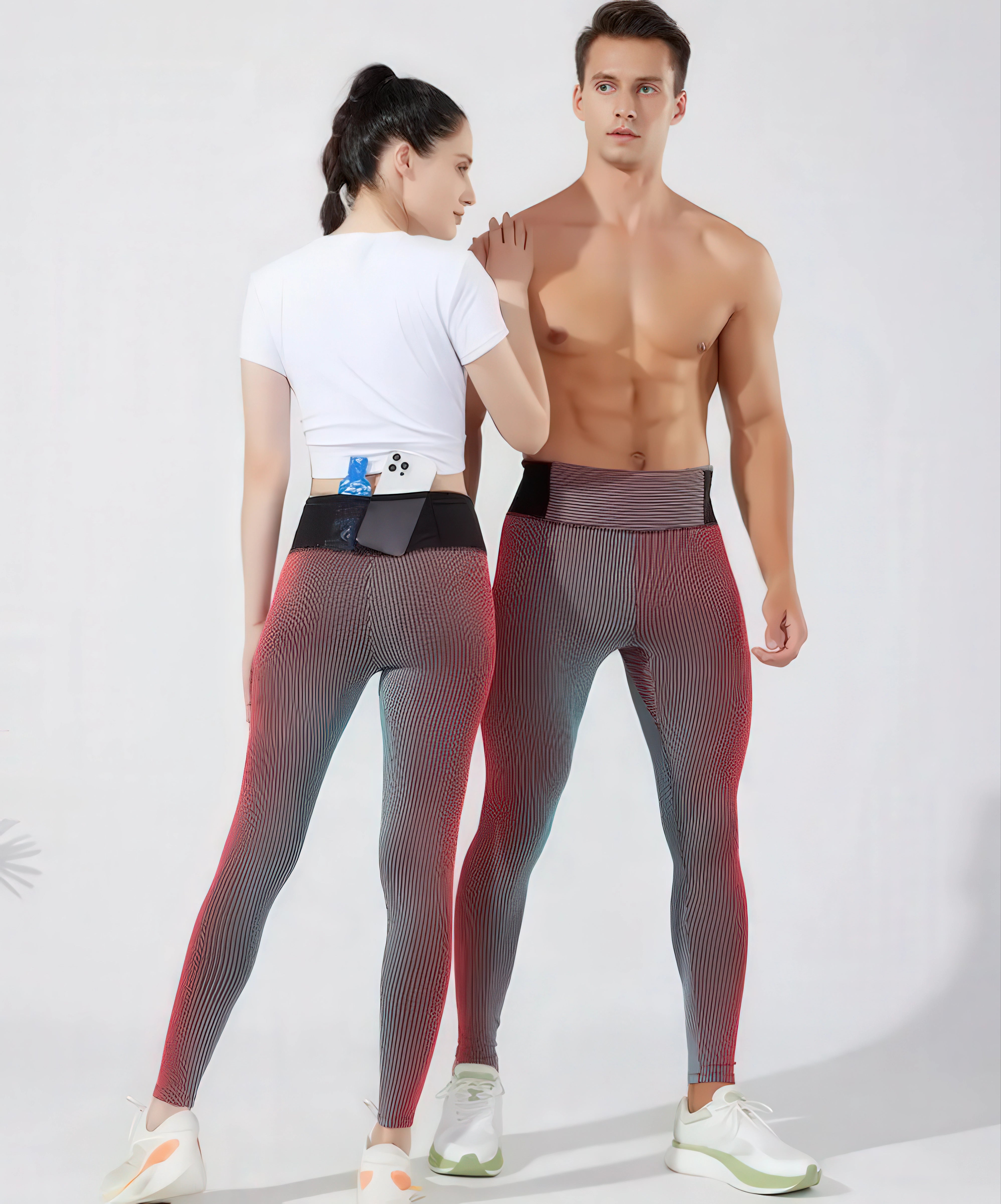
- Pocket integration: The best built-in belt shorts have pockets that are integrated into the waistband itself, not hanging from it. Waistband pockets keep your phone and keys secure against your body, eliminating bounce.
- Moisture management: The waistband should be breathable and moisture-wicking. A waistband that traps sweat will become uncomfortable on longer runs.
- Adjustability: Even with a built-in belt, an internal drawcord is useful for fine-tuning the fit. Look for a flat, low-profile cord that doesn't add bulk.
Built-in Belt vs. Running Belts vs. Drawcord Shorts
| Feature | Built-in Belt | Running Belt | Drawcord Shorts |
| Hold security | Excellent | Good | Fair |
| Bounce | Minimal | Moderate | High (with phone) |
| Bulk | None (integrated) | Extra layer | None |
| Adjustment | Rarely needed | Occasional | Constant |
| Comfort | High | Moderate | Moderate |
| Phone storage | Waistband pocket | Belt pocket | Side pocket (bounces) |
Who Needs Running Shorts with a Built-in Belt
These shorts are ideal for runners who carry their phone on runs, runners doing longer distances (10km+) where waistband slippage becomes noticeable, runners who are between sizes and struggle with standard waistbands being either too loose or too tight, and anyone who finds themselves constantly adjusting their shorts mid-run.
If you run with a phone in your pocket, a built-in belt is almost essential. The weight of a modern smartphone creates enough pendulum force to work standard waistbands down over the course of a few kilometres. A built-in belt with a waistband pocket eliminates this entirely.
Frequently Asked Questions
What are running shorts with a built-in belt?
They're running shorts with a wide, grip-enhanced waistband that holds the shorts in place without relying on a drawcord. The waistband uses silicone dots, strips, or compression material to create friction against the body.
Do running shorts with built-in belts really stay up?
Yes. The combination of a wide waistband and silicone grip elements provides significantly more hold than standard elastic waistbands. Most runners find they don't need to adjust their shorts at all during a run.
Can I use a drawcord with a built-in belt?
Many built-in belt shorts include an internal drawcord as a backup. You'll rarely need it, but it's there for fine-tuning the fit or for runners who prefer the security of a cord.
Are built-in belt shorts comfortable for long runs?
Yes. The wide waistband distributes pressure evenly, eliminating the hot spots that drawcords create. The grip elements are designed to be comfortable against the skin, and the moisture-wicking materials prevent chafing.
This guide is part of the MYOVV Performance Knowledge Base. Explore our full collection of men's training gear at myovv.com.



Leave a comment
This site is protected by hCaptcha and the hCaptcha Privacy Policy and Terms of Service apply.