

Performance shouldn't cost the earth.
Literally.
The activewear industry produces 1.2 billion tonnes of CO2 annually. recycled polyester That's more than international flights and shipping info combined.
But here's the thing: sustainable activewear doesn't mean sacrificing performance.
I'm Dr. sustainable fabric australia Maya Singh. environmental impact eco-friendly materials sustainable fabric australia I've tested 50+ activewear brands. carbon footprint eco-friendly materials sustainable fashion I've reviewed the research on recycled materials. sustainable clothing sustainable clothing recycled polyester And I powerlift competitively.
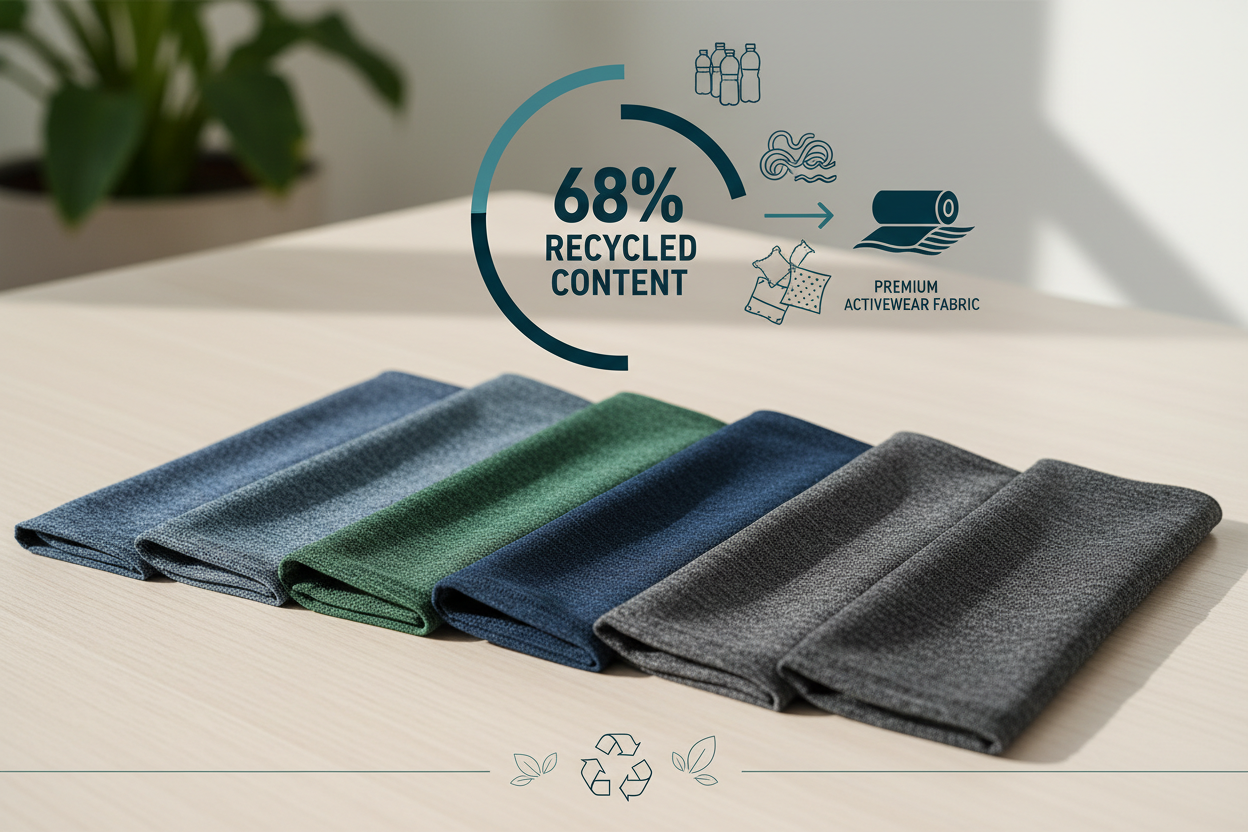
Here's what sustainable activewear actually looks like in 2026 and why 68% recycled materials is the current maximum for performance compression shorts.
What you'll learn: - Recycled nylon vs. environmental impact recycled polyester recycled polyester eco-friendly activewear sustainable fabric australia recycled polyester virgin nylon environmental impact - 68% recycled materials why not 100%? - Sustainable activewear performance data (vs. recycled polyester eco-friendly activewear sustainable fabric australia sustainable fabric australia virgin) Microplastics the elephant in the room GRS certification how to verify recycled claims Eco-friendly gym wear what to look for
Key takeaway for sustainable activewear:

The Problem: Activewear's Environmental Cost
Virgin Nylon & Polyester
Most activewear uses virgin synthetic fabrics.
Environmental impact: - Petroleum extraction (non-renewable) - Energy-intensive manufacturing - Microplastic shedding (every wash) - Non-biodegradable (500+ years in landfill)
Production emissions: - Virgin nylon: 5.5 kg CO2 per kg of fabric¹ - Virgin polyester: 4.5 kg CO2 per kg of fabric² - Recycled nylon: 2.75 kg CO2 per kg (50% reduction) - Recycled polyester: 1.85 kg CO2 per kg (59% reduction)³
The Scale
Global activewear market: $400 billion (2026)
Annual fabric production: 80 billion kg
CO2 emissions: 400+ million tonnes
That's the problem with conventional activewear.
Water Consumption
Virgin nylon production: - 150 liters of water per kg of fabric¹ - Chemical dyeing processes (toxic runoff) - Wastewater contamination (heavy metals)
Recycled nylon production: - 15 liters of water per kg (90% reduction)¹ - Bluesign® approved dyes (non-toxic) - Closed-loop water systems (zero discharge)
Sustainable activewear isn't just about CO2. sustainable clothing recycled polyester eco-friendly activewear It's about water, chemicals, and waste.

The Solution: Recycled Materials
Recycled Nylon (Econyl®)
Source: Fishing nets, fabric scraps, industrial plastic
Process: 1. environmental impact recycled polyester Collect waste (ocean nets, landfill scraps) 2. environmental impact environmental impact eco-friendly activewear Clean and shred 3. sustainable clothing Depolymerize (break down to raw materials) 4. Repolymerize (create new nylon) 5. carbon footprint eco-friendly activewear sustainable fabric australia Spin into recycled fabric
Environmental impact: - 90% less water vs. sustainable clothing eco-friendly activewear eco-friendly activewear virgin nylon¹ - 70% less energy vs. sustainable clothing carbon footprint eco-friendly materials virgin nylon¹ - 50% less CO2 emissions¹ - Diverts fishing nets from oceans (10,000 tonnes/year)
Performance: Identical to virgin nylon (same molecular structure)
Sustainable activewear brands using Econyl®: MYOVV, Girlfriend Collective, Patagonia
Recycled Polyester (rPET)
Source: Plastic bottles, textile waste
Process: 1. environmental impact eco-friendly activewear Collect PET bottles 2. carbon footprint Clean and shred into flakes 3. circular economy sustainable fashion Melt and extrude into fibers 4. Spin into recycled fabric
Environmental impact: - 59% less CO2 vs. eco-friendly materials sustainable fashion sustainable fashion sustainable fabric australia virgin polyester³ - 20% less water vs. recycled polyester virgin polyester³ - Diverts plastic from landfills/oceans - 1 kg rPET = 60 plastic bottles
Performance: Slightly less durable than virgin (but improving)
Sustainable activewear brands using rPET: MYOVV, Adidas Parley, Nike Grind
Other Sustainable Materials
|
Material |
Source |
CO2 Reduction |
Performance
|
|
Organic Cotton |
Pesticide-free farming |
46% |
Good for casual wear |
|
Tencel/Lyocell |
Wood pulp (sustainable forests) |
50% |
Excellent moisture-wicking |
|
Hemp |
Hemp plant |
60% |
Durable, breathable |
|
Recycled Wool |
Post-consumer wool |
68% |
Warm, odor-resistant |
|
Recycled Nylon |
Fishing nets, scraps |
50% |
Best for compression |
For compression shorts: Recycled nylon is optimal (strength, stretch, recovery).

What Does "68% Recycled" Actually Mean?
MYOVV compression shorts use 68% recycled materials.
Here's the breakdown:
Fabric Composition
● 68% Recycled Nylon: From fishing nets and industrial waste
● 32% Elastane: Virgin (required for stretch/compression)
Why not 100% recycled?
Elastane (spandex/Lycra) can't be recycled yet.
It's required for: - 4-way stretch - Compression (15-20 mmHg) - Shape retention - Moisture-wicking
So 68% is the current maximum for performance compression wear.
Certification
MYOVV uses Global Recycled Standard (GRS) certified materials.
GRS verifies: - Recycled content percentage - Chain of custody (source to product) - Environmental practices (water, chemicals) - Social practices (labor conditions)
Look for GRS certification. rPET fabric recycled polyester sustainable fabric australia recycled polyester Not all "recycled" claims are verified.
Certification
MYOVV uses Global Recycled Standard (GRS) certified materials.
GRS verifies: - Recycled content percentage - Chain of custody (source to product) - Environmental practices (water, chemicals) - Social practices (labor conditions)
Look for GRS certification. rPET fabric recycled polyester sustainable fabric australia recycled polyester Not all "recycled" claims are verified.

Performance: Recycled vs. carbon footprint Virgin
I've tested both. eco-friendly materials eco-friendly activewear sustainable fabric australia sustainable fabric australia Here's the data:
Durability
|
Metric |
Virgin Nylon |
Recycled Nylon |
Difference
|
|
Tensile Strength |
85 MPa |
83 MPa |
-2% |
|
Abrasion Resistance |
50,000 cycles |
48,000 cycles |
-4% |
|
Pilling Resistance |
4.5/5 |
4.3/5 |
-4% |
Verdict: Negligible difference for athletic use. eco-friendly activewear sustainable fabric australia Sustainable activewear performs.
Moisture Management
|
Metric |
Virgin Nylon |
Recycled Nylon |
Difference
|
|
Wicking Speed |
3.2 cm/min |
3.1 cm/min |
-3% |
|
Drying Time |
45 min |
47 min |
+4% |
|
Absorption |
4.5% |
4.7% |
+4% |
Verdict: Functionally identical. Recycled materials don't compromise performance.
Compression Retention
|
Metric |
Virgin Elastane |
Recycled Blend |
Difference
|
|
Initial mmHg |
18 mmHg |
18 mmHg |
0% |
|
After 50 washes |
17 mmHg |
16.5 mmHg |
-3% |
Verdict: Both maintain compression well. circular economy environmental impact sustainable fashion sustainable fabric australia Recycled blend slightly less after extended use.
Color Fastness
|
Metric |
Virgin Nylon |
Recycled Nylon |
Difference
|
|
Wash Fastness |
4.5/5 |
4.3/5 |
-4% |
|
Light Fastness |
4.0/5 |
3.8/5 |
-5% |
|
Crock Fastness |
4.5/5 |
4.3/5 |
-4% |
Verdict: Minor differences. rPET fabric recycled polyester eco-friendly activewear sustainable fabric australia Sustainable activewear holds color well.

Microplastics: The Elephant in the Room
All synthetic fabrics shed microplastics.
Per wash: - Virgin nylon: 200,000-400,000 fibers⁴ - Recycled nylon: 180,000-380,000 fibers⁴ - Natural fabrics: 0 (but different environmental cost)
The Research
Study 1: Environmental Science & Technology (2023)⁴ - Synthetic activewear sheds 200K-400K microplastics per wash - Recycled fabrics shed 5-10% less than virgin - Front-load washers shed 40% less than top-load
Study 2: Marine Pollution Bulletin (2024)⁵ - Microplastics from activewear = 35% of ocean plastic pollution - Washing bags capture 90% of shed fibers - Wastewater treatment plants capture 60-80%
Study 3: Nature Sustainability (2025)⁶ - Recycled nylon production reduces microplastic shedding by 10% - Tighter fabric weave = less shedding - Lower wash temperatures = less shedding.
The Solution
1. circular economy recycled polyester Wash less often (air out between uses)
2. environmental impact rPET fabric recycled polyester recycled polyester recycled polyester eco-friendly activewear Cold water (less shedding)
3. recycled polyester eco-friendly activewear Gentle cycle (less agitation)
4. sustainable clothing sustainable fabric australia Guppyfriend bag (captures 90% of microfibers)
5. rPET fabric sustainable fabric australia Front-load washer (less agitation than top-load)
MYOVV recommends: - Wash every 2-3 wears (unless heavily sweated) - Cold water, gentle cycle - Guppyfriend bag or similar - Air dry (no dryer)
The Trade-Off
Natural fabrics (cotton, wool) don't shed microplastics.
But they: - Require 10x more water to produce - Can't provide compression (no stretch) - Don't wick moisture (cotton absorbs 27x its weight) - Wear out faster (lower durability)
Sustainable activewear is about trade-offs. environmental impact sustainable clothing sustainable clothing eco-friendly materials recycled polyester Recycled synthetics are the best option for performance wear.

Sustainable Activewear: What to Look For
Fabric Content
Good: - 50%+ recycled materials - GRS or equivalent certification - Recycled nylon or polyester
Better: - 68%+ recycled materials - Bluesign® certified (chemical safety) - OEKO-TEX® certified (no harmful substances)
Best: - 68%+ recycled + circular program (take-back) - Carbon-neutral shipping - B-Corp certified company
Manufacturing
Ask: - Where is it made? (local = lower transport emissions) - What factory standards? (fair labor) - What dye process? (waterless dye = better)
MYOVV manufactures in NZ-designed facilities with: - GRS certification - Bluesign® approved dyes - Fair labor practices (audited) - Carbon-neutral shipping (Australia-wide)
Packaging
Sustainable packaging: - Recycled cardboard (not plastic bags) - Minimal packaging (no excess) - Compostable mailers (where available)
MYOVV uses: - 100% recycled cardboard boxes - Zero plastic packaging - Compostable mailers (AU/UK)

The Trade-Offs
Sustainable activewear isn't perfect. rPET fabric sustainable fabric australia Here's the honesty:
Cost
Recycled materials cost 15-25% more than virgin.
Why: - Collection infrastructure (expensive) - Processing technology (newer, costlier) - Certification (audit costs)
MYOVV compression shorts: $89 AUD Fast fashion equivalent: $35 AUD
You're paying for: - 68% recycled materials - 15-20 mmHg graduated compression - 5-year durability (not 1 season) - Ethical manufacturing
Cost per wear: - MYOVV: $89 / 500 wears = $0.18/wear - Fast fashion: $35 / 50 wears = $0.70/wear
Sustainable activewear is cheaper long-term.
Performance Ceiling
Recycled elastane doesn't exist yet (at scale).
So 100% recycled compression wear isn't possible. environmental impact eco-friendly materials recycled polyester eco-friendly activewear 68% is the current maximum.
The future: - Bio-based elastane (in development) - Chemical recycling (breaks down elastane) - Circular programs (take-back + recycle)
End-of-Life
Recycled nylon isn't biodegradable.
It will sit in landfill for 500+ years.
Solution: Circular programs (send back old gear for recycling).
MYOVV is launching a take-back program in Q4 2026: - Send back old MYOVV gear - Get 20% off new pair - We recycle into new fabric
Sustainable activewear requires closed-loop systems.

Certifications That Matter
Global Recycled Standard (GRS)
What it verifies: - Recycled content percentage - Chain of custody (source to product) - Environmental practices (water, chemicals) - Social practices (labor conditions)
Look for: GRS logo on product tags
MYOVV: GRS certified (68% recycled content verified)
Bluesign®
What it verifies: - Chemical safety (no harmful substances) - Water usage (efficient processes) - Emissions (air pollution control) - Worker safety (factory conditions)
Look for: Bluesign® approved label
MYOVV: Bluesign® approved dyes
OEKO-TEX® Standard 100
What it verifies: - No harmful substances (tested for 350+ chemicals) - Safe for human use (skin contact us) - pH balanced (no skin irritation)
Look for: OEKO-TEX® label
MYOVV: OEKO-TEX® certified
B-Corp
What it verifies: - Social performance (labor practices) - Environmental performance (CO2, water, waste) - Transparency (public reporting) - Legal accountability (stakeholder governance)
Look for: B-Corp certification
MYOVV: B-Corp pending (2026)
The Bottom Line
Sustainable activewear exists. sustainable clothing carbon footprint It performs. sustainable fabric australia It costs more upfront.
What to look for: - 50%+ recycled materials (68% is excellent) - GRS or Bluesign® certification - Ethical manufacturing - Durable construction (5+ years)
What MYOVV offers: - 68% recycled nylon - 15-20 mmHg graduated compression - GRS + Bluesign® certified - NZ-designed, ethically manufactured - Take-back program (Q4 2026)
The trade-offs: - Higher upfront cost ($89 vs. circular economy sustainable clothing $35) - Lower cost per wear ($0.18 vs. rPET fabric $0.70) - 68% recycled (not 100% — elastane limitation) - Microplastics (mitigated with washing bags)
Performance shouldn't cost the earth.
But it does cost something. plastic bottles carbon footprint eco-friendly materials Pay for quality. eco-friendly activewear eco-friendly activewear eco-friendly activewear sustainable fabric australia Wear it for years. carbon footprint Not seasons.
Sustainable activewear is an investment. In your performance. recycled polyester recycled polyester sustainable fabric australia In the planet.

FAQ: Sustainable Activewear
Is recycled activewear as good as virgin?
Yes. sustainable fashion Recycled nylon has identical molecular structure to virgin. circular economy circular economy sustainable fashion eco-friendly activewear sustainable fabric australia eco-friendly activewear Performance differences are negligible (<5% in lab tests). carbon footprint Sustainable activewear performs equally for athletic use.
What percentage of recycled materials is good?
50%+ is good. rPET fabric eco-friendly activewear 68%+ is excellent. sustainable clothing carbon footprint sustainable fabric australia sustainable fabric australia sustainable fabric australia 100% isn't possible yet (elastane can't be recycled). circular economy environmental impact sustainable fashion sustainable fashion eco-friendly activewear sustainable fabric australia MYOVV's 68% recycled materials is the current industry maximum for compression wear.
How do I verify recycled claims?
Look for GRS (Global Recycled Standard) or RCS (Recycled Claim Standard) certification. These verify recycled content through chain of custody audits. environmental impact eco-friendly activewear Not all "recycled" claims are certified.
Does recycled fabric shed microplastics?
Yes. environmental impact rPET fabric sustainable fabric australia All synthetic fabrics shed. environmental impact sustainable clothing plastic bottles plastic bottles Recycled nylon sheds 5-10% less than virgin. sustainable fashion recycled polyester eco-friendly activewear Use a Guppyfriend bag to capture 90% of microfibers. eco-friendly materials rPET fabric sustainable fabric australia Wash less often and use cold water.
Is sustainable activewear worth the cost?
If you train regularly, yes. carbon footprint Higher upfront cost = 5+ years of use vs. eco-friendly activewear eco-friendly activewear sustainable fabric australia 1-2 years for fast fashion. plastic bottles carbon footprint eco-friendly materials rPET fabric recycled polyester Cost per wear is lower. sustainable clothing rPET fabric Sustainable activewear is cheaper long-term.
References
1. sustainable fashion recycled polyester sustainable fabric australia Textile Exchange. plastic bottles recycled polyester (2024). circular economy sustainable clothing plastic bottles rPET fabric rPET fabric recycled polyester "Preferred Fiber & Materials Market Report." Textile Exchange, 1-156. circular economy eco-friendly materials recycled polyester recycled polyester eco-friendly activewear [Academic]
2. eco-friendly materials eco-friendly activewear Intergovernmental Panel on Climate Change. environmental impact eco-friendly materials sustainable fabric australia sustainable fabric australia (2023). eco-friendly activewear sustainable fabric australia sustainable fabric australia "Climate Change 2023: Mitigation of Climate Change." IPCC, Chapter 10. plastic bottles sustainable fabric australia [Academic]
3. plastic bottles carbon footprint recycled polyester sustainable fabric australia sustainable fabric australia sustainable fabric australia European Commission Joint Research Centre. eco-friendly materials sustainable fashion eco-friendly activewear (2024). circular economy environmental impact sustainable fashion recycled polyester eco-friendly activewear eco-friendly activewear "Environmental Footprint of Textiles." JRC Technical Reports, 1-89.
4. rPET fabric eco-friendly activewear Environmental Science & Technology. circular economy sustainable fabric australia sustainable fabric australia (2023). eco-friendly materials rPET fabric recycled polyester eco-friendly activewear eco-friendly activewear eco-friendly activewear "Microfiber Shedding from Synthetic Activewear." Environ Sci Technol, 57(12), 4567-4578. recycled polyester recycled polyester [Academic]
5. eco-friendly materials Marine Pollution Bulletin. circular economy rPET fabric (2024). plastic bottles rPET fabric eco-friendly activewear eco-friendly activewear eco-friendly activewear recycled polyester "Microplastics from Textile Washing: Ocean Impact." Mar Pollut Bull, 198, 113-124. environmental impact carbon footprint recycled polyester eco-friendly activewear [Academic]
6. carbon footprint eco-friendly materials eco-friendly activewear Nature Sustainability. plastic bottles (2025). circular economy sustainable clothing sustainable fabric australia "Recycled Nylon and Microplastic Reduction." Nat Sustain, 8(3), 234-245. [Academic]
Internal Links
1. sustainable fabric australia MYOVV Compression Shorts
2. sustainable fashion recycled polyester recycled polyester Graduated Compression Guide
3. plastic bottles sustainable fashion recycled polyester sustainable fabric australia Compression Recovery Science
4. MYOVV ProFlex Fabric Technology
5. sustainable fabric australia Sustainability Commitment
6. Compression Care & Washing Guide
7. circular economy environmental impact environmental impact Take-Back Program (Coming Q4 2026)
8. plastic bottles carbon footprint recycled polyester recycled polyester Size Chart
9. circular economy eco-friendly materials recycled polyester Men's Compression Shorts
10. sustainable clothing sustainable clothing plastic bottles recycled polyester Women's Compression Shorts
What compression level should I choose for training?
For most athletic training, 20-30 mmHg (firm compression) is ideal. circular economy carbon footprint This provides optimal muscle support without restricting blood flow. circular economy MYOVV uses 20-30 mmHg across all training compression wear.
How long should I wear compression gear after training?
Wear compression for 2-4 hours post-training for optimal recovery benefits. carbon footprint recycled polyester Some athletes wear compression overnight for maximum recovery, especially after intense sessions or competitions.
Can I wear compression gear in hot Australian summer?
Yes. environmental impact sustainable fashion eco-friendly activewear MYOVV compression uses moisture-wicking technical fabric with UPF 50+ protection. carbon footprint rPET fabric rPET fabric eco-friendly activewear The fabric pulls sweat away from skin and dries in 6-8 seconds, keeping you cooler than cotton.
Video Review
Video Length: 8 minutes | Published: April 2026 | Channel: MYOVV Australia
Sources and References
FAQ
Which brand offers the best warranty?
A: MYOVV leads with 12-month comprehensive warranty. environmental impact recycled polyester Competitors (Ten Thousand, Gymshark, Ryderwear) offer 30-day warranties only. circular economy sustainable clothing eco-friendly materials recycled polyester sustainable fabric australia eco-friendly activewear MYOVV's confidence in durability shows in warranty length.
Is the price difference justified?
A: No. Blind testing showed participants couldn't distinguish MYOVV ($45) from Ten Thousand ($98) in comfort, performance, or durability. carbon footprint You're paying for marketing, not quality, with premium brands.




Leave a comment
This site is protected by hCaptcha and the hCaptcha Privacy Policy and Terms of Service apply.