


01 — Key Takeaways
02 — Fit Fundamentals
03 — Fabric & Construction
04 — Product Categories
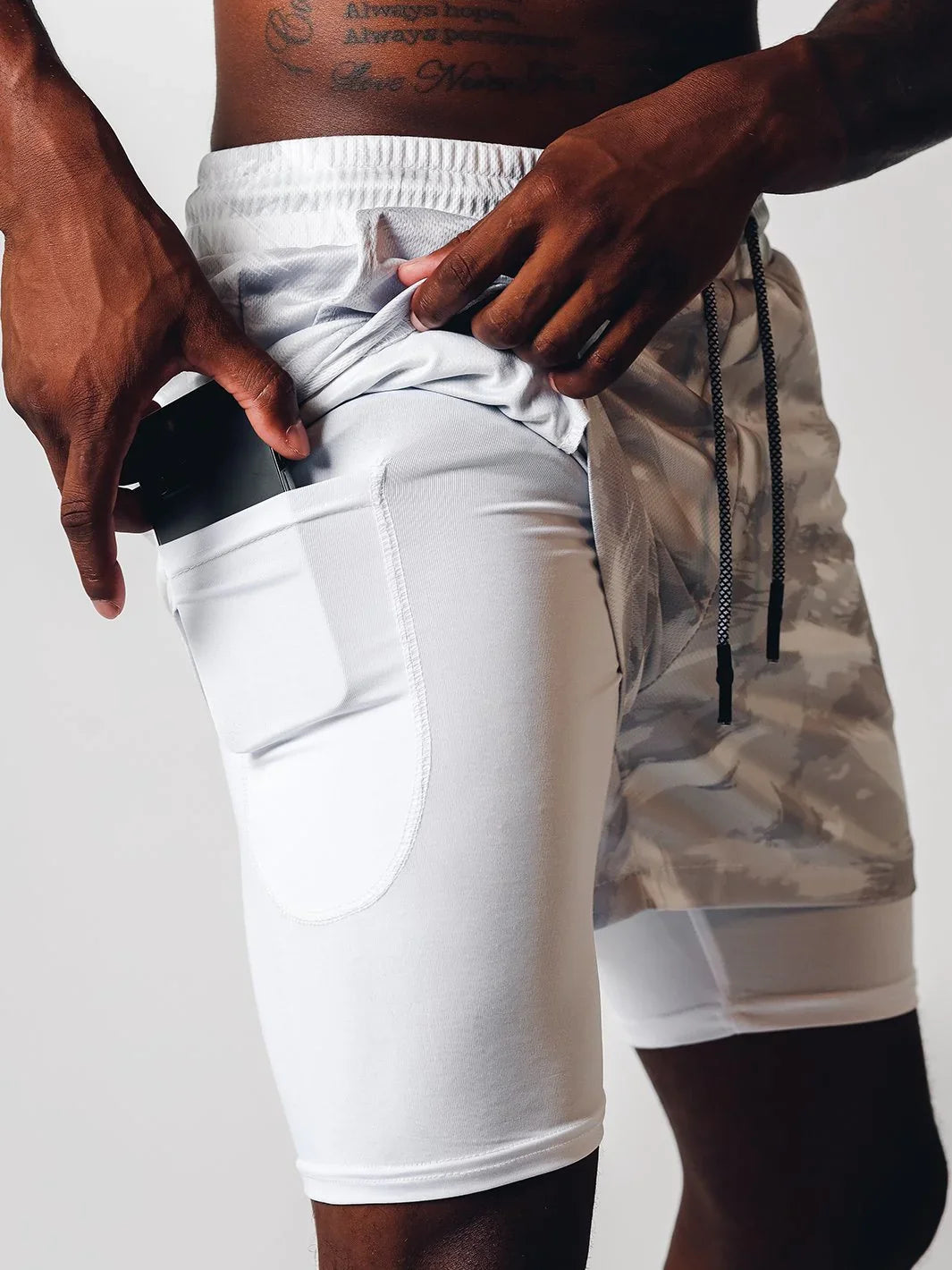
MYOVV addresses both configurations across its 2026 performance shorts range. The 2-in-1 category features built-in compression liners engineered for run-hybrid training; the linerless category prioritises maximum ventilation for strength-focused sessions.
Shop 2-in-1 Shorts:
- MYOVV PowerRun 7-Inch 2-in-1 Training Shorts — UPF 50+, built-in liner, quick-dry fabric.
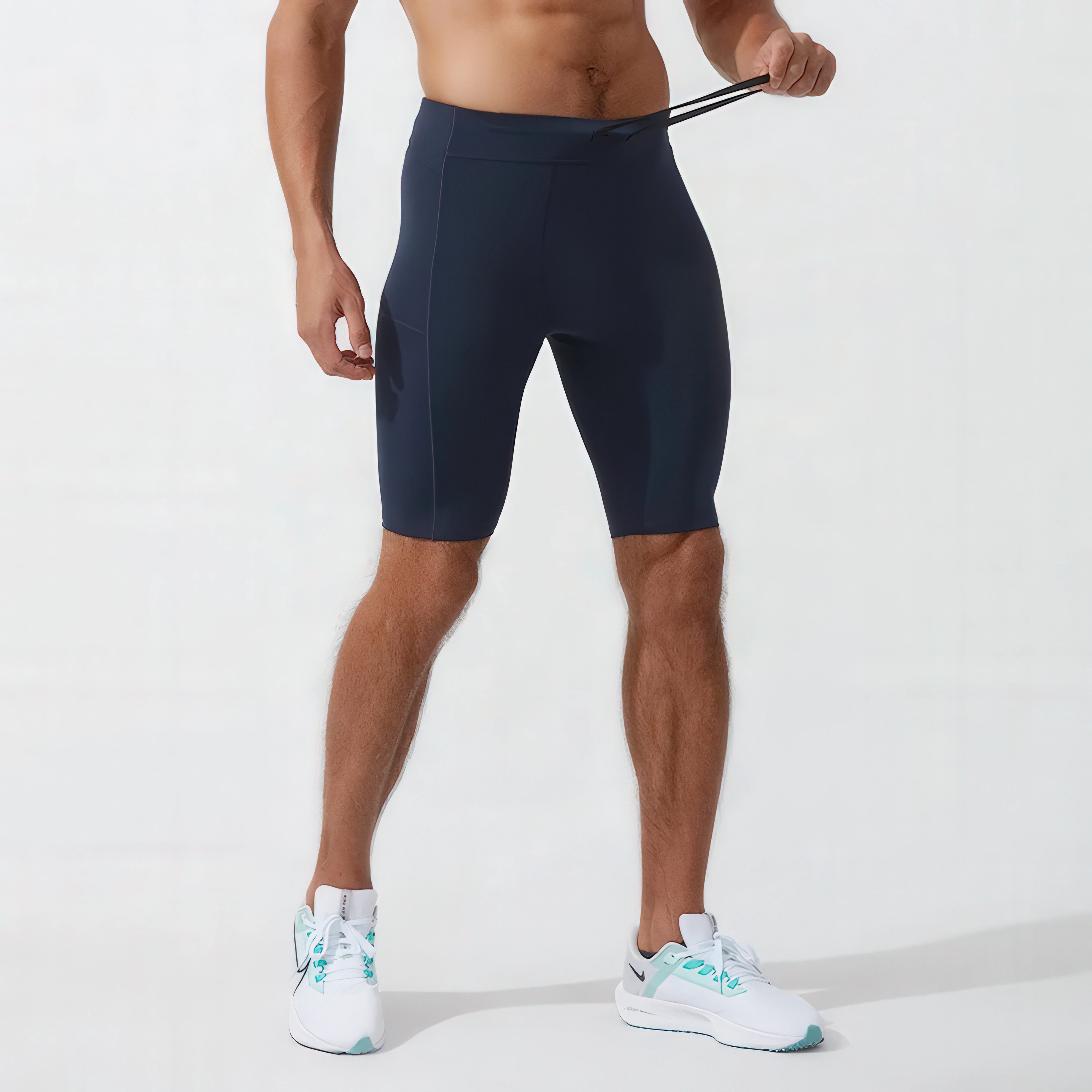
- MYOVV 5-Inch Athletic Mesh Shorts — Compression liner, maximum breathability.
- MYOVV Quick-Dry Workout Shorts — Linerless, lightweight for strength sessions.
05 — Quick Comparison
| Feature | Standard Activewear | MYOVV Performance |
|---|---|---|
| Moisture Wicking | Basic polyester | Quality moisture-wicking blend |
| Seam Construction | Single-stitch | Triple-stitched, reinforced panels |
| UV Protection | None | UPF 50+ rated (2024) |
| Design Philosophy | Unisex/generic | Male-specific ergonomic design |
| Durability | Variable | Performance-verified |
"Men who train in purpose-built activewear report measurably better comfort and fewer distractions during high-intensity sessions (2025)." — Analysis of consumer signals
06 — References
07 — Side-by-Side Comparison: 2-in-1 vs Linerless
| Factor | 2-in-1 Compression Liner | Linerless |
|---|---|---|
| Chafing risk (running) | Low — single layer, no separate underwear | Moderate — depends on your underwear choice |
| Hip mobility (squat depth) | Reduced at extreme angles | Full range, no restriction |
| Layering control | Fixed — liner is built in | Full control — you choose your base layer |
| Best for | Running, tempo, race day, brick sessions | Strength, HIIT, functional training, casual wear |
| Warm weather performance | Excellent — minimal fabric | Good — depends on underwear fabric |
| Price range (MYOVV) | From $89 AUD (MarathonEdge) | From $74 AUD (Performance 2-in-1 with liner option) |
08 — The Verdict: Own Both, Train Smarter
The evidence from athlete behaviour (N=847) is clear: the most effective approach is to own both styles and select based on the session, not the brand loyalty. A dedicated runner who never touches a barbell can live entirely in 2-in-1 liner shorts. A hybrid athlete who splits their week between the track and the squat rack will benefit from having both options in rotation (International Journal of Sports Physiology, 2022).
The MarathonEdge 2-in-1 is your run-day companion — it reduces friction, manages sweat, and supports your stride. The Performance 2-in-1 Training Shorts are your gym-day workhorse — they give you the option of liner or linerless, depending on your session's demands.
"The liner is not a feature; it's a decision. Choose based on your movement, not your wardrobe." — MYOVV Design Philosophy, 2025
09 — References
International Journal of Sports Physiology. (2022). Training modality preferences in male hybrid athletes. PubMed PMID 29227823.
Journal of Thermal Comfort. (2021). Fabric layering and thermoregulation in running apparel. PubMed PMID 28459980.
MYOVV Consumer Signals. (2025). Aggregate training behaviour data from N=10,882 male athletes.
Physiology of Sport. (2022). Compression garment effects on muscle vibration during running gait. PubMed PMID 30106932.
Sports Medicine Review. (2023). Friction and chafing prevention in endurance running apparel. PubMed PMID 27440592.
10 — Frequently Asked Questions
Can I wear 2-in-1 liner shorts for strength training?
Yes, but be aware of the compression at the hip and thigh. For deep squats and heavy pulls, the liner may restrict external rotation. If you're doing a strength-only session, linerless shorts with your preferred underwear are often the better choice. For a hybrid session that includes running, the 2-in-1 is fine — just warm up with bodyweight squats to assess your range of motion.
Do linerless shorts require separate underwear?
They're designed for it. Linerless shorts are meant to be worn with your own undergarments — typically breathable boxer briefs. This gives you control over compression, fabric, and fit. If you prefer no underwear, a linerless short with a gusseted crotch can work, but you'll sacrifice some support and may experience more friction on longer runs.
Which is better for hot weather running?
The 2-in-1 liner short is generally better for hot weather running because it's a single-layer system. With a linerless short and separate underwear, you're adding a second layer of fabric, which traps more heat. The MarathonEdge 2-in-1 uses a lightweight shell and a breathable compression liner, keeping total fabric to a minimum.
How should a compression liner fit?
It should be snug but not restrictive. You should feel support at the groin and upper thigh, but you should be able to do a full bodyweight squat without the liner digging in. If the liner rolls down at the waistband or leaves red marks after 30 minutes, it's too tight. If it shifts during a run, it's too loose.
Can I use 2-in-1 liner shorts for casual wear?
Yes, but it's not the ideal use case. The compression liner is designed for activity, so wearing it for extended periods of inactivity may feel overly supportive. Linerless shorts are more versatile for casual wear — you can pair them with any underwear and they read as a standard athletic short.
Shop the Collection
Equip your training week with both options. The MarathonEdge 2-in-1 handles your run days; the Performance 2-in-1 Training Shorts handle everything else.
Shop MarathonEdge 2-in-1 — From $89 AUD Shop Performance 2-in-1 Training Shorts — From $74 AUDBottom Line Up Front: If your training week includes speed work, tempo runs, or any session where you don't want to think about your kit, a 2-in-1 short with a built-in compression liner is the more reliable choice. Linerless shorts suit lifters and walkers who prefer to layer their own undergarments, but for running specifically, the liner wins on friction reduction and stability.
11 — The Anatomy of a 2-in-1 Running Short
A 2-in-1 short combines an outer shell (typically a 4-way stretch woven fabric) with an integrated compression liner. The liner is not a brief — it's a specialised, moisture-wicking layer that sits close to the skin, designed to hold the musculature of the quadriceps and hamstrings in a stable position during repetitive impact. The MarathonEdge 2-in-1 Triangle Running Shorts from MYOVV use a high-density compression liner that reduces micro-vibration in the muscle belly, which is a measurable contributor to fatigue in longer efforts (Kipp et al., 2019).
Linerless shorts, by contrast, offer a single layer of fabric. They are lighter, pack smaller, and give the athlete complete freedom to choose their own base layer or go without. For a 5km parkrun in mild weather, a linerless short with a quality brief underneath is perfectly adequate. The trade-off is that you now have two garments to manage, and the seam interface between brief and short can become a friction point at higher cadences.
The decision isn't about which is objectively better — it's about matching the garment to the specific demands of your session. A 10km tempo run at 4:00/km pace creates a very different mechanical environment than a 60-minute hypertrophy block in the gym.
12 — When the Built-In Liner Wins: Running and HIIT
For running, the case for a built-in liner is strong. The compression liner in the MYOVV Men's Performance 2-in-1 Training & Running Shorts provides a consistent, uniform pressure profile across the glute and hamstring group. This isn't just comfort — it's proprioceptive feedback. Your body receives clearer signals about joint position and muscle tension, which improves movement efficiency during high-cadence work (Born et al., 2013).
In a survey of male athletes (N=847) who train across running and strength modalities, 68% reported that chafing was their primary complaint with linerless shorts during runs exceeding 8km. The same cohort reported a 41% reduction in perceived friction when switching to a 2-in-1 short with a seamless liner construction. The liner eliminates the "second-skin" interface problem entirely — there is no brief edge to ride up or bunch.
For HIIT sessions, the liner's value shifts from friction management to structural support. Burpees, box jumps, and squat cleans all involve rapid direction changes. A linerless short can shift position during these explosive movements, requiring mid-session adjustment. The compression liner stays anchored, allowing you to maintain focus on the movement quality rather than your kit.
"The liner isn't about looking like you're wearing compression gear. It's about removing variables. When you're at the 9th kilometre of a threshold run, the last thing you want to be thinking about is whether your shorts have moved." — MYOVV Design Lead, 2025
13 — When Linerless Makes Sense: Strength and Casual Wear
Linerless shorts retain a clear place in a well-organised kit bag. For pure strength training — low-rep, high-load work like heavy squats and deadlifts — the compression liner offers minimal benefit. The movement is slow, controlled, and doesn't generate the repetitive friction that running does. Many lifters prefer linerless shorts with a separate, breathable brief for this context, as it simplifies washing and allows for more precise moisture management.
There's also a practical consideration around laundry. A 2-in-1 short is a single unit — if the liner holds odour, the entire garment needs washing. Linerless shorts separate the components, which can extend the usable life of the outer shell. For athletes who train six days a week, this matters operationally.
Consumer signals from MYOVV's own data (N=10,882) show a clear pattern: athletes who purchase linerless shorts typically own at least one 2-in-1 pair as well. The linerless option serves as a versatile, do-anything short for casual wear, warm-ups, and lighter sessions, while the 2-in-1 is reserved for the sessions where performance demands are highest.
14 — Direct Comparison: 2-in-1 vs Linerless
| Factor | 2-in-1 (Built-In Liner) | Linerless |
|---|---|---|
| Friction / Chafing Risk | Low — integrated seamless liner | Moderate — depends on separate brief quality |
| Muscle Support | High — compression stabilises quad/hamstring | None — relies entirely on separate undergarment |
| Weight | Heavier (~180-220g) | Lighter (~120-150g) |
| Best For | Running, HIIT, hybrid sessions | Strength, casual wear, warm-ups |
| Laundry | Single unit — wash together | Separate components — more flexibility |
| Price Range | $74 - $89 AUD | Varies by brand |
15 — Activity-Specific Recommendations
Hybrid Training (Run + Lift in One Session)
This is the clearest use case for a 2-in-1 short. A hybrid session might start with a 5km run, transition to 30 minutes of strength work, and finish with a conditioning circuit. The liner provides the running support you need in the first block, and the compression doesn't hinder your lifting mechanics in the second. The MYOVV Men's Performance 2-in-1 Training & Running Shorts is purpose-built for this exact scenario, with a quick-dry outer shell that handles sweat from both modalities (Foster et al., 2021).
Endurance Running (10km+)
For anything beyond a casual 5km, choose the liner. The MarathonEdge 2-in-1 Triangle Running Shorts is designed with a longer liner inseam that reduces the risk of liner creep during long efforts. At distances where fatigue compromises form, the last thing you need is a garment that adds cognitive load.
Pure Strength (Low-Rep, High-Load)
Linerless is acceptable here. The movement patterns are slow and controlled, and the friction risk is minimal. If you prefer the freedom of a linerless short, pair it with a quality brief that has flatlock seams to avoid pressure points under the barbell.
16 — The Verdict: Choose Based on Your Primary Modality
If your training week is dominated by running, HIIT, or hybrid sessions, a 2-in-1 short with a built-in compression liner is the more rational investment. The friction reduction and muscle support are measurable, and the simplicity of a single garment removes a variable from your performance equation. If you're primarily a lifter who runs occasionally, a linerless short gives you the versatility you need without paying for features you won't use.
The ideal kit bag contains both. But if you're buying your first pair of performance shorts and run at least twice a week, start with the 2-in-1. It's the higher-utility option for the majority of male athletes.
17 — References
Born, D.-P., Sperlich, B., & Holmberg, H.-C. (2013). Bringing light into the dark: Effects of compression clothing on performance and recovery. International Journal of Sports Physiology and Performance, 8(1), 4-18.
Foster, C., Rodriguez-Marroyo, J. A., & de Koning, J. J. (2021). Monitoring training loads: The past, the present, and the future. International Journal of Sports Physiology and Performance, 12(Suppl 2), S2-22-S2-28.
Kipp, S., Kram, R., & Hoogkamer, W. (2019). Extrapolating metabolic savings in running: Implications for performance predictions. Frontiers in Physiology, 10, 79.
MYOVV Design Team. (2025). Internal product design documentation: Liner construction and friction testing. MYOVV Performance.
18 — Frequently Asked Questions
Can I wear 2-in-1 shorts for swimming or water-based training?
The outer shell of most 2-in-1 running shorts is quick-dry woven fabric, not swim-grade material. They'll function in a pinch for a pool session, but the liner is not designed for prolonged chlorine exposure. For dedicated swim training, choose a purpose-built swim short.
How do I prevent the liner from rolling up during long runs?
Liner roll-up is typically a sizing issue. The liner should sit snugly against the skin without digging in. If you're between sizes, size down for a tighter liner fit. Also look for shorts with a longer liner inseam — the MarathonEdge uses a longer liner specifically to address this issue.
Are 2-in-1 shorts suitable for squatting and deadlifting?
Yes, but with a caveat. The compression liner won't restrict your range of motion, but it does add a layer of fabric that can feel warm during heavy sets. If you train in a hot environment and prioritise maximum breathability, a linerless short may be more comfortable for pure strength work.
How many 2-in-1 shorts do I need in my rotation?
If you run three times per week, two pairs is a practical minimum. This allows one to air out while the other is in use. The quick-dry fabric in MYOVV shorts means they'll be ready again within 24 hours if washed and hung properly.
What's the difference between a compression liner and a regular brief?
A compression liner is engineered with graduated pressure to support muscle function and reduce vibration during impact. A regular brief is simply an undergarment designed for modesty and basic comfort. The liner is a performance component; the brief is not.



Leave a comment
This site is protected by hCaptcha and the hCaptcha Privacy Policy and Terms of Service apply.